You're standing in the store with a half-remembered list, a packet of pasta in one hand, and the sick feeling that you forgot the garlic, again. That's not bad luck, it's a broken system. A grocery list only works when it starts at home, not in the aisle.
How to make a grocery list that saves money is simple: check what you already have, pick a small set of meals, turn those meals into one category-grouped list, and then shop like you mean it. That's the whole game. A list written from memory is just a receipt for mistakes.
The reason this matters is basic rhythm. A practical grocery routine has to match how households shop, which is often every few days, not once a month. The best list is a short-cycle planning tool, not a vague wish list.
Why Most Grocery Lists Fail Before You Leave the House
You're in the pasta aisle on a Wednesday, looking at three almost-empty boxes of spaghetti, and it hits you. You forgot garlic, you already have half a jar of tomato sauce at home, and you probably bought pasta last week because nobody checked the pantry first. That's how people waste money, not by buying one bad item, but by building a list with no system behind it.
A grocery list fails when it's written from memory mid-aisle. It also fails when it ignores what's already in the fridge, when it has no link to actual meals, and when it mixes random ingredients from different recipes without any store order. The fix is boring, and boring is what works. Start with a pantry check, then choose meals, then build a category-grouped list, then execute it with discipline.
Practical rule: if the list wasn't built from what's already at home, it's probably wrong.
That four-step workflow matters because grocery shopping is repeated, not rare. Households shop often, and that means every sloppy list multiplies into extra trips, duplicate purchases, and impulse buys that look harmless at the register but add up over the week. Even store safety and traffic flow depend on disciplined habits, which is why operational resources like compare shopping trolley security solutions can be useful if you're looking at the retail side of how organized shopping environments work.
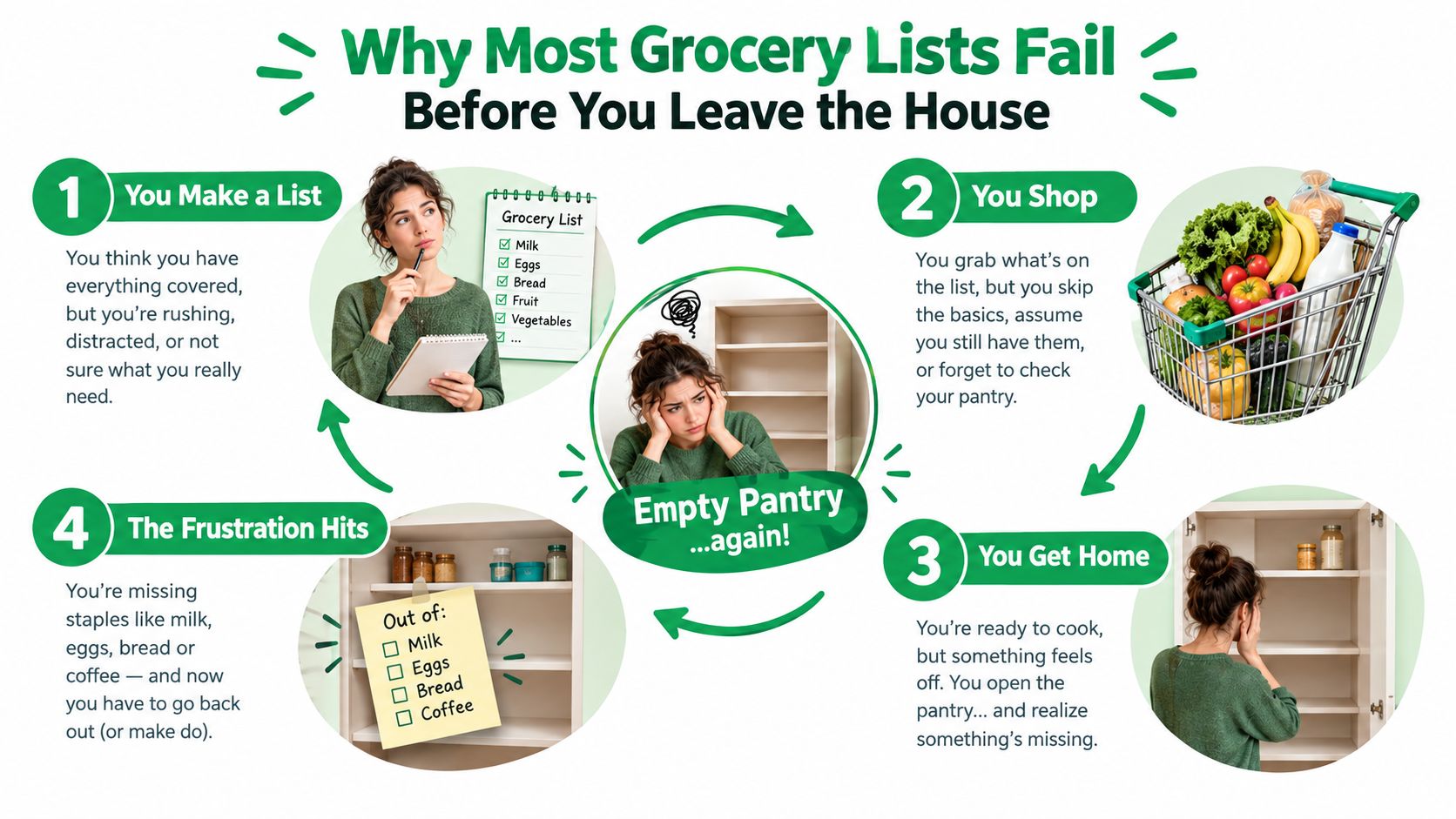
The point is blunt. A grocery list is not the starting point, it's the output of a system. If you build the system right, you get fewer midweek takeout orders, fewer forgotten staples, and a spend that feels predictable instead of chaotic.
Build the Foundation With a Pantry Check and Meal Plan
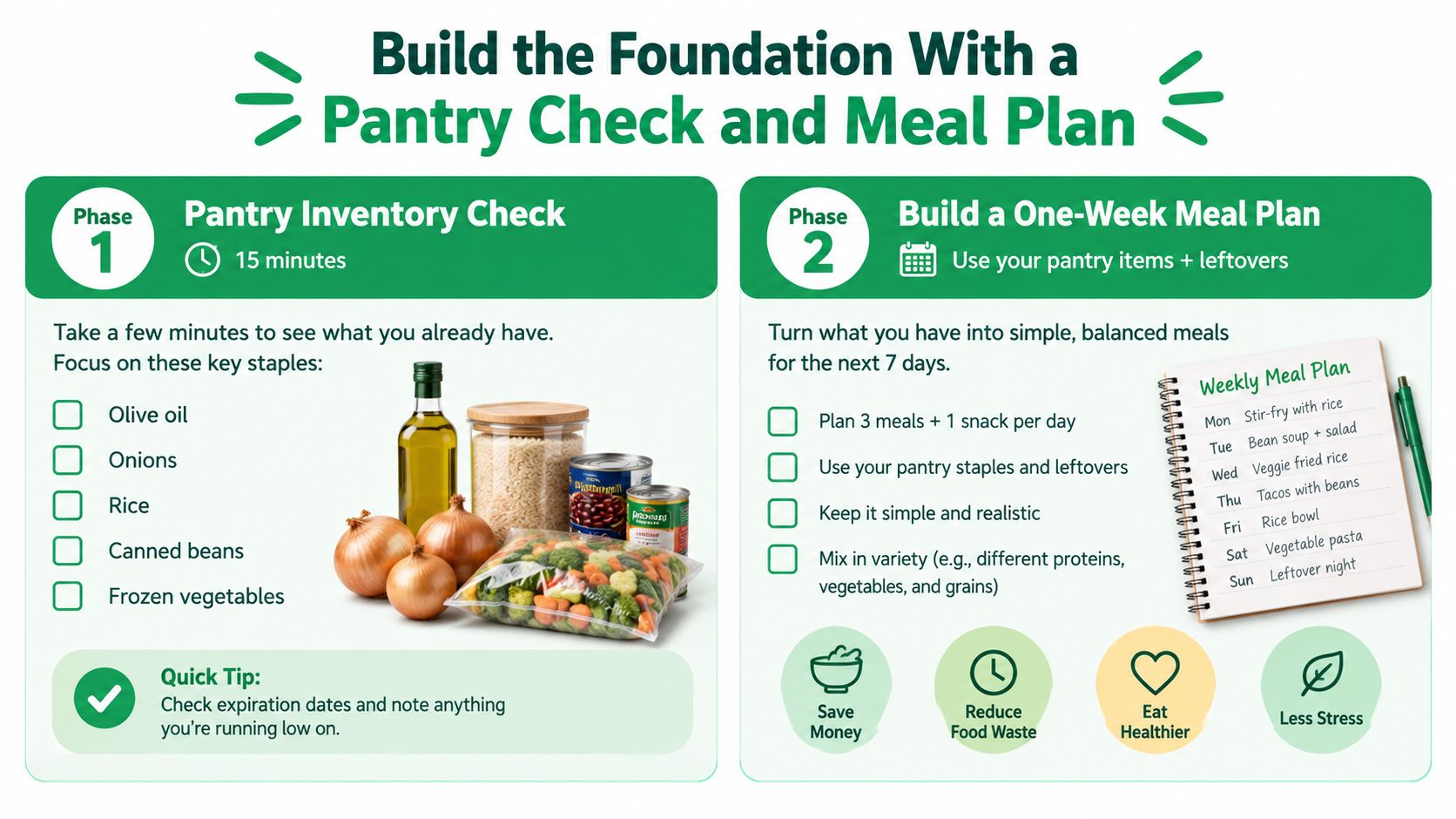
Start with the pantry check, not the recipes. Give yourself 15 minutes and look at the obvious stuff first, olive oil, onions, rice, canned beans, frozen vegetables, and the other ingredients you always assume are there until they're gone. Write down what's low, what's missing, and what you have too much of already. That one pass stops the dumbest kind of duplicate buying.
After that, choose four or five dinners and two or three breakfast or lunch items based on what's already on hand. Monday can be chicken stir-fry with rice. Wednesday can be one-pot pasta with sausage. Friday can be sheet-pan vegetables with fish. Each meal should pull from the pantry check you just did, not from fantasy cooking.
Good shopping starts at home. If you skip inventory, you're shopping twice, once in the store and once in your own kitchen.
That meal plan turns into a raw ingredient list fast. Chicken stir-fry needs chicken, rice, and vegetables. The pasta needs pasta, sausage, garlic, and tomatoes. The sheet-pan dinner needs fish, vegetables, oil, and whatever seasoning you already keep around. Once you write those ingredients down, you can see gaps clearly, and you can spot where one item covers two meals.
The money-saving part gets real. Meal planning against pantry stock keeps you from buying the same staple again and again just because it feels familiar. It also makes sale items useful, because you're buying them to fill a planned meal, not because the endcap made you nervous.
If you want a tighter pantry setup, this pantry organization guide fits the same logic. A clean pantry makes the next week's list faster because you can clearly see what needs replacing.
Turn Your Recipes Into One Aisle-Ready List
A good grocery list doesn't stay in recipe order. It gets merged, normalized, and sorted by store section so you're not zigzagging through the store like you forgot how aisles work. Pull every ingredient from the meals you picked, then combine duplicates before you shop. Three recipes calling for half an onion should become one line that reflects the total you need, not three separate half-notes.
The manual method that actually works
First, gather the ingredients from each meal. Then clean up the wording so you're not listing the same thing three ways. “Bell pepper,” “peppers,” and “red pepper” should be one entry if that's what you mean. After that, sort by department, produce, dairy, meat, pantry, frozen.
Do the math once, not in the aisle. If the list is sorted before you leave, you stop paying for store-floor confusion with time and impulse buys.
Here's the kind of before-and-after that makes the difference obvious.
| Store Section | Items Needed | Source Recipes |
|---|---|---|
| Produce | Bell peppers, garlic, onion | Stir-fry, pasta, sheet-pan dinner |
| Dairy | Milk, cheese | Pasta, breakfast item |
| Meat | Ground beef, sausage | Pasta, another dinner |
| Pantry | Pasta, canned tomatoes, rice, olive oil | Multiple dinners |
| Frozen | Peas | Stir-fry, side dish |
That same pile of scattered ingredients, bell peppers, ground beef, milk, garlic, canned tomatoes, cheese, pasta, onion, frozen peas, looks manageable once it's grouped. Now the store order makes sense. You can move through produce, dairy, meat, pantry, and frozen without circling back.
The hard part is that most paper systems break here. Once the list gets messy, people start rewriting it on scraps, or they carry a recipe printout and hope for the best. That's exactly where the friction starts to show.
If you want a cleaner recipe-to-list workflow, this recipe-to-shopping list guide covers the same conversion idea in a more structured way.
When an App Beats Paper for Generating the List
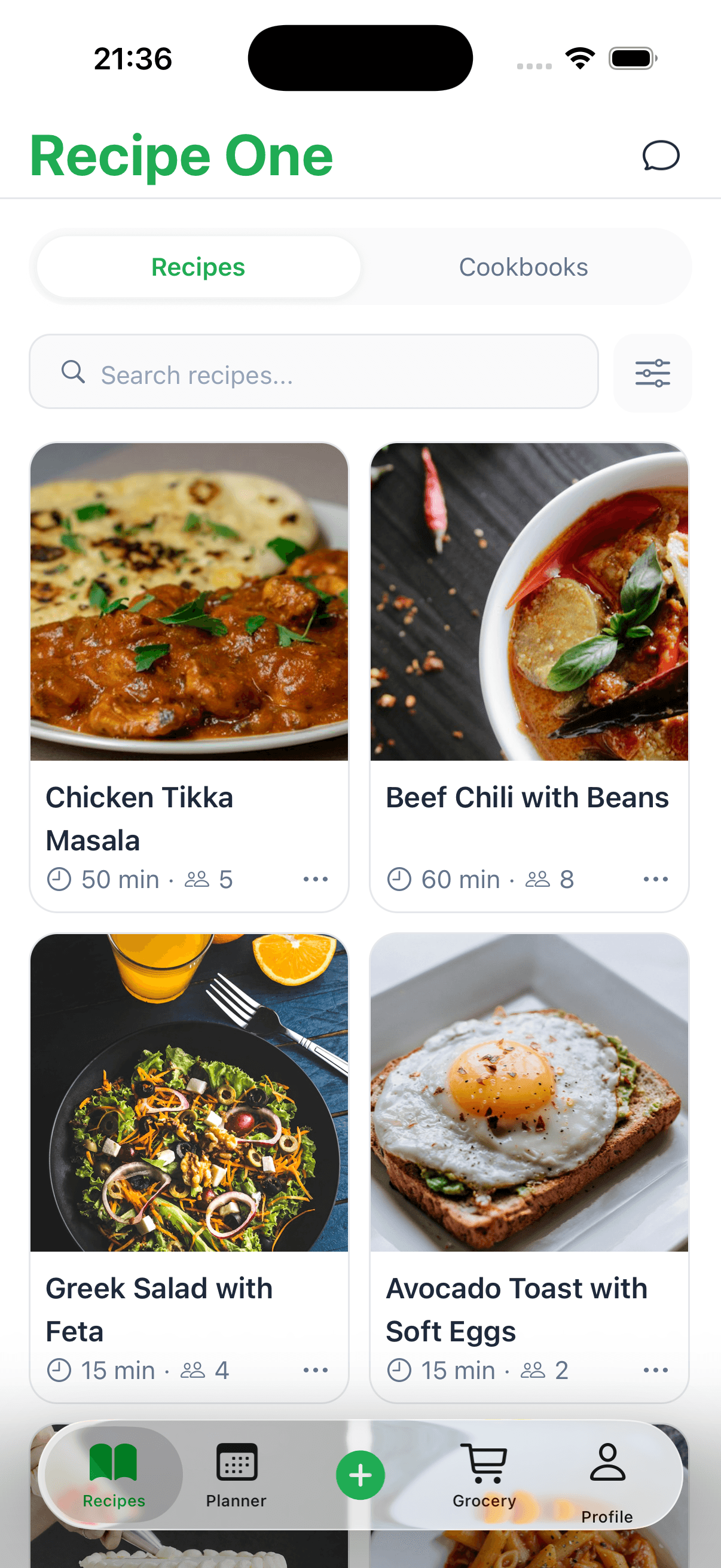
Paper is fine for a quick top-up, and I still think it's better when you're buying three things and heading straight home. But once you've got several recipes in play, paper turns into busywork. A tool like Recipe One earns its keep because it can pull ingredients from saved recipes, combine duplicates, and sort the output by aisle without making you do the arithmetic yourself.
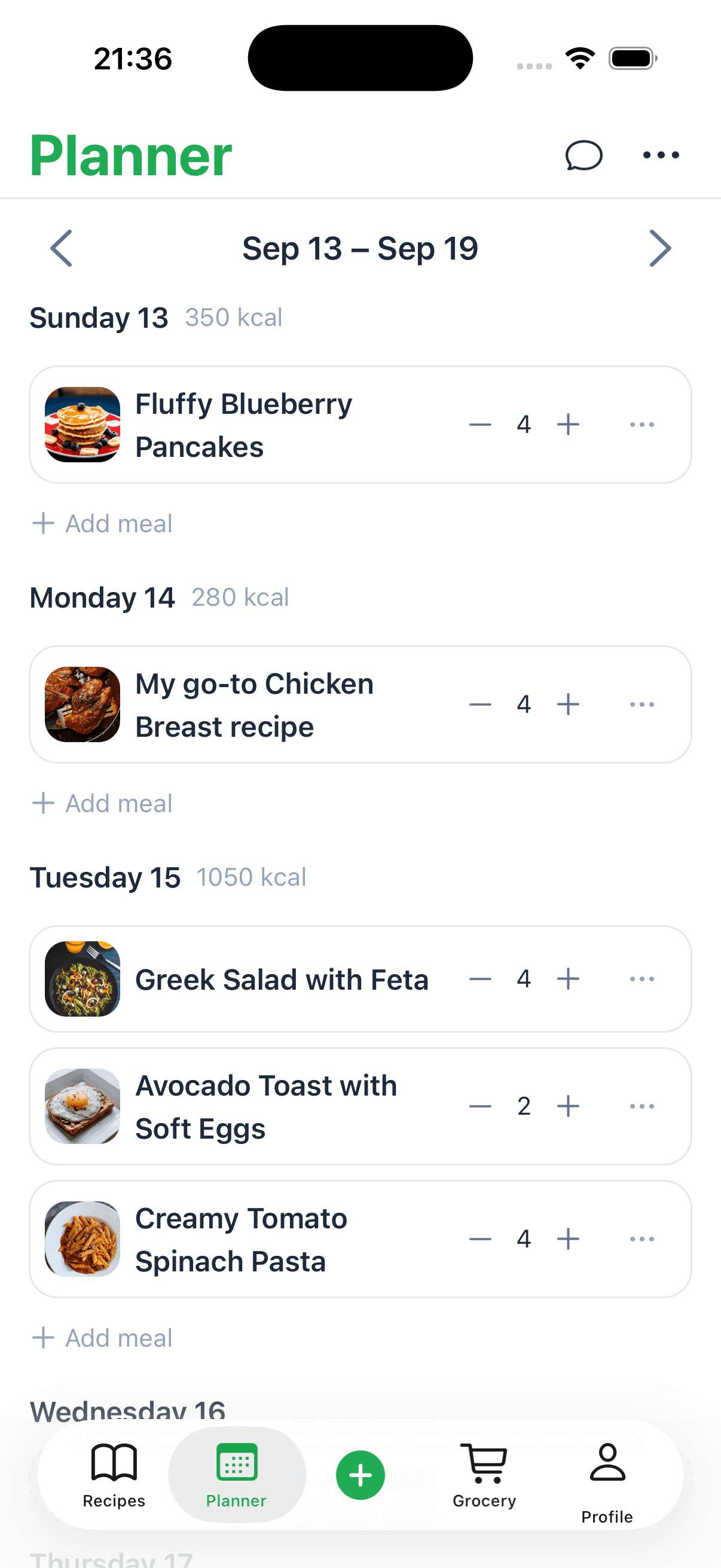
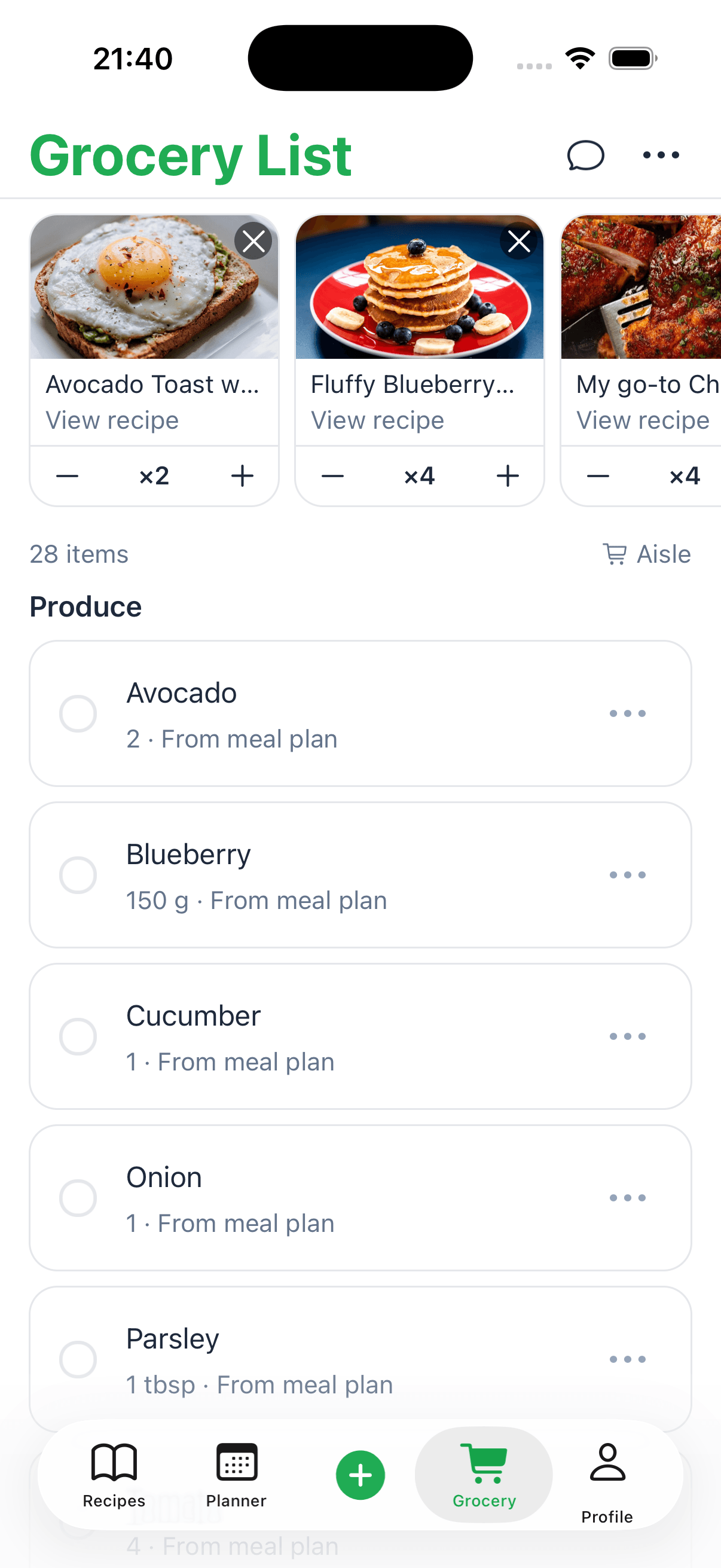
Here's the clean use case. You plan four dinners in Recipe One, tap to generate the shopping list, and the ingredients show up grouped into supermarket sections. The list can also live on your phone, which matters when the person shopping isn't the person who planned dinner. That's a real household problem, not a tech gimmick.
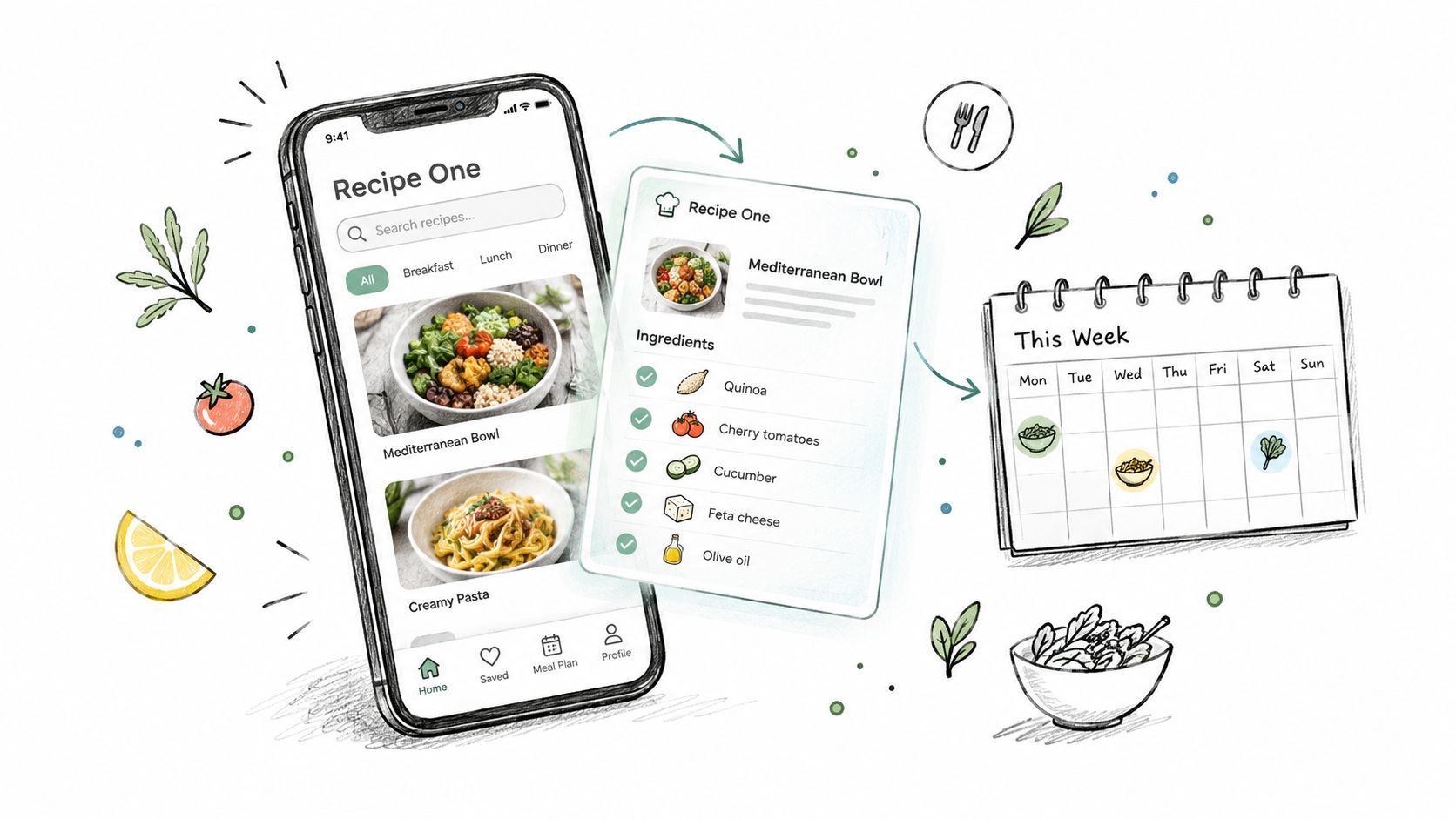
The biggest win is not just list generation. It's the handoff from meal plan to store-ready list without retyping everything. That matters when the week is busy and you don't want to lose momentum because you're still editing ingredients on your kitchen counter. If you need a simpler entry point, the grocery list generator does the same kind of aisle grouping from typed or recipe-based items.
The one thing paper still does better is simplicity. A parent who won't use a phone, a tiny farmers-market run, or a single-item stop does not need a full app workflow. Don't over-engineer a milk run.
For a bigger weekly shop, though, digital wins when it handles recipe-to-list automation and cross-device sync without fuss. If the list is already generating itself from your meal plan, you've cut out the most annoying part of the process.
Stick to the List and Cut Impulse Buys
A written list changes behavior because it forces commitment. Shopping lists work as an external memory system, and the people who write things down tend to buy more of what they intended and less of the random stuff that catches their eye. That's why winging it is expensive. It feels flexible, but it usually just means you're letting the store choose for you.
Store-floor rules that keep money in your pocket
- Eat before you go. Shopping hungry is how you end up “treating yourself” to things you didn't need.
- Enter with purpose. Don't drift through the store like you're browsing a museum.
- Use the list in aisle order. Backtracking wastes time and gives end-cap displays more chances to win.
- Treat every non-list item as a decision. Don't pick it up by accident and call it a choice.
- Never shop without a list. If you forgot the list, go back home or keep the trip tiny.
Once you're in the store, stick to the order you built. That matters because the list isn't just a memory aid, it's a route. The less you wander, the less exposure you give yourself to the “maybe later” stuff stacked at the end of aisles. That's where budgets get sloppy.
If you need to deviate, pause and ask one question, will you use it before it spoils? If the answer is yes, add it to the list with a price so next week's planning has better data. If the answer is no, leave it on the shelf and save the money.
If you want a cleaner way to keep your list organized after that decision, the grocery list organizer approach fits the same discipline. A neat list is easier to follow than a messy one.
Your Weekly Grocery List Rhythm Starting Now
Make this a weekly ritual, not a last-minute scramble. Sunday afternoon is for a 20-minute pantry check and meal planning session. Sunday evening is for generating the list and sorting it by store section. If perishables run short, do one midweek store run. Then on Friday, take 60 seconds and check weekend gaps before they become a surprise.
Track one metric that tells the truth, cost per serving across the week's dinners. If you want a second number, compare items purchased with items used before they spoil. Don't turn this into homework. It's just feedback that tells you which meals are pulling their weight and which ones are wasting money.
A few weeks of that rhythm will show you patterns fast. Some recipes will keep earning their place because they use cheap staples well. Others will get retired because they're expensive, awkward, or always leave you with leftovers nobody wants. That's the point of the system, to make the good choices obvious.
If you want the routine to get easier, keep your meal planning tight and repeatable. A weekly meal planning guide helps keep the whole process grounded in dinners you can actually cook, not ideas that sound better than they shop.
After three weeks, the list starts writing itself, and the store stops feeling like a decision-making marathon. It becomes a 35-minute errand instead of a 90-minute drift.
Recipe One gives you a way to turn saved recipes into a grocery list without retyping everything by hand. If you want your meal plan, pantry check, and shopping list to live in one place, Recipe One is built for that workflow. Start there if you're ready to make your weekly shopping routine less chaotic and a lot more predictable.