The average U.S. consumer loses about $728 a year to food waste, and a four-person household loses about $2,913 a year, according to the EPA. That's not a rounding error, it's the reason grocery bills feel out of control. If you want to know how to save money on groceries, start by treating the grocery list like a control system, not a memory aid.
The problem isn't just that food is expensive. A lot of the money disappears after you've already bought it, then let it sit, spoil, or get buried behind something newer. The fix is simple enough to execute and strict enough to work, plan meals first, turn that plan into one exact list, and shop from that list without freelancing.
If you want a clean starting point, build your grocery habit around a weekly plan and keep a simple method for turning recipes into a shopping list. Recipe One's how to make a grocery list is useful here because the whole point is to stop guessing in the aisle and start buying only what your meals require. For shoppers who also want to compare ingredient choices, how to find a grass fed meat is a reminder that higher quality and tighter buying habits can live in the same kitchen routine.
Why Your Grocery Bill Is Higher Than You Think
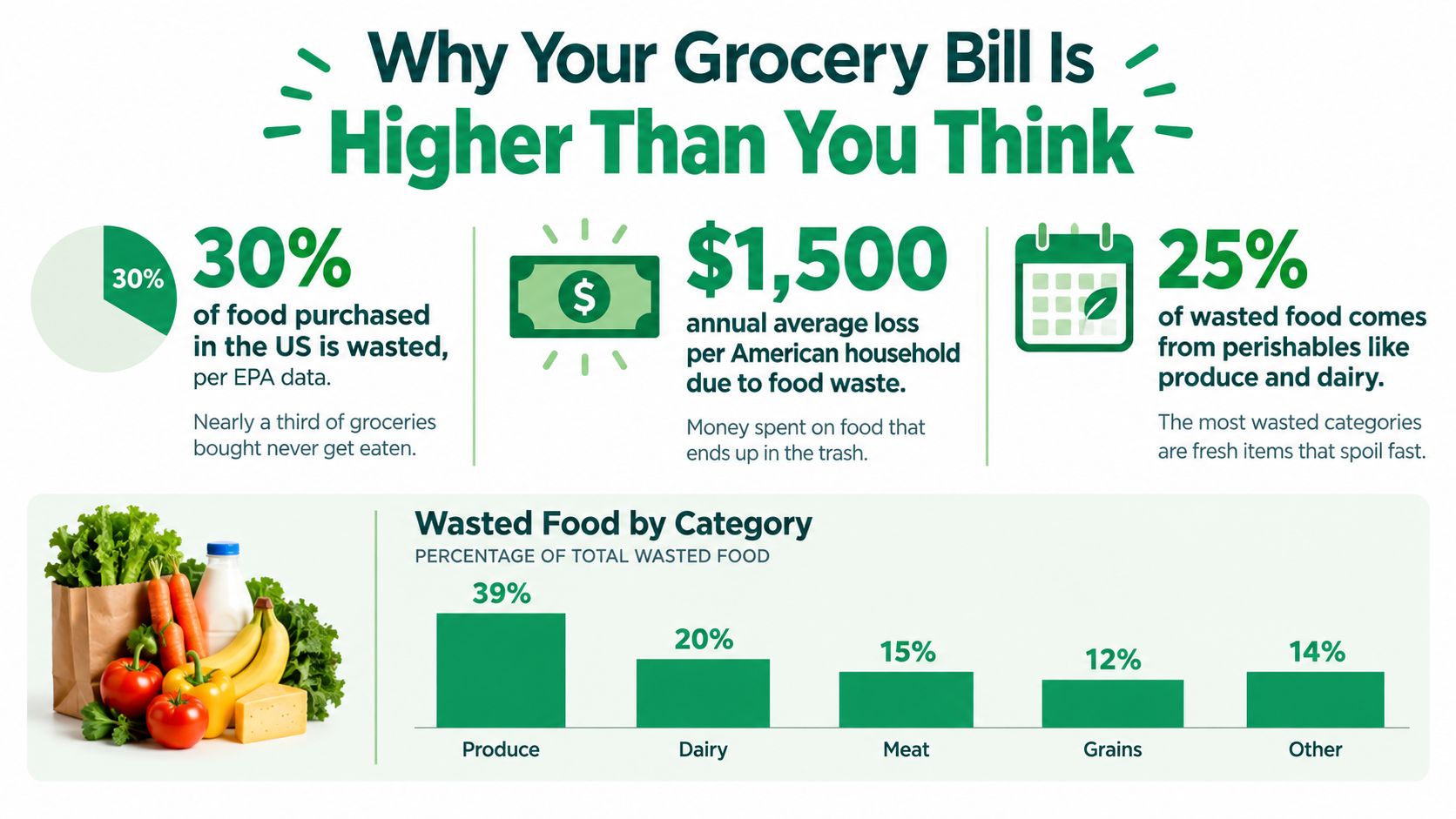
Food waste is where a lot of grocery budgets leak. The USDA estimates that 30 to 40% of the U.S. food supply goes uneaten, and at the retail and consumer levels alone, the estimate was 31% in 2010, equal to about 133 billion pounds and nearly $162 billion of food. That is a grocery problem, not just a compost problem. The practical move is to cut waste before you chase lower prices. USDA food loss and waste overview
Practical rule: the cheapest meal is the one you actually eat.
Meal planning matters because waste adds up fast. The USDA estimates the average American family of four loses about $1,500 a year on uneaten food, and the EPA's more recent estimate puts food waste at $728 per U.S. consumer per year, or about $14 a week. For a four-person household, that EPA estimate is $2,913 a year. Those numbers make the point clearly, controlling waste can save as much as bargain hunting, and often more.
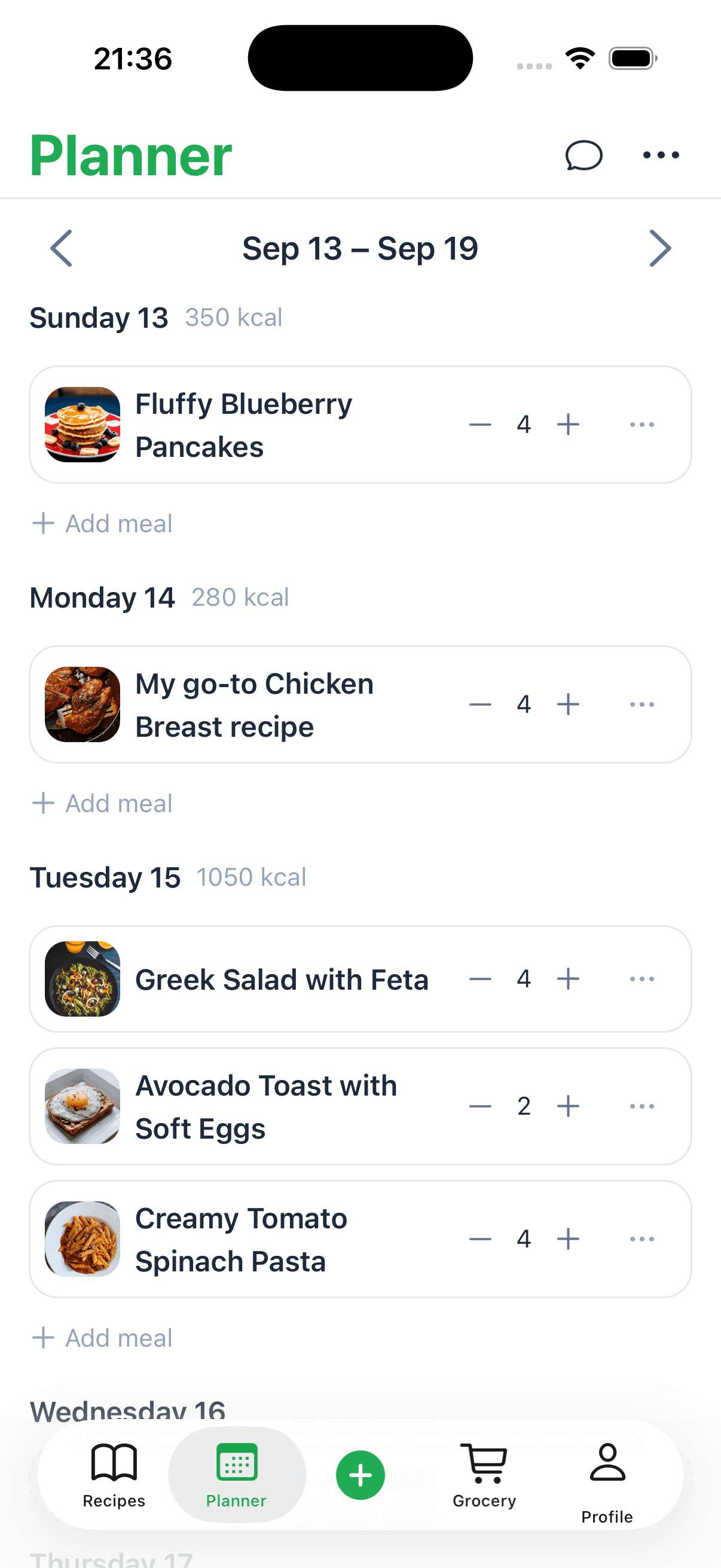
Recipe One fits that approach because it turns saved recipes into a weekly meal plan, then turns that plan into one shopping list. That order matters. Plan first, list second, shop last. If your week starts with half-remembered dinner ideas and ends with limp produce, the plan has already failed before you reach the store.
The other mistake is thinking grocery saving only means buying less. It also means buying with intent. A kitchen routine built around planning, inventory, and a single list gives every dollar a job before it leaves your wallet. A saved-recipe library supports that routine because the best grocery system starts with meals you will cook, not recipes you will bookmark and forget. For a deeper walkthrough of the list part, see the list-building guide linked at the top of this article. If you also want to compare ingredient choices, how to find a grass fed meat shows how quality decisions and tighter buying habits can sit in the same kitchen routine.
The Weekly Planning Workflow That Cuts Overspending
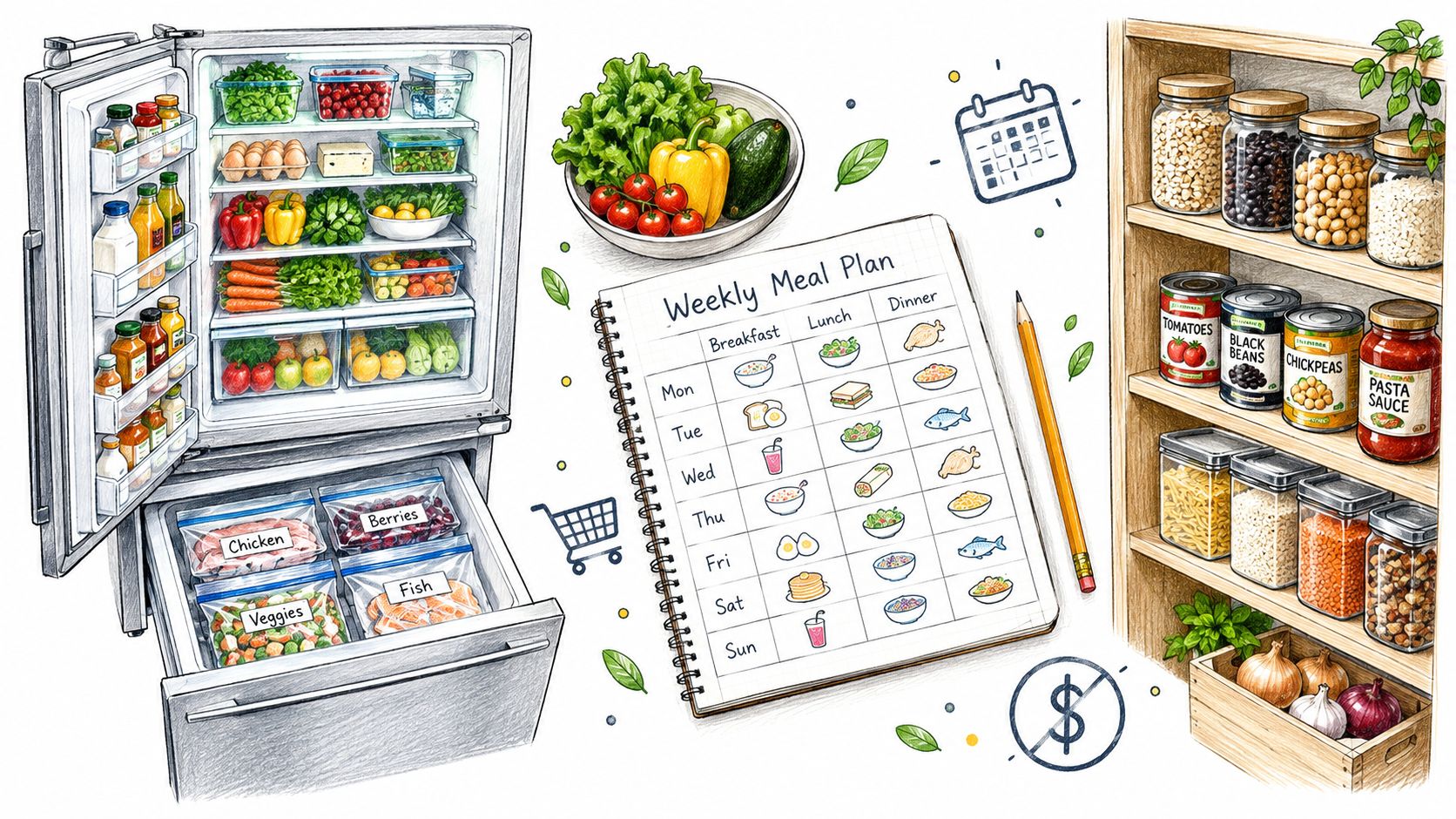
Start with what's already in the kitchen. Check the refrigerator, freezer, and pantry, then write down perishables and use-by dates so the soonest-to-spoil items get used first. That inventory step is what keeps you from buying a second jar, second bag, or second carton of something you already own.
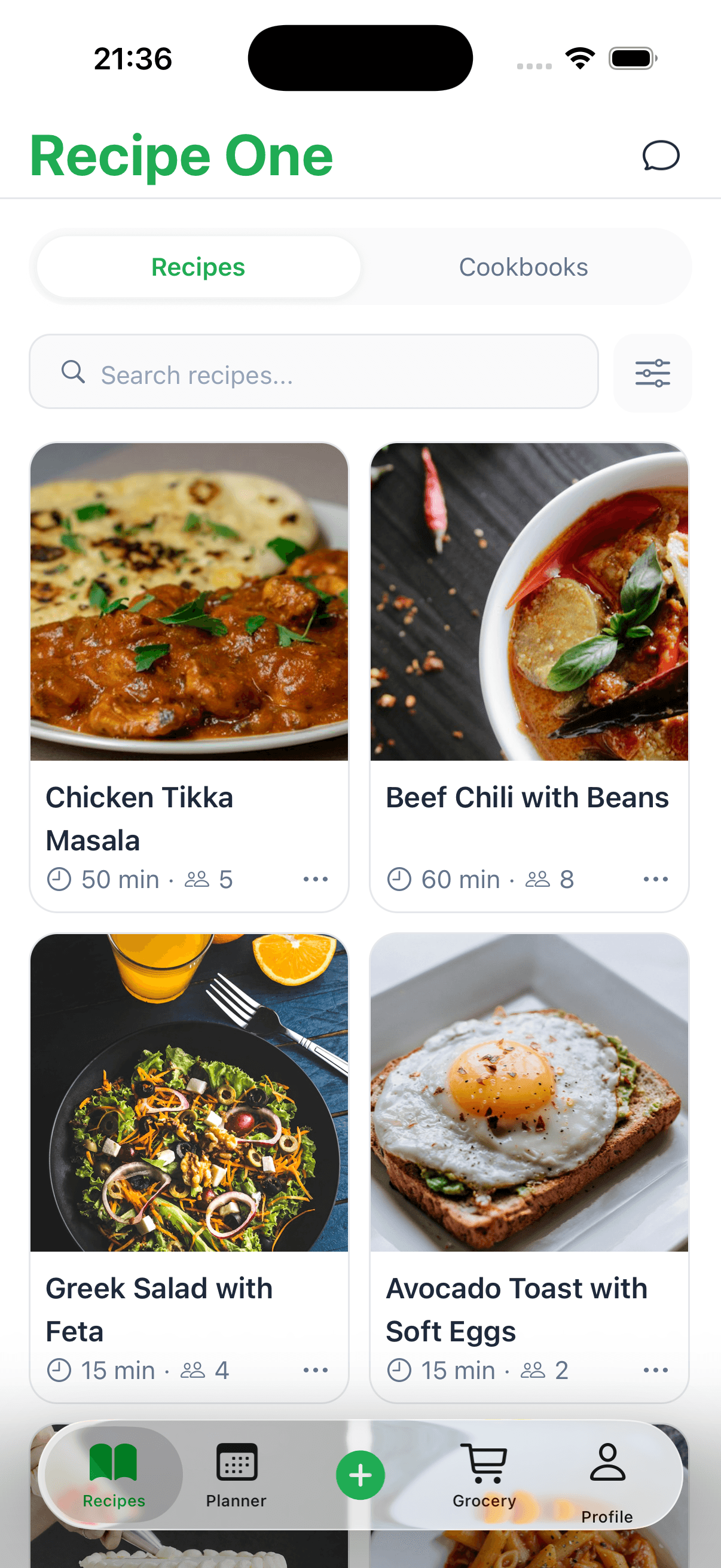
Then pick meals that eat through that stock. Recipe One's saved-recipes library matters here because it lets you pull ideas from TikTok, Instagram, blogs, and websites into one place, then schedule those recipes into the week. That's how you stop treating dinner like an improvisation exercise. It becomes a controlled loop, inventory first, recipes second, list third. If you like this style of routine, weekly meal planner with grocery list on a budget is the right companion read.
USDA guidance is blunt on this point, plan ahead and make a list before shopping, and include the amounts needed for the household so you don't buy more than you need. USDA shopping list guidance That means no aisle-by-aisle inventing, no “I'll remember it later,” and no extra trip because you forgot the onion.
Shop once, then freeze or portion surplus immediately.
The mistakes are predictable. People plan seven brand-new recipes, ignore package sizes, and treat the list like a suggestion. That's how half-used vegetables and duplicate purchases pile up. A tighter routine works better. Five to seven meals, one list, one shop. If you want an example of a simpler household setup, this budget guide for two shows the same logic in a smaller format.
Build a Grocery List That Matches Your Meals
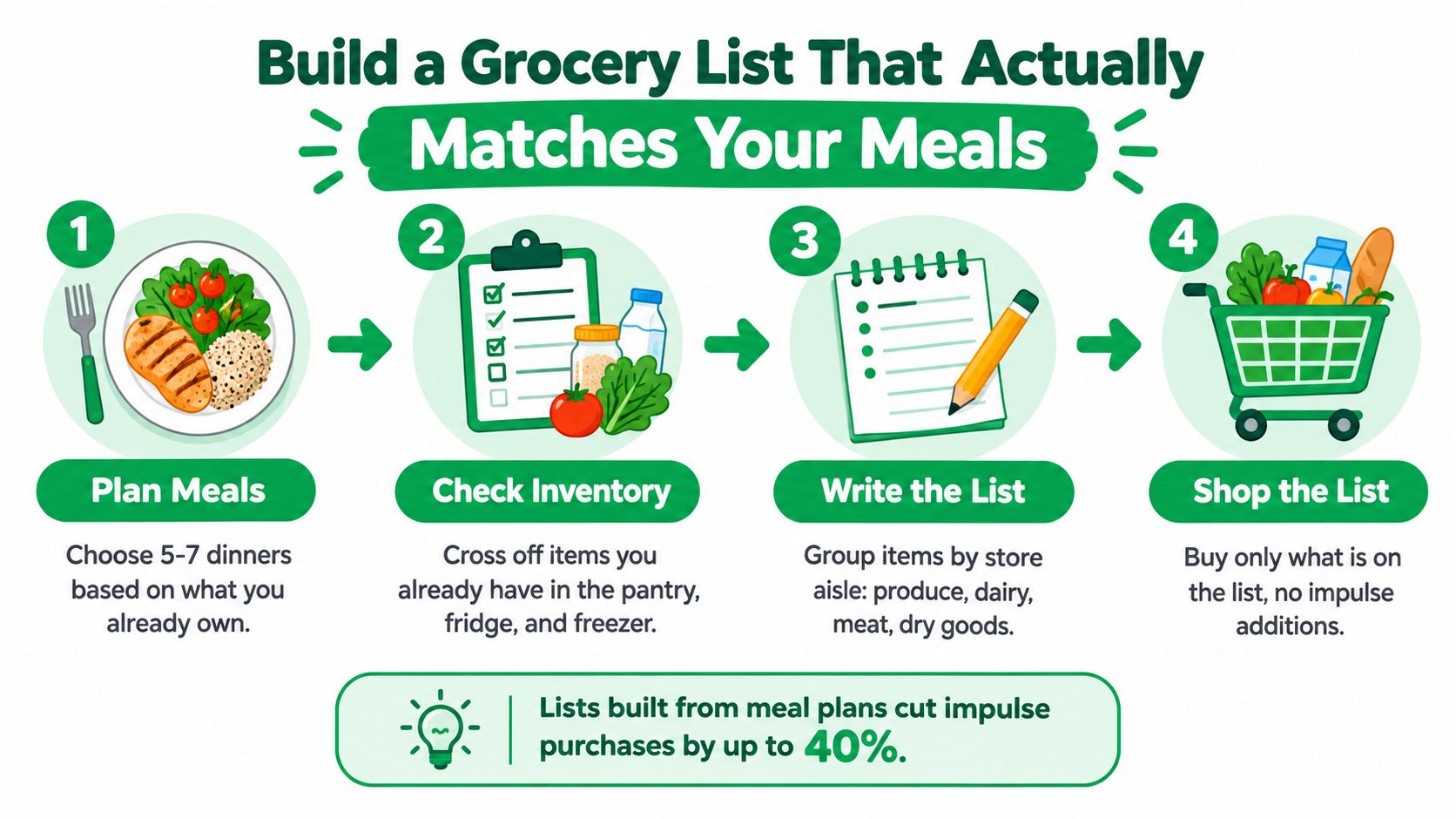
A grocery list saves money only when it tracks the meals you will cook. A random list built in the aisle invites impulse buys, duplicate ingredients, and pack sizes that do not fit the week. A list built from a meal plan does the opposite. It tells you what to buy, how much to buy, and what you can skip because it is already in the kitchen.
Combine the ingredients first
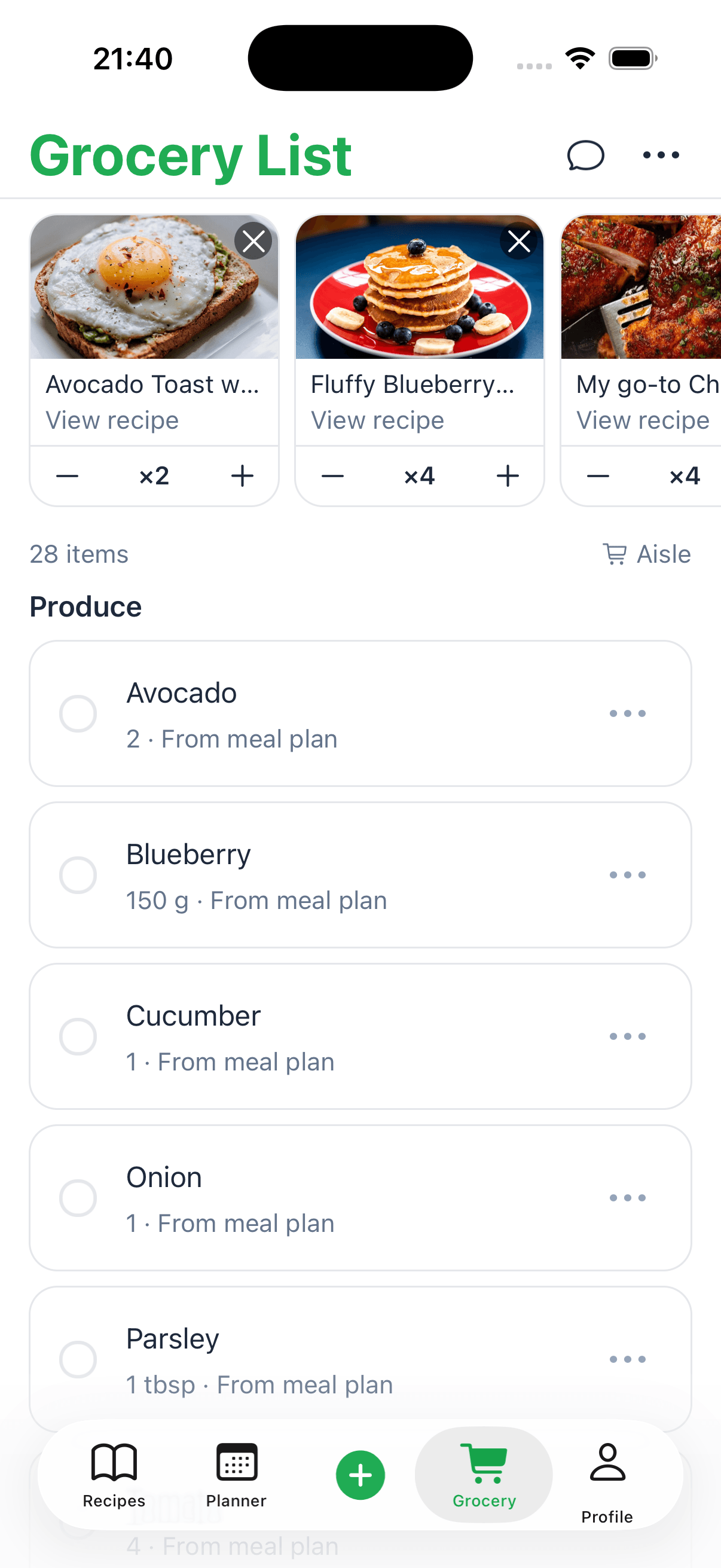
Start by merging every planned meal into one list. If three recipes call for onions, write one onion entry with the total amount, not three separate reminders buried in notes and screenshots. That is the point of Recipe One's grocery-list generator from recipes, it turns separate meal ingredients into one shopping list you can use.
Use what you already have before you buy more
A half-full fridge and an empty plan waste money fast. Use the ingredients you already own first, then build recipes around them. That approach turns existing food into meals instead of letting it sit until it becomes waste.
USDA gives the same practical advice with a simple example, if a recipe needs one tomato, buy loose produce instead of a bundled pack so you do not bring home more than you need. USDA on buying the right amount That is the rule to follow, buy the quantity the meal requires, not the quantity the package pushes.
A good grocery list is short because it is accurate. Group items by aisle, write the amounts, and keep the list tied to the week's meals. That keeps the cart aligned with the plan instead of drifting into extras.
Reading Unit Prices and Swapping Categories Without Losing Nutrition
Sticker price is the wrong lens. The better lens is effective cost, the price paid divided by the edible servings you eat. A cheaper pack is not cheaper if half of it spoils, gets trimmed away, or never gets cooked. That's why a modestly priced ingredient used across multiple meals can beat a bargain that dies in the back of the fridge.
USDA food-at-home prices climbed unevenly in recent years, 11.4% in 2022, 5.0% in 2023, and 1.2% in 2024, compared with a 20-year historical average of 2.7% per year. In 2024, beef and veal rose 5.4%, while fish and seafood fell 1.9% and dairy fell 0.2%. USDA food-at-home price changes That unevenness is the point. You don't need a perfect budget, you need a flexible one.
Make swaps that lower cost without wrecking the menu
Use store brands for shelf-stable staples when quality is acceptable. Choose dried beans instead of canned when you'll cook them ahead and use them across several meals. Buy whole produce instead of pre-cut when you're willing to do a little trimming. Pick seasonal produce over out-of-season produce when the recipe allows it. These aren't heroic sacrifices, they're ordinary substitutions that protect the budget without making dinner miserable.
Here's the rule that keeps the math honest:
Compare meals by what they cost per eaten serving, not by what the label says at checkout.
That mindset also helps with protein. If a planned week includes several meals with the same ingredient family, the plan can flex toward cheaper categories when prices move. If one protein jumps and another softens, shift the menu. Don't cling to a favorite recipe like it's sacred. Grocery saving rewards flexibility.
Bulk Buys, Sales, and Other Traps That Quietly Drain the Budget
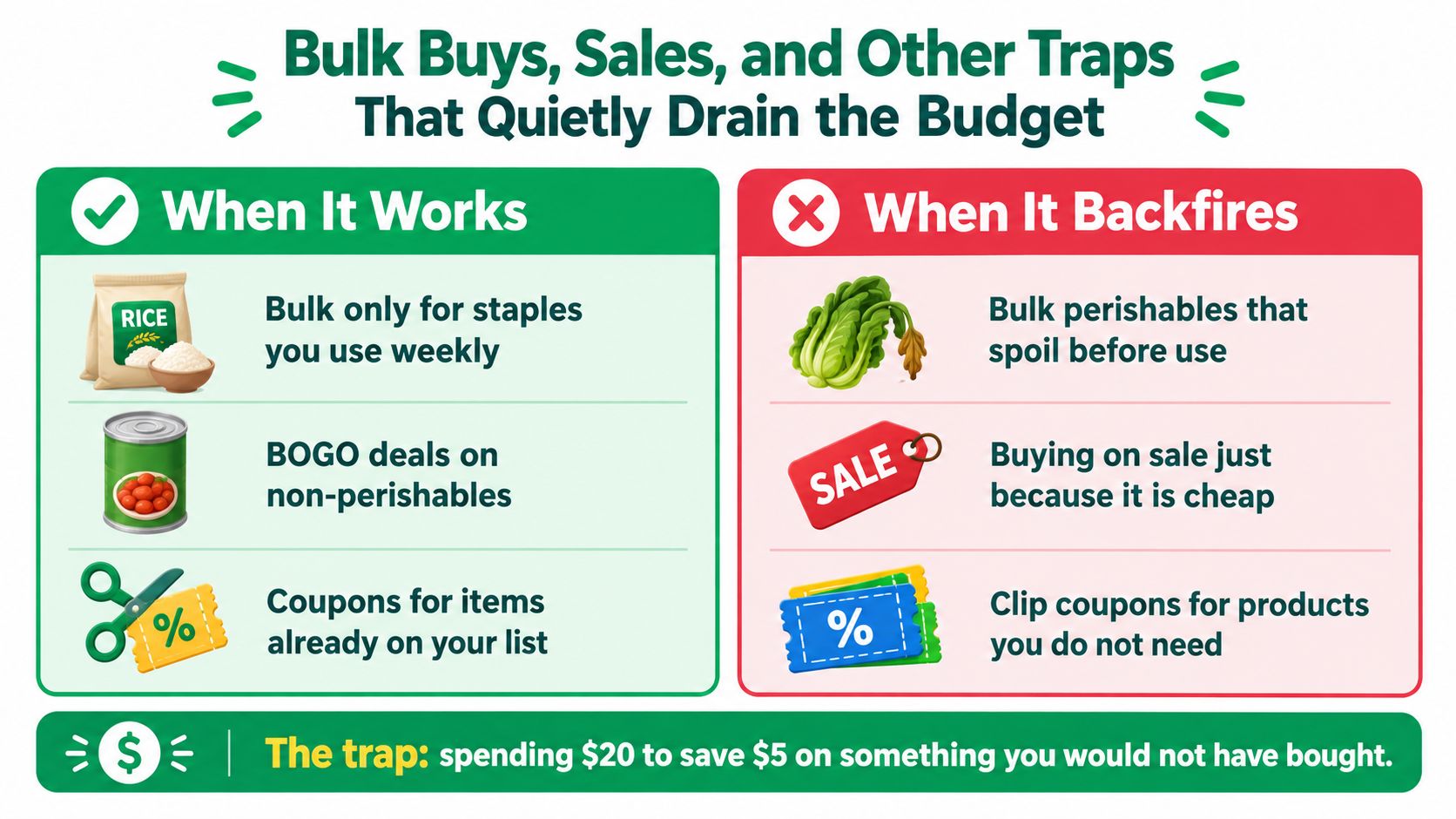
Bulk deals look smart because the shelf tag is smaller, but grocery waste doesn't care about shelf tags. Research on household food waste identifies buying in bulk and preparing too much food as behaviors that can increase waste, while inventory checks, lists, and freezing leftovers reduce it. The same study estimated average welfare gains of $9.96 per week when food waste fell 7.5%. Study on food waste and household welfare That's not a promise for every kitchen. It's a useful benchmark that says the savings come from eating what you buy.
When bulk actually works
Bulk makes sense only when three things line up, you use the ingredient often, you have storage space, and the item fits the weekly meal plan. That's why long-lasting pantry staples and frozen items can make sense, while random oversized perishables usually don't. The same logic applies to sales. Buy the discount only if it belongs to a planned meal.
When the deal is fake
A sale item that doesn't get eaten is still money gone. A cheap food that sits unused costs more than a pricier ingredient that gets used in two or three meals. That's the contrarian rule people need to hear, the most expensive item is often the one you waste.
Receipts should get audited against the plan. If it wasn't on the list, ask why it came home. This is also where larger buyers sometimes need a different frame, and bulk buying thresholds for caterers is a useful contrast because professional kitchens buy against known consumption, not mood and aisle pressure.
A Sample Week Built Around Overlapping Ingredients
A budget week works because ingredients do repeat. Start with one roast chicken, a bag of greens, a loaf of bread, and a can of beans, then stretch them across several meals. That overlap keeps the list tight and turns leftovers into a plan.
Monday can be roast chicken with greens. Tuesday can become chicken sandwiches. Wednesday can use the remaining meat in a grain bowl or soup. Thursday can rely on beans for a fast dinner, then Friday can use the last bread with eggs or a simple toast meal. The exact recipes matter less than the pattern. One purchase should carry multiple meals.
Leftovers need rules, not optimism. Store them in small portions in shallow containers, label them with the contents and date, refrigerate them, and use them within 3 to 4 days or freeze them right away, following FoodSafety.gov leftover storage guidance. That keeps a planned week from turning into spoiled food.
A saved-recipe library makes this easier. Tag a leftover like “use up roast chicken,” then pull recipes that fit what is already cooked. Make-ahead freezer meals is a useful next read if you want to turn extra food into future dinners instead of fridge clutter.
Leftovers aren't extra work when they already have a destination.
The point is simple. When the week is built around overlapping ingredients, the kitchen runs leaner, the cart shrinks, and dinner stops demanding a fresh decision every night.
Your Sunday Reset and a One-Week Savings Checklist
Run the same routine every Sunday. Inventory the fridge, freezer, and pantry. Pick 5 to 7 saved recipes that share ingredients. Drop them into the weekly meal plan. Generate one combined grocery list. Shop once. Portion leftovers the moment you get home.
If you want the structure to stay usable, keep your recipes organized instead of scattered across apps and screenshots. A personal library makes it easier to reuse what already works, and a weeknight plan built from saved recipes keeps the list connected to actual dinners. For more on that setup, read pantry inventory app and weeknight dinners from saved recipes.
Recipe One is built for that routine, it saves recipes from social posts, videos, blogs, and websites, lets you plan the week from those saved recipes, and turns them into one grocery list based on what the meals need. If you want the habit to stick, download it from the App Store or Google Play and make your grocery list before you leave the house.
If you're tired of grocery runs that drift off-script, use Recipe One to build your week from saved recipes, turn that plan into one grocery list, and shop with fewer mistakes. It gives you a cleaner way to plan meals before shopping and a better way to cook with what you already have. Start there, and the cheapest meal becomes the one you meant to make.