Before you can even think about those pretty matching containers, you have to get real about what’s actually in your pantry. The first, non-negotiable step is to empty it out completely. Yes, everything.
Start Fresh by Clearing Everything Out
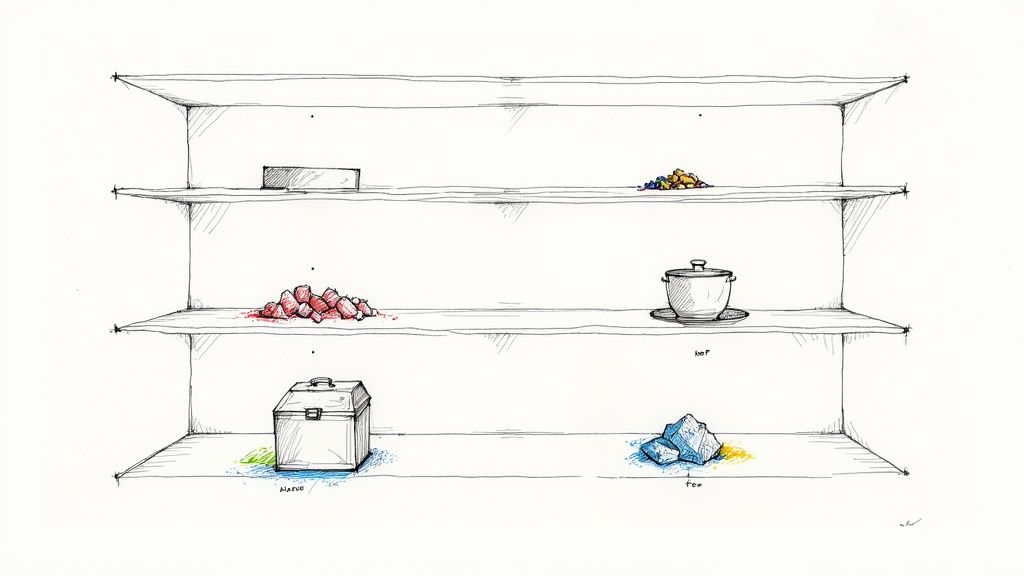
I know it sounds like a huge pain, but pulling every last can, box, and bag onto your kitchen counter is the only way to see what you’re really working with. Just shifting things around on the shelves is a recipe for failure. You need a clean slate.
Sort Everything Into Four Piles
As you pick up each item, make a quick decision. Don't overthink it! Just sort everything into one of these four piles to keep the momentum going.
- Keep: The stuff you actually use, that’s still fresh, and that you know you’ll reach for.
- Toss: Anything that's expired, stale, or looks even a little bit sketchy. Seriously, when in doubt, throw it out. It's important to know what happens if you eat mold to avoid any nasty surprises.
- Donate: Those unopened, non-perishable items you bought on a whim but will never use. That can of artichoke hearts from three years ago? Someone else will be thrilled to have it.
- Relocate: This is for all the random things that ended up in the pantry but don't belong there—batteries, lightbulbs, the dog’s medicine, you name it.
This is your chance to be ruthless. That fancy jam you got in a gift basket two holidays ago? If it’s still sitting there, you’re not going to use it. Those four half-empty bags of quinoa? Combine them into one container.
The point here isn't just to make it look neat for a week. It’s about creating a truly functional space filled only with food you love and will actually cook with. A decluttered pantry makes meal prep feel less like a chore.
And you're not alone in wanting a more organized kitchen. The global market for kitchen pantry organizers was projected to reach USD 6.4 billion in 2024. It just goes to show how many of us are craving a more streamlined system at home.
By starting with a complete purge, you’re setting yourself up for a pantry that stays organized for good, not just for an afternoon.
Create Smart Zones That Fit Your Lifestyle
Now that you've whittled everything down to the essentials, it's time for the fun part: arranging it all in a way that actually makes sense for how you cook. This is where you go from just having a pantry to having a functional system. We're going to set up smart zones that make finding ingredients second nature.
Think about your daily rhythm. Are you a smoothie-every-morning person? Then let's create a "Breakfast Station" with your blender, protein powder, oats, and seeds all grouped together. If you're packing school lunches every day, a "Quick Lunch" bin with bread, peanut butter, and grab-and-go snacks can be an absolute game-changer.
Find Your Zoning Strategy
The whole idea here is to group items by how you use them, not just by what they are. This simple shift stops the frantic search for that one can of tomatoes and makes pulling together a meal feel effortless. A few popular ways to do this are:
- Zoning by Meal Type: This is my personal favorite for busy weeknights. Think of a "Pasta Night" basket with different noodles, jars of sauce, and canned tomatoes all in one spot.
- Zoning by Food Group: This is the classic approach—all your grains live together, all canned goods are buddies, and every snack has its own designated area. It's simple and effective.
- Zoning by Frequency: The most-used items get prime real estate at eye level. Those specialty spices or baking ingredients you only use a few times a year? They can go on the higher or lower shelves.
This chart breaks down how easy each strategy is to maintain, which can help you figure out the best fit for your own cooking style.
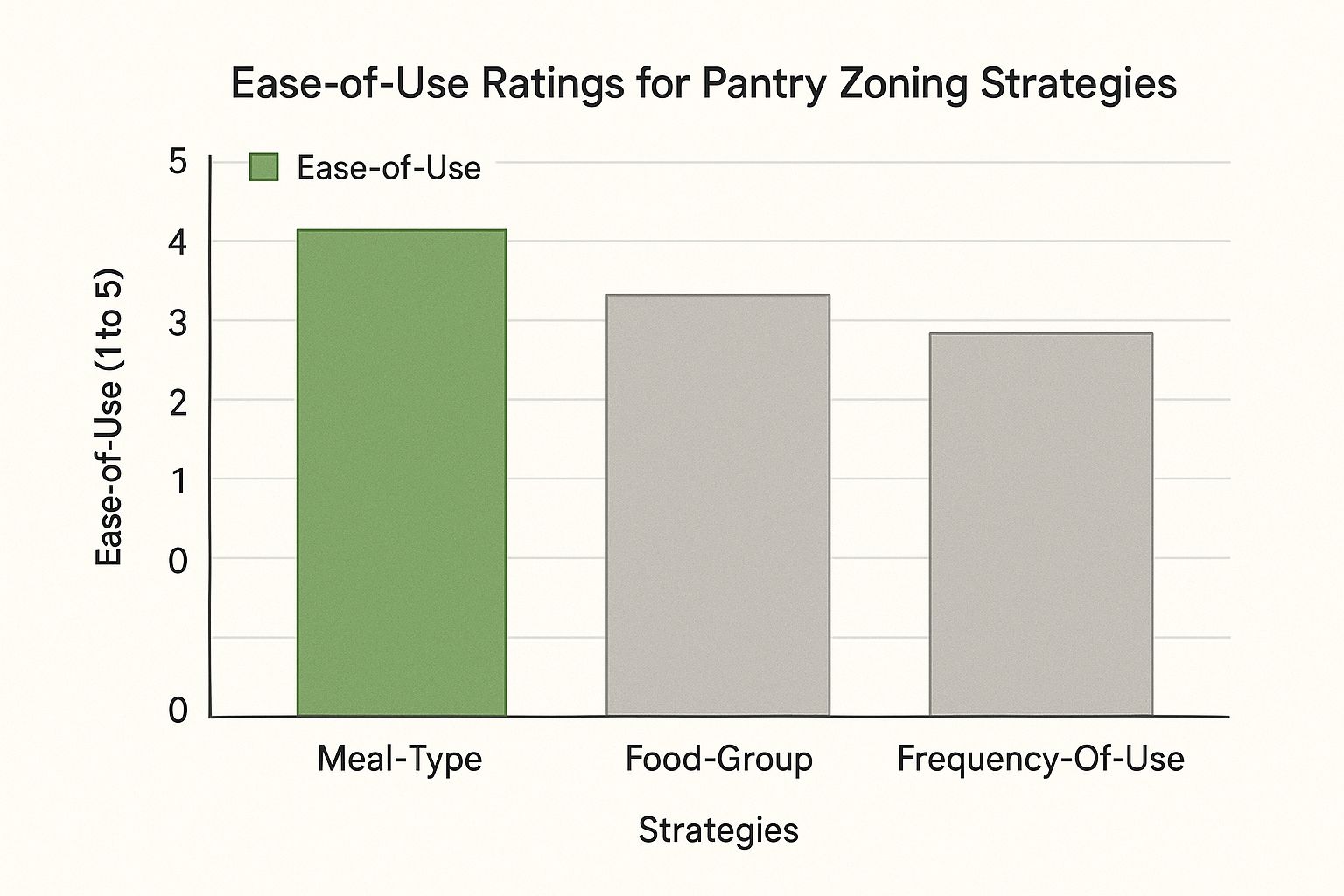
As you can see, organizing by meal type often feels the most intuitive for day-to-day cooking, but the traditional food-group method is a very close second.
It’s no surprise that people are getting serious about kitchen functionality. The global kitchen storage industry was valued at over USD 131 billion in 2023, showing just how much we all want our spaces to work better for us.
By creating these logical zones, you're not just tidying up; you're designing a system that anticipates your next move in the kitchen.
This is a lot like how you might organize your recipes. In fact, if you want more ideas on this, check out our guide on how to categorize recipes for easy access. The same logic of grouping by cuisine or meal type works perfectly for your pantry, too.
Choose Organizers That Actually Work
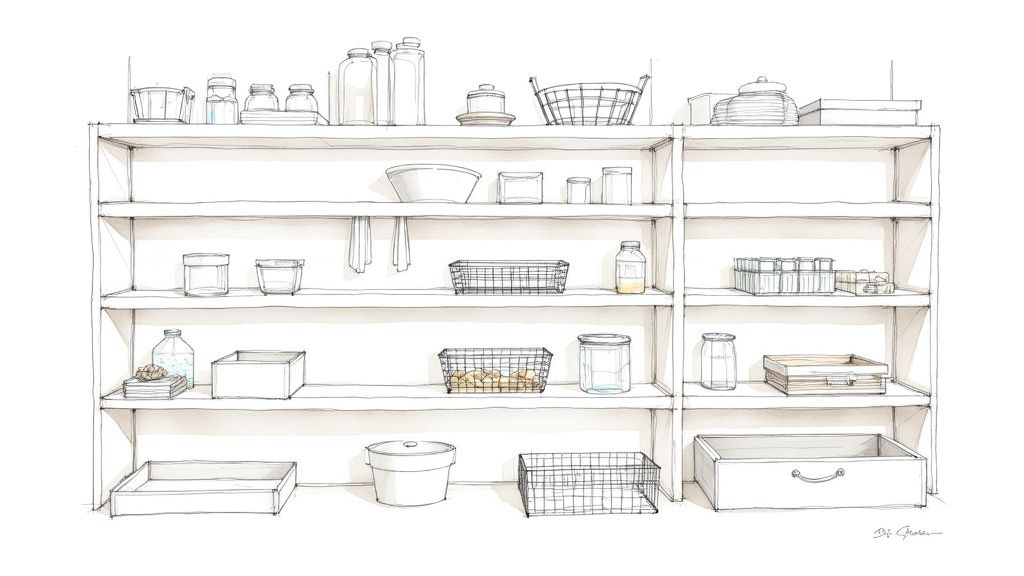
Now for the fun part: picking out the gear. With your zones mapped out, it’s time to choose the containers and organizers that will bring your system to life. The right tools aren't just for looks—they're what create a functional framework that practically maintains itself.
The best material really boils down to what you need to see and what you'd rather hide. I'm a huge fan of clear plastic or glass containers for dry goods like pasta, grains, and cereal. This is a little trick called decanting, and it's brilliant. You can see exactly what you have at a glance, food stays much fresher, and you'd be amazed how much space you save by ditching all that bulky packaging.
But for things you don't need to see—like half-eaten bags of chips or those random snack bars—solid bins or woven baskets are your best friends. They instantly cut down on visual noise while keeping like-items together. Wire baskets are another solid choice, especially for produce like onions and potatoes that need good airflow.
Smart Solutions for Tricky Spaces
Every pantry has those annoying spots. You know the ones I mean—the super deep shelves where jars go to die, or that awkward corner that’s basically a black hole. The goal is to make every single inch of that space earn its keep.
- Turntables (Lazy Susans): These are absolute game-changers for corner shelves. With a simple spin, everything hidden in the back comes right to the front. No more discovering an expired jar of artichoke hearts from three years ago.
- Tiered Shelves: If you have a lot of canned goods, you need these risers. They let you see every single label without having to unstack a wobbly tower of cans just to find the chickpeas.
- Pull-Out Bins: For those really deep shelves, think of long, narrow bins as little drawers. I like to group all my baking supplies (flour, sugar, vanilla) in one and just slide the whole thing out when I need it.
To help you decide, here’s a quick breakdown of the most common organizers and what they're best for.
Pantry Organizer Comparison
| Organizer Type | Best For | Material | Pro Tip |
|---|---|---|---|
| Clear Canisters | Dry goods (flour, pasta, rice, cereal) | Glass, Acrylic, Plastic | Get containers with airtight seals to maximize freshness. Square shapes are more space-efficient than round ones. |
| Woven Baskets | Packaged snacks, bread, backstock items | Rattan, Seagrass, Fabric | Label the front of each basket so you don't have to pull it down to see what's inside. |
| Wire Baskets | Root vegetables (potatoes, onions), produce | Metal | The open-wire design promotes airflow, which helps produce last longer. Avoid storing onions and potatoes together! |
| Turntables | Oils, vinegars, jars, condiments | Plastic, Wood | Perfect for making corner shelves and deep cabinets fully accessible. Just spin to win. |
| Tiered Risers | Canned goods, spices, small jars | Plastic, Metal, Wood | Instantly creates stadium-style seating for your cans, so nothing gets lost at the back. |
| Pull-Out Bins | Deep shelves, backstock, grouped items | Clear Plastic | Measure your shelf depth carefully to get bins that fit just right, maximizing your storage. |
Choosing the right organizers is about finding the perfect match for both your pantry's layout and the items you store.
Investing in a few quality organizers that fit your specific pantry and lifestyle is one of the smartest moves you can make. It’s the difference between a pantry that looks organized and one that truly is organized.
Think about it this way: organizers are the skeleton of your pantry system. They give everything structure and a designated home, which is the secret to keeping things tidy for the long haul.
Design a Layout for Real-Life Use
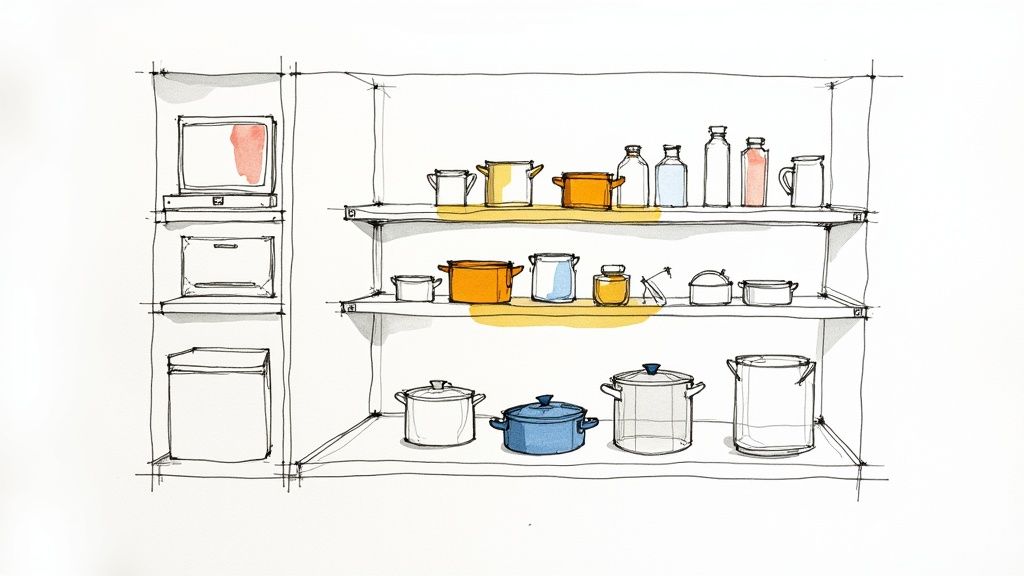
Now that you have your zones mapped out and your bins and baskets ready, it’s time for the fun part: putting everything back. But this isn't just about cramming things in; we're going to be strategic. The goal is to create a pantry that genuinely makes your daily life easier.
Think of your pantry shelves like a grocery store. The most expensive, high-demand items are always placed at eye level. This is your "prime real estate." Anything you grab daily—your morning cereal, the olive oil for cooking, the kids' favorite after-school snacks—belongs right here.
Placing your go-to items between your shoulders and knees means no more awkward reaching or bending for things you use constantly. It’s a simple shift, but it’s the core principle of a pantry that works for you, not against you.
Master Your Vertical Space
With your everyday essentials in their prime spot, everything else can fall into place around them. It’s all about working smarter, not harder.
- Up Top: The highest shelves are perfect for things that are light but rarely used. I'm talking about holiday cookie cutters, that extra roll of paper towels, or maybe a specialty cake pan you only pull out once a year.
- Down Low: The bottom shelves should be reserved for your heaviest, bulkiest items. Think big bags of flour, pet food, cases of seltzer, or that stand mixer you don't use every single day. This makes them easier and safer to get out.
- The Kid Zone: If you have kids, dedicate a low, easily accessible shelf just for them. Stock it with parent-approved snacks and juice boxes. It gives them a little independence and keeps sticky fingers out of the pantry items you want to protect.
This kind of logical placement is what makes an organization system stick. When every item has a designated home based on how you actually live, keeping it tidy becomes almost effortless. A well-organized pantry also makes meal planning a breeze. For more on that, check out our guide on how to plan weekly meals.
The key is to turn your pantry from a simple storage closet into a functional extension of your kitchen workflow. Everything should be exactly where you expect it to be.
This push for efficiency isn't just a trend; it's a movement. The kitchen storage market is expected to grow to around USD 15 billion by 2025, a clear sign that people everywhere are craving more streamlined, functional homes. You can find more about these market trends on datainsightsmarket.com.
Simple Habits to Keep Your Pantry Organized
So, you’ve put in the work and your pantry looks incredible. The real trick, though, is keeping it that way. Don’t worry, this isn’t about another massive overhaul. Maintaining that beautiful order comes down to a few small, consistent habits that stop the clutter from ever creeping back in.
One of the best habits I’ve ever adopted is the 'one-in, one-out' rule. It’s incredibly simple: before you put away a new bag of rice, you make sure the old one is either used up or combined into the new container. This single trick is a game-changer for preventing that classic pantry chaos of duplicate, half-empty boxes.
Adopt a Quick Reset Routine
To keep your system from slowly unraveling, try scheduling a super-quick 10-minute pantry reset once a month. Think of it as a tune-up, not a deep clean.
- Quickly straighten up any containers or cans that have gone rogue.
- Give the shelves a fast wipe-down, especially where you might have spilled some flour or sugar.
- Scan for anything that’s running low and add it to your shopping list right then and there.
This tiny bit of effort is your secret weapon against big messes. It keeps everything functional and saves you from facing a major reorganization project a few months down the line.
Here's a tip I swear by: hang a small whiteboard or notepad on the inside of your pantry door. The moment you use the last of the olive oil or grab the final tea bag, jot it down. This creates a live shopping list and virtually guarantees you'll never forget the essentials again.
A pantry inventory app can track those staples between resets.
This little habit also makes meal planning a breeze, a skill you can sharpen even more with some of the top recipe apps out there. Ultimately, these are the simple secrets to long-term pantry organization that save you both time and money.
Answering Your Top Pantry Organization Questions
Even the best-laid plans can hit a snag. As you start organizing, you'll probably run into a few tricky situations. Let's tackle some of the most common questions I hear from people trying to get their pantries in order.
How Do You Deal With a Small or Deep Pantry?
Small pantries force you to think vertically. I always tell people to look up! Use stackable bins to take advantage of the full height of each shelf, and don't forget about over-the-door organizers—they're a lifesaver for small snacks, spices, and jars.
Deep pantries, on the other hand, can feel like a black hole where food goes to be forgotten. The trick here is making the back of the shelf just as accessible as the front. I swear by clear, pull-out bins and lazy susans (turntables). They let you bring everything from the back to the front without having to dig through a mountain of cans.
Should I Really Decant Everything?
This is a big one, and my answer is: it depends. Decanting things like pasta, flour, rice, and cereal into clear, airtight containers is a game-changer. It not only keeps food fresher for longer but also gives you an instant visual of what you have, which helps prevent overbuying.
But don't feel pressured to decant everything. It’s often more practical to keep individually wrapped snacks or canned goods in their original packaging, maybe grouped together in a larger bin. And speaking of cans, if you ever find yourself with a stubborn one, we can even show you how to open a tin without a can opener.
The secret to a pantry that stays organized is finding a system that’s genuinely easy for you to maintain. If a habit feels like a chore, you’re not going to stick with it.
What's the Best Way to Keep It Tidy Long-Term?
It all comes down to building a few simple habits. The most important one is to always put things back where they belong. It sounds obvious, but it makes all the difference.
Before you head to the grocery store, take a quick peek in the pantry to see what you actually need. This alone will cut down on clutter from duplicates. Finally, I recommend scheduling a quick 10-minute pantry reset once a month. Just straighten up, wipe down any spills, and do a quick check for anything nearing its expiration date. This small time investment prevents a little mess from snowballing back into total chaos.