A family of four can spend roughly $1,374 per month on groceries, while the average household spends about $438 per month, according to food-spending guidance from Family Credit. That's why a weekly meal planner with a grocery list on a budget isn't just a nice organizational habit. It's a practical way to stop random purchases, forgotten ingredients, and last-minute meals from draining the food budget.
The system below starts with the spending cap, not the recipes. You'll build meals around ingredients you already own, track an estimated basket total, and change the plan in the store when prices or substitutions threaten the limit. The result is a flexible plan that works in an ordinary week, including the Tuesday when dinner needs to be quick and the grocery shelf doesn't match your list.
Why a Weekly Meal Planner Saves Real Money
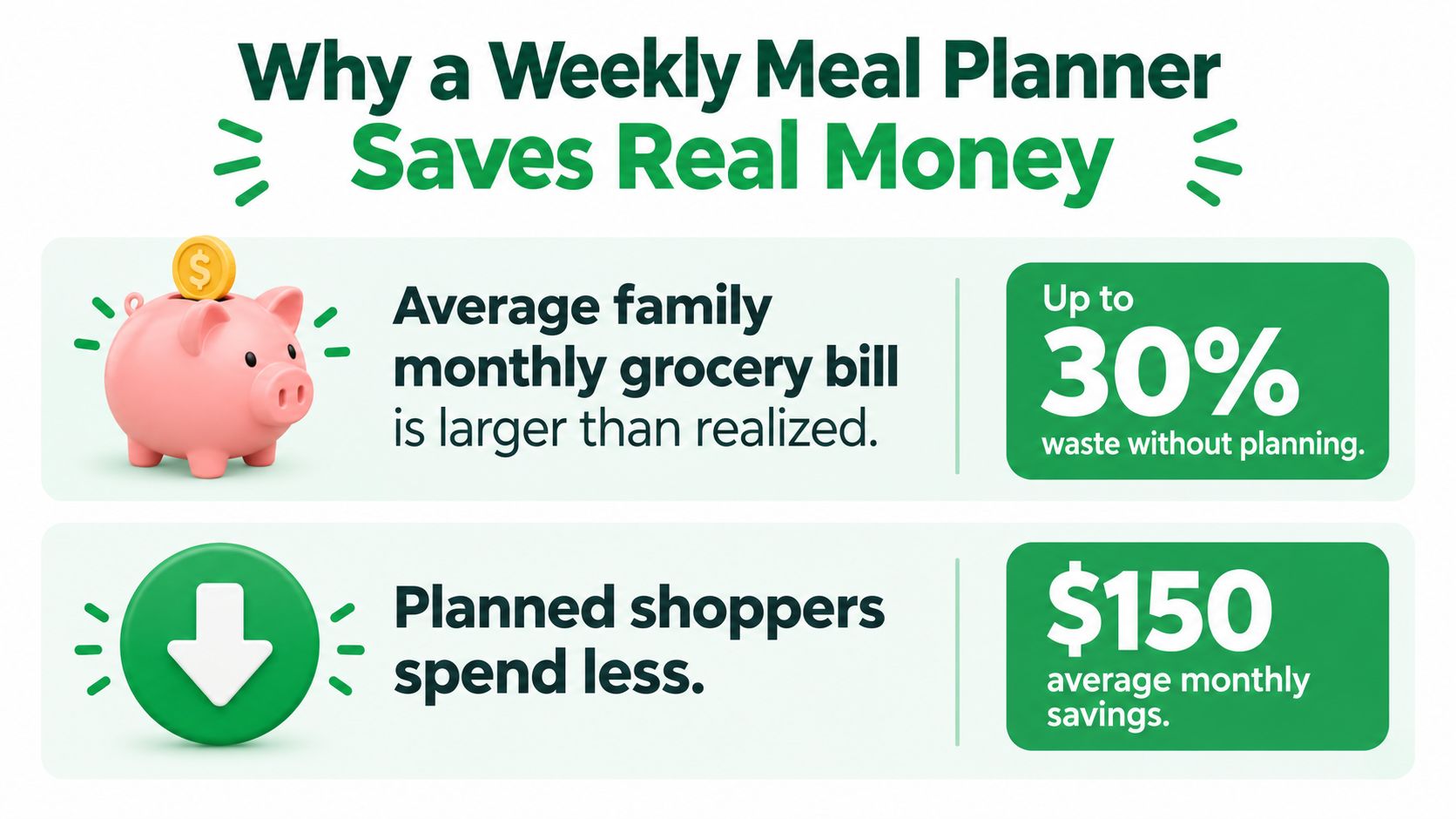
Meal planning can reduce food spending by about 15% to 20%, while a widely used budgeting rule places groceries at roughly 10% to 15% of take-home pay, according to this food-budgeting reference. The savings come from controlling decisions before the shop, not from choosing the cheapest recipe every night.
Unplanned shopping creates small, expensive mistakes. You buy milk, respond to a discount display, add ingredients for a meal you may not cook, and return home without a clear use for part of the basket. By the end of the week, those disconnected items still do not make dinner, so another shop or takeaway order fills the gap.
A written plan gives each purchase a purpose. Check the pantry, fridge, and freezer first, then build meals around ingredients already available. Rice, beans, frozen vegetables, or half a jar of sauce can anchor dinner instead of becoming duplicate purchases.
Planning controls the cart
A grocery list without prices can still break the limit. Give every ingredient a meal, write down its expected price, and add the list before leaving home. This grocery-list method can help organize the list, but the running total is what keeps the plan connected to the budget.
Set category caps for proteins, produce, grains, chilled items, and pantry goods. Leave a small amount uncommitted for price changes. While shopping, update the basket total after each category rather than waiting for checkout. If chicken costs more than expected, switch to beans or eggs, remove a snack, or replace a side with an item already at home. That mid-shop adjustment protects the weekly plan when shelves, substitutions, or price spikes do not match your estimates.
Food waste adds another cost. The U.S. Environmental Protection Agency's guidance on preventing wasted food states that one-third of food in the United States goes uneaten, and an average family of four spends almost $3,000 per year on food that is never eaten. Planning portions, assigning leftovers to another meal, and using partial ingredients help prevent food from becoming wasted spending.
The working sequence is simple: set the cap, assign category limits, choose overlapping meals, price the list, and track the basket in the store. A plan that can change before checkout saves more reliably than one that only looks affordable on paper.
Setting Your Weekly Food Budget Before You Plan
The most expensive planning mistake is choosing recipes first. A recipe can look affordable on its own and still push the whole week over budget when several meals require separate proteins, sauces, herbs, and specialty ingredients.
Set the weekly ceiling before choosing dinner. The USDA Thrifty Food Plan is a useful lower-cost benchmark because it underpins SNAP calculations. Independent summaries place the 2026-dollar target at roughly $60 to $75 per adult per week, as outlined in this 2026 budget-planning reference. Treat that figure as a planning reference, not a universal prescription. Your household may need to account for dietary requirements, local prices, children's appetites, or meals eaten outside the home.
Build category envelopes
Once you choose the cap, divide it into spending envelopes. You don't need separate cash envelopes, but the categories should be visible on paper or in a spreadsheet.
| Category | Share of budget | Example line items |
|---|---|---|
| Proteins | Largest planned share | Eggs, beans, lentils, chicken, canned fish |
| Grains and filling bases | Steady core share | Rice, pasta, oats, potatoes, tortillas |
| Produce | Flexible seasonal share | Onions, carrots, cabbage, greens, frozen vegetables |
| Dairy and chilled items | Controlled support share | Milk, yogurt, cheese |
| Pantry and flavor | Small maintenance share | Tomatoes, broth, spices, sauces |
| Buffer | Reserved before shopping | Sales, substitutions, price changes, waste |
The category amounts don't need to be mathematically perfect. They need to answer a shelf-level question: if the chicken costs more than expected, can you still afford it, or should dinner use lentils instead?
Keep a small buffer
The budget guidance linked above recommends reserving a 5% to 10% buffer for sales and waste. That reserve gives you room to handle a different package size, a missing store-brand item, or a small price increase without raiding another category.
Write the buffer into the plan before selecting meals. If you spend it on an impulse purchase, it's gone. If you don't use it, carry the difference into the next shop or use it to replenish a staple.
Practical rule: A recipe only belongs on the plan after its ingredients fit inside the category envelopes.
For a household with a strict limit, plan the cheapest meals first and leave the most flexible meal for the end. Beans, eggs, lentils, rice, potatoes, and frozen vegetables can absorb changes better than a meal that depends on one expensive ingredient. This approach doesn't make food boring. It gives you enough room to keep one meal interesting without allowing every meal to become a special purchase.
Choosing Budget-Friendly Recipes That Share Ingredients
A low-cost recipe can still produce an expensive week if its ingredients are used once. The stronger saving comes from ingredient overlap. One bunch of herbs, one cooked grain, or one batch of shredded chicken should support several meals, so you buy fewer items and finish more of what enters the kitchen.
Start with an inventory before opening a recipe app. List food that needs using soon, packages already open, and ingredients that can anchor multiple meals. A half-used onion can go into soup, rice bowls, or a skillet. Canned tomatoes can support beans, pasta sauce, or stew. Shared ingredients should connect the meals without forcing every dish into the same flavor profile.
Use the overlap rule
Select a small set of base ingredients, then change the seasoning, texture, or format.
- Cooked grain: Rice can become a bowl, fried rice, or a side for beans.
- Flexible protein: Eggs, lentils, beans, and canned fish can cover different meals.
- Aromatics: Onions, garlic, carrots, and cabbage work in soups, stir-fries, sauces, and wraps.
- One fresh accent: Cilantro, greens, lemon, or yogurt can finish several dishes.
- A reliable sauce: Salsa, tomato sauce, curry paste, or a simple dressing can change leftovers without requiring another full recipe.
Low-cost protein bases deserve close attention. Eggs work at breakfast or dinner. Beans and lentils extend soups and bowls, while canned fish can become sandwiches, pasta, or patties. Chicken can fit the plan too, but the cost is easier to control when it supports a meal instead of making up the entire plate.
Keep a running basket total while choosing these ingredients. If a protein price rises, replace it before checkout with a base that already appears elsewhere in the plan. This mid-shop adjustment works better than cutting a complete dinner after the cart is full.
Let the sale choose the direction
Check store sales before finalizing the menu. A discounted protein or useful vegetable can set the week's direction when you can name its meals and storage plan. A low shelf price alone is not a reason to buy. If the item has no assigned use, it can become waste or push the basket over budget.
Write exact ingredient amounts as you build the list. This catches the common mistake of buying a full package for a recipe that uses only a small portion. It also exposes duplication early. If three recipes call for different cheeses, choose one that works across all three and record the amount needed.
For a quicker way to use food already available, try this ingredient-based recipe search tool. Choose a short group of meals that share ingredients and use items nearing their limit, rather than collecting unrelated ideas.
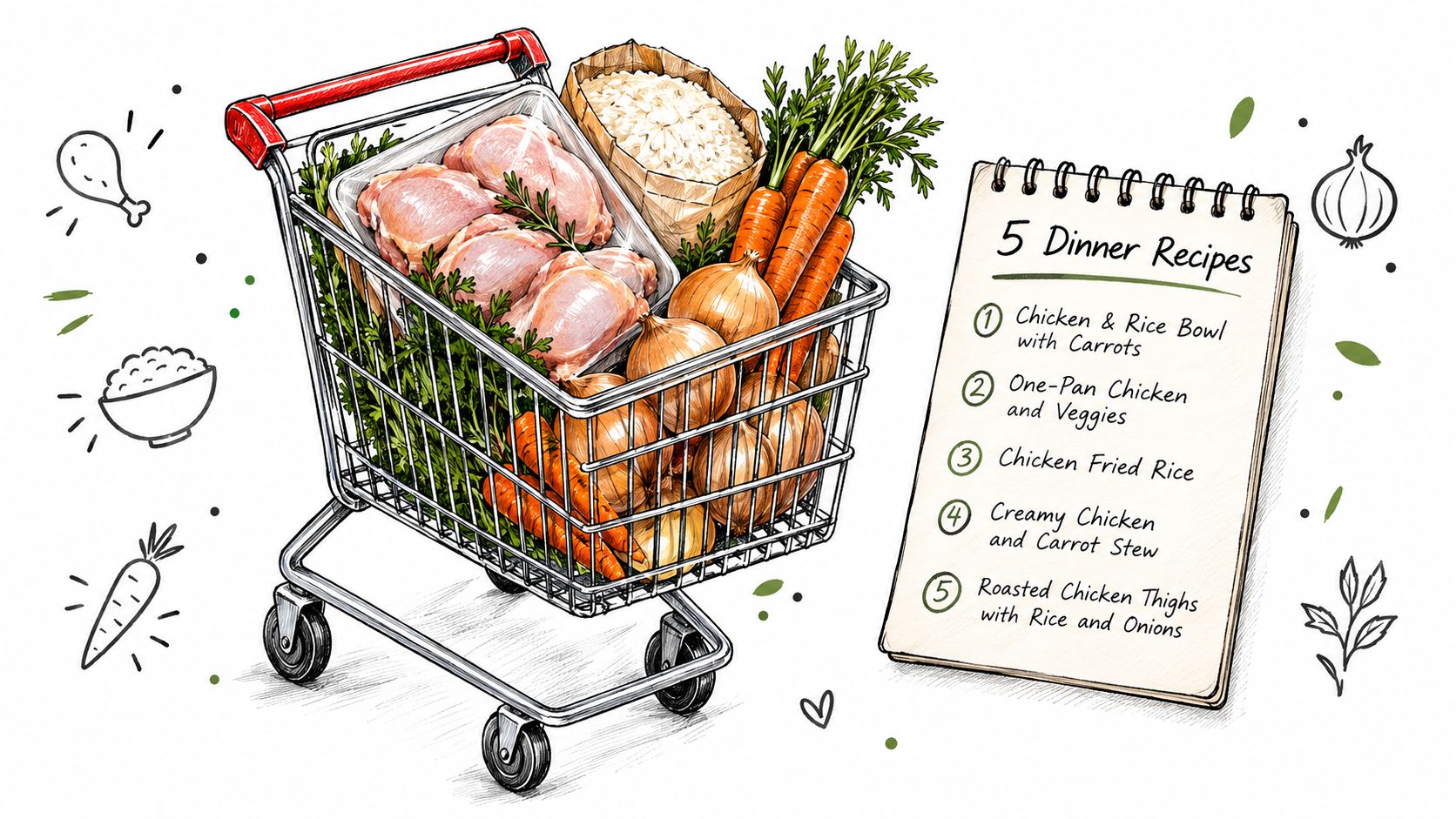
A connected week might use one cooked protein, rice, chopped vegetables, and beans. Serve the protein with rice and vegetables first, turn the leftovers into wraps, then use remaining vegetables in soup or fried rice. The meals change form while the costly and perishable ingredients keep working. When the running total drifts, remove an optional accent or switch the protein, not the shared foundation that holds the plan together.
Batch Cooking and Leftovers as Your Budget Engine
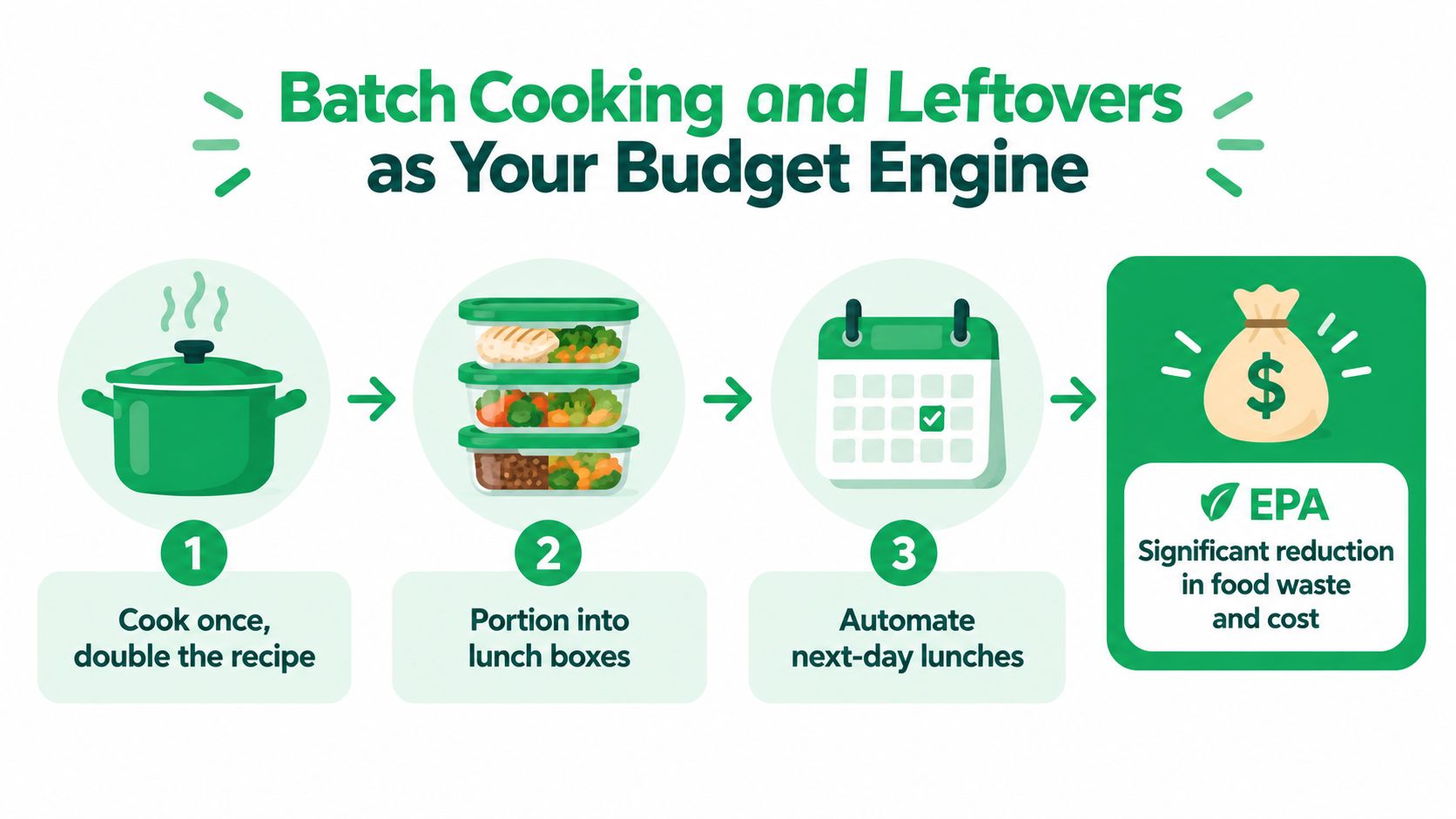
Food waste can consume the money you intended for meals. Cooking only what you need helps, but leftovers are easier to use when each portion has a scheduled destination. Assign tomorrow's lunch, a freezer meal, or a flex-night use before the food goes into the refrigerator.
Batch cooking works best when it stays modular. Prepare a pot of beans, a tray of vegetables, a grain, or a soup, then store the components separately. Separate ingredients can become dinner, lunch, or a freezer portion when plans change. A rigid calendar is harder to keep when a meeting runs late or someone refuses the planned meal.
Cook once and assign the extra
If a dish freezes well, make enough for tonight and one future use. Portion the extra while it is still easy to identify, label the container with the meal and date, and freeze it before it becomes an overlooked refrigerator leftover.
Schedule one leftovers night instead of letting containers accumulate. Build bowls from cooked ingredients, turn vegetables into soup, or make fried rice with the week's grains. Wraps work well for small amounts of chicken, beans, vegetables, and cheese because those remnants can become one meal without needing separate full portions.
Keep one or two flex nights deliberately easy, such as eggs with toast, bean quesadillas, freezer soup, or pasta with vegetables. These meals protect the budget when a schedule changes. They also reduce the temptation to place a new grocery order or buy takeout.
The cheapest ingredient is the one you already bought and can still use.
Batch cooking suits picky eaters because components can remain separate. Serve rice, vegetables, beans, and sauce individually instead of combining them into one dish. Family members can assemble their own plates, while unfinished ingredients remain usable for another meal.
A running basket total makes this system hold up when prices change. Set category caps before shopping, then update the total as items enter the cart. If a substitution or price spike pushes one category over its cap, adjust mid-shop: use a cheaper protein, drop an optional topping, or choose a flex-night meal that relies on pantry items. Keep the shared ingredients that support several meals.
For surplus ingredients outside the original plan, use this leftover recipe generator to suggest combinations. Check the fridge before shopping and give partial ingredients a role before they spoil.
The budget engine is practical: buy overlapping ingredients, cook a useful base, reserve portions, track the basket total, and keep a flexible meal available. This structure handles irregular weeks better than a perfect calendar that assumes every evening will follow the plan.
Building a Categorized Grocery List With Price Estimates
A grocery list becomes budget-safe when every line has three pieces of information: the ingredient, the amount, and the expected price. “Chicken” is too vague. “Chicken, package size needed for the bean and rice bowls, estimated price” lets you compare the shelf item with the plan before it enters the cart.
Organize the list in the order you shop. Most stores are easier to move through when the list follows sections such as produce, proteins, pantry, dairy, and frozen. Put items already in the house in a separate “use first” area so you don't accidentally buy them again.
Build the list from the meals
Combine duplicate ingredients across recipes before adding prices. If two meals use onions, write one total amount rather than two separate lines. If a recipe uses only part of a package, record the remaining portion beside the next meal that will use it.
A useful list has this shape:
| Category | Share of budget | Example line items |
|---|---|---|
| Produce | Flexible | Onions for soup and rice, carrots for roasting, cabbage for wraps |
| Proteins | Planned first | Eggs, beans, lentils, chicken, canned fish |
| Pantry | Controlled | Rice, pasta, tomatoes, broth, spices |
| Dairy | Limited | Yogurt, milk, cheese |
| Frozen | Backup and waste control | Frozen vegetables, frozen fruit, prepared portions |
| Buffer | Held back | Substitution or price-spike allowance |
Estimate the price beside every line, then add the list before leaving home. Don't treat the projected total as a promise. It's an early warning system. If the list is already above the cap, replace a meal in the kitchen, where you have time to think, rather than in a crowded checkout line.
Keep a running basket total
In the store, record the actual price as each item goes into the cart. Use a notes app, a calculator, or a paper list. Update the total when the package size differs from your estimate, when the store brand is unavailable, or when a promotion changes the price.
Weights and substitutions are where many plans fail. A larger package may have a lower unit price but still exceed what the budget can absorb. A missing ingredient may also force a second purchase if you don't decide on a substitute before reaching the shelf.
Use a mid-shop adjustment routine:
- Identify the drift. Mark the category or item that pushed the total higher.
- Protect the meal structure. Keep a filling base, a protein source, and produce where possible.
- Swap within the category. Replace a planned chicken dish with beans or lentils, or use frozen vegetables instead of a costly fresh option.
- Reuse what is already in the cart. Choose a meal that uses the same rice, onions, sauce, or tortillas.
- Recalculate before moving on. Don't make a second change without checking whether the first one fixed the total.
If the store doesn't have the exact item, change the meal, not the entire shopping trip. The plan should help you make a decision quickly without buying an expensive substitute out of frustration.
Budget rule: The plan is a living document, not a contract. Change the meal before you change the spending cap.
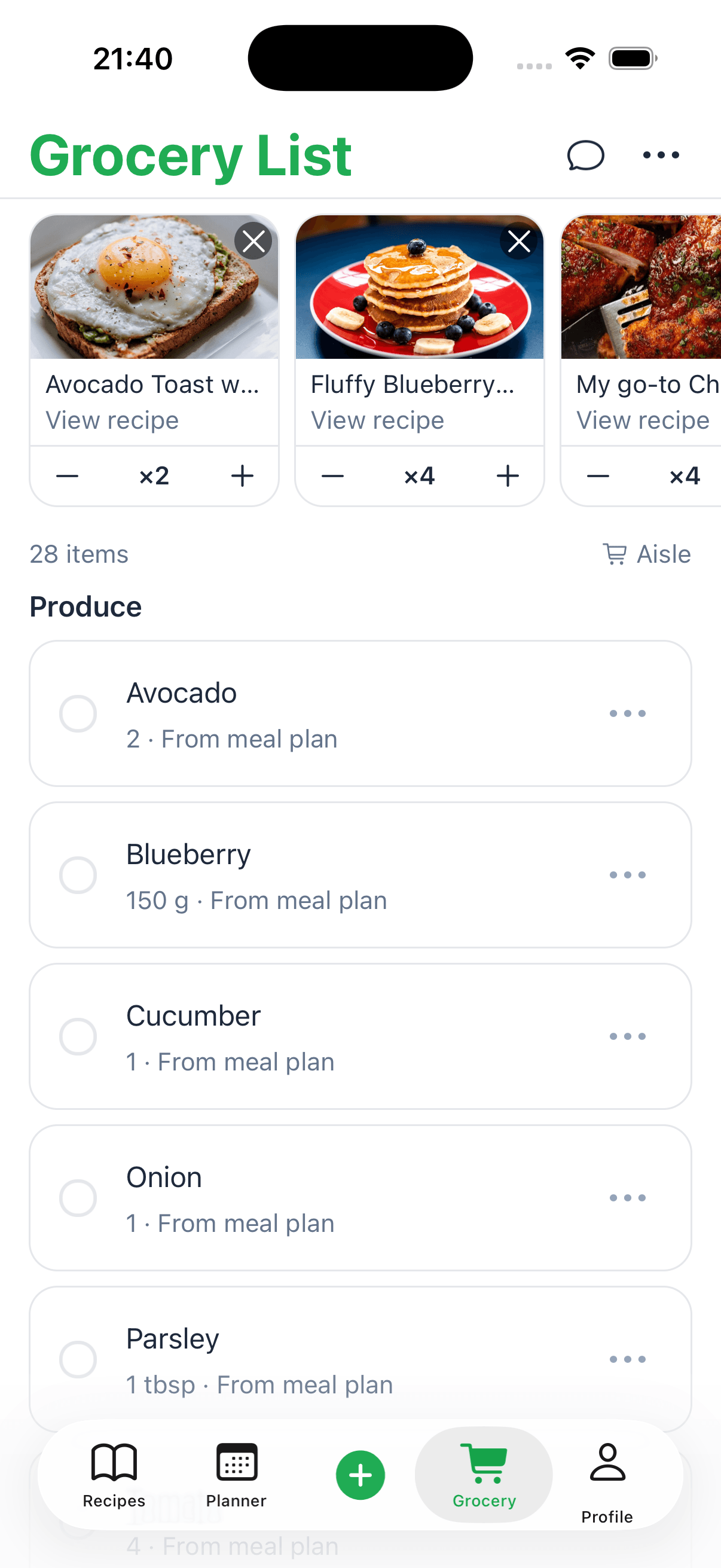
A grocery list generator can reduce the copying work when several recipes overlap. This grocery list tool is useful for turning selected recipes into one combined list, but you should still check your pantry, compare package sizes, and enter local prices. Automation can organize the ingredients. It can't see the shelf price in your store.
Sample 7-Day Budget Meal Plans for Families and Singles
A useful sample plan doesn't promise that every household will pay the same amount. Prices, appetites, dietary needs, and pantry supplies vary. The value is in the sequence, the overlap, and the built-in recovery nights.
Family of four
This family plan uses a cooked chicken base, beans, rice, vegetables, tortillas, and eggs. The chicken appears in different formats, while beans and rice provide a low-cost backup when the fresh ingredients run short.
- Sunday: Cook chicken, rice, and roasted vegetables. Serve chicken with rice and vegetables, then cool the extra portions.
- Monday: Chicken tacos with beans, cabbage, and salsa. Keep the fillings separate so everyone can assemble a preferred combination.
- Tuesday: Lentil or bean soup with toast. Add leftover vegetables rather than buying a new soup ingredient.
- Wednesday: Chicken and rice bowls with the remaining vegetables and a yogurt or salsa topping.
- Thursday: Vegetable fried rice with eggs. Use the rice that has been waiting in the fridge.
- Friday: Flex night. Use a freezer portion, make bean quesadillas, or serve eggs and toast.
- Saturday: Leftovers night. Turn remaining chicken into soup, wraps, or a mixed bowl.
The shopping logic is more important than the exact menu. One main protein supports several dinners, beans provide a backup, and rice carries the week across bowls, soup, and fried rice. The flex night keeps a late evening from forcing a new purchase.
Single cook
A solo cook faces a different problem: family-size packages can create waste before they create value. Choose ingredients that freeze well, buy only what can be used across meals, and portion cooked food as soon as it cools.
- Sunday: Cook lentils, rice, and a tray of vegetables. Eat a lentil bowl and freeze a portion.
- Monday: Eggs with toast and sautéed vegetables.
- Tuesday: Rice bowl with lentils, cabbage, and sauce.
- Wednesday: Pasta with tomatoes, beans, and leftover vegetables.
- Thursday: Frozen soup or lentils with bread.
- Friday: Tuna or bean wrap with the remaining fresh vegetables.
- Saturday: Flex night using the freezer, pantry, or any ingredients that need attention.
The solo plan avoids assigning a separate protein to every dinner. It also uses small, repeatable combinations rather than elaborate recipes that require one-off ingredients. If a package is larger than needed, freeze the extra immediately instead of hoping you'll remember it later.
Using Recipe One to Automate Your Plan and List
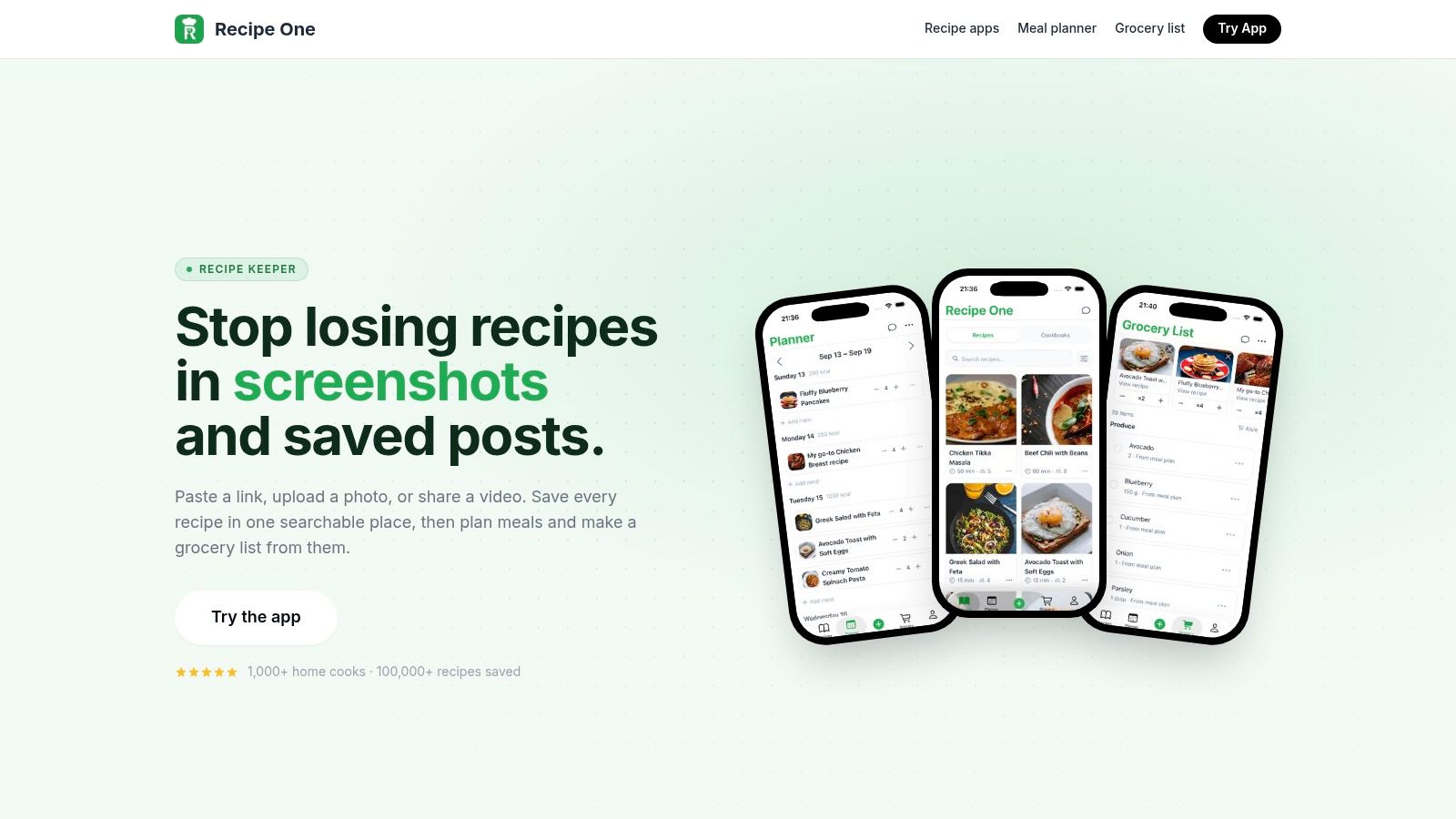
A spreadsheet or paper notebook works when the recipe collection is small. It becomes harder to maintain when recipes live across social posts, videos, photos, saved messages, and browser tabs. Copying ingredients by hand also creates predictable errors, especially when a recipe has measurements that need to be scaled or combined with another meal.
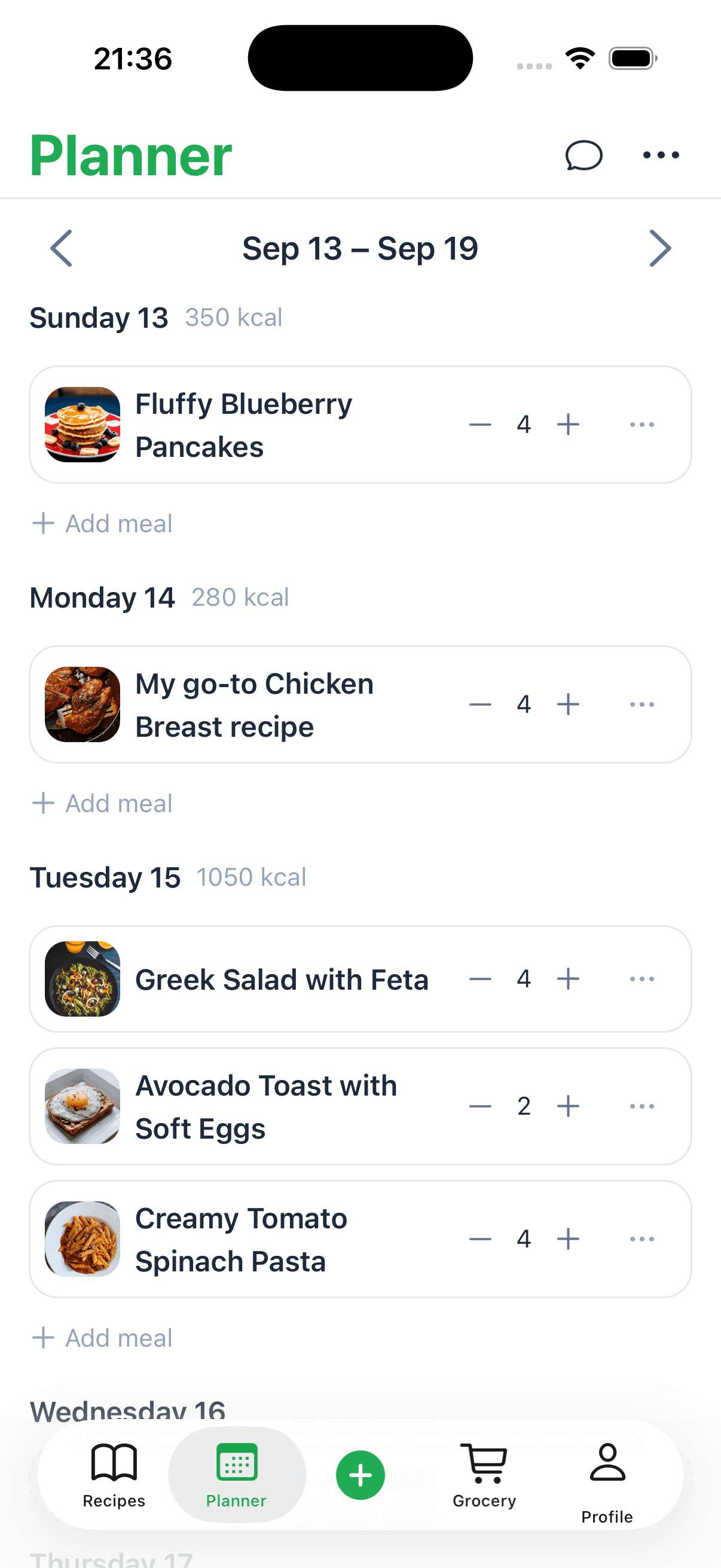
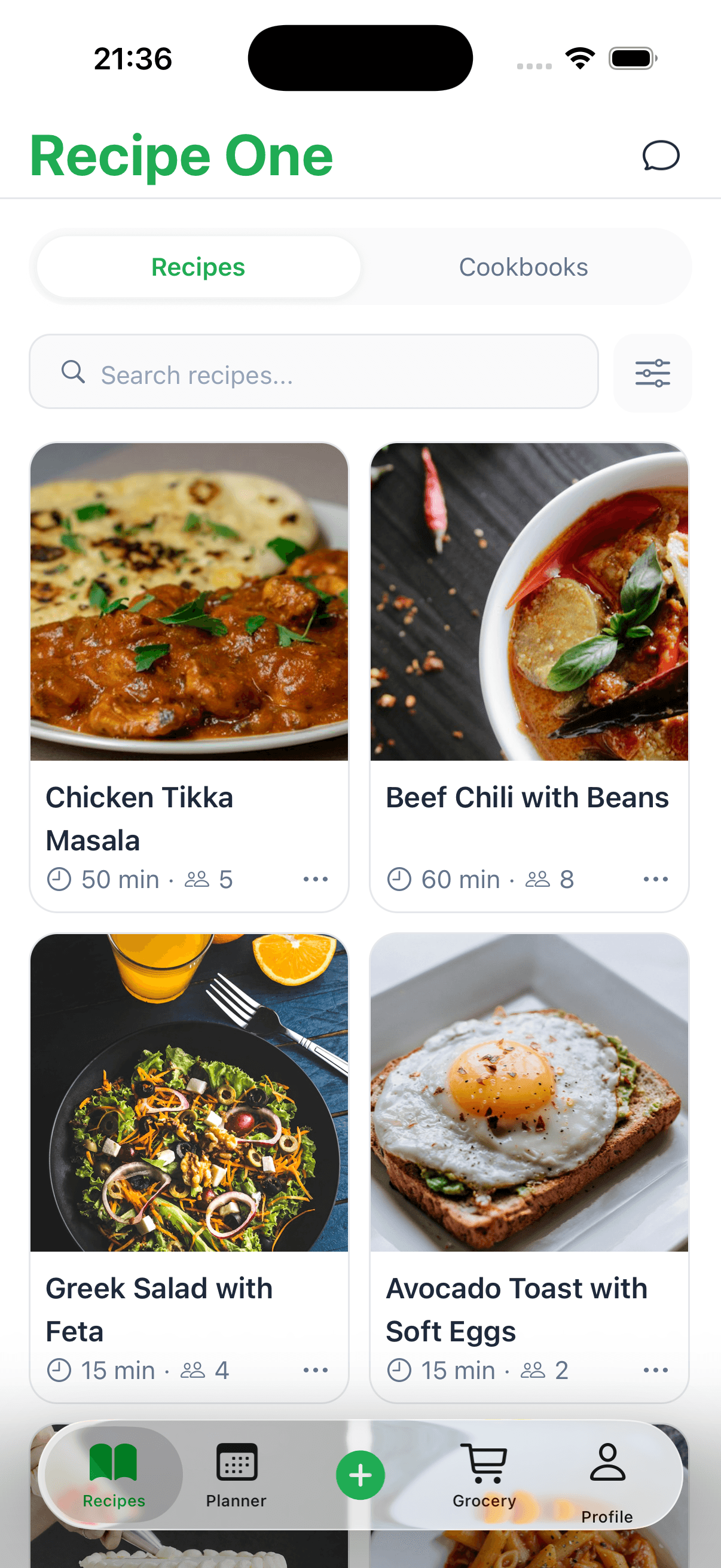
Recipe One lets cooks save recipes from social posts, videos, photos, or text, then organize them in a searchable personal library with ingredients, steps, and measurements. Its meal planner places saved recipes into a weekly schedule, while its grocery-list workflow turns the selected meals into a combined shopping list. That removes much of the manual plan-to-list handoff that can leave out a sauce, duplicate an ingredient, or miss the amount needed.
Manual planning versus an organized system
With notes and spreadsheets, you choose the meals, copy the ingredients, combine duplicates, and sort the list by store section. That approach gives you complete control, but every step depends on careful maintenance.
With Recipe One, the recipes stay connected to the plan and the list. You still need to set the spending cap, check the pantry, review local prices, and make substitutions. The tool handles organization, not the judgment required to keep a cart affordable.
Use the Recipe One tools when you want to find a recipe from ingredients on hand, convert measurements, or solve a specific cooking problem without opening several separate sites. For budget planning, the most useful routine is still the same: plan around overlap, price the basket, and revise before checkout.
Keep the system working with a short weekly review:
- Check the pantry first: Build the next plan around ingredients that need using.
- Record actual spending: Compare the receipt with the projected basket total.
- Review waste: Note what spoiled, what was frozen, and what was unexpectedly useful.
- Adjust the next cap: Base the next week on your real household pattern, not an optimistic guess.
- Keep a flex meal: Leave room for schedule changes and substitutions.
Recipe One turns saved cooking ideas into an organized recipe library, weekly meal plan, and grocery list, which makes it easier to control overlapping ingredients and keep shopping connected to the budget. Start your next plan with a spending cap, then visit Recipe One to build the meals and list in one place.