It's 6 p.m., someone's hungry, nothing's defrosted, and the fridge has a few odds and ends that don't quite become dinner on their own. That's the moment many households start hunting for a clever recipe and end up making three decisions at once, what to cook, what to buy, and what to do with the leftovers. A weekly meal planning template fixes that by forcing the week into a simple system, inventory, plan, grocery list, and use-up meals, so you decide once and eat all week with less scrambling.
Why a Simple Template Beats a Fancy Menu
A pretty menu falls apart when Tuesday goes sideways. A good weekly meal planning template does one job well. It turns the week into a closed loop, so you check what is already in the fridge, choose meals that fit the calendar, write one grocery list, and give leftovers a real job instead of letting them rot in the back of the shelf.
That is the difference between a menu grid and a working kitchen tool. The grid is only a list of dinners. A real template connects inventory, meals, shopping, and leftovers so each part feeds the next. Because many people plan only a few days at a time, the template adds inventory and use-up rows to stretch that habit across the full week, as noted in the study details.
Practical rule: If the template does not tell you what to buy and what to use up, it is not really planning. It is wishful thinking on paper.
Keep the goal simple, fewer decisions, fewer store runs, less waste. A flexible template works on paper and in an app, which is exactly what busy households need. For a practical companion, this guide on how to meal plan for the week is a solid companion.
The Copyable Weekly Meal Planning Template
Copy this into a note, doc, spreadsheet, or printable page and start there. Don't decorate it first. Fill it in first, then make it pretty if you still care.
| Weekly Meal Planning Template | Breakfast | Lunch | Dinner | Snacks |
|---|---|---|---|---|
| Monday | ||||
| Tuesday | ||||
| Wednesday | ||||
| Thursday | ||||
| Friday | ||||
| Saturday | ||||
| Sunday |
Grocery list
- Produce
- Dairy and eggs
- Meat and seafood
- Pantry
- Frozen
- Bakery and bread
- Other
Leftovers / use-up
- Dish:
- Cooked on:
- Eat by:
- Freezer if needed:
- Use for lunch or dinner:
Here's a short example week using simple, generic dishes. It's only an illustration, not a rulebook.
| Weekly Meal Planning Template | Breakfast | Lunch | Dinner | Snacks |
|---|---|---|---|---|
| Monday | Oatmeal | Turkey sandwich | Sheet-pan chicken | Fruit and yogurt |
| Tuesday | Toast and eggs | Leftover chicken | Pasta | Nuts |
| Wednesday | Yogurt and granola | Pasta leftovers | Stir-fry | Carrots and hummus |
| Thursday | Oatmeal | Soup | Soup and bread | Apple slices |
| Friday | Eggs and toast | Sandwiches | Fridge-scavenger night | Cheese and crackers |
| Saturday | Pancakes | Leftovers | Family dinner | Popcorn |
| Sunday | Yogurt | Simple lunch | Roast or soup | Whatever is left |
If you want a quick way to sanity-check breakfasts and snacks while you build the week, Rip Van's 7-day fiber guide is an easy reference to keep nearby. The point isn't to chase perfection. The point is to stop improvising from zero.
Picking Recipes That Fit Your Real Week
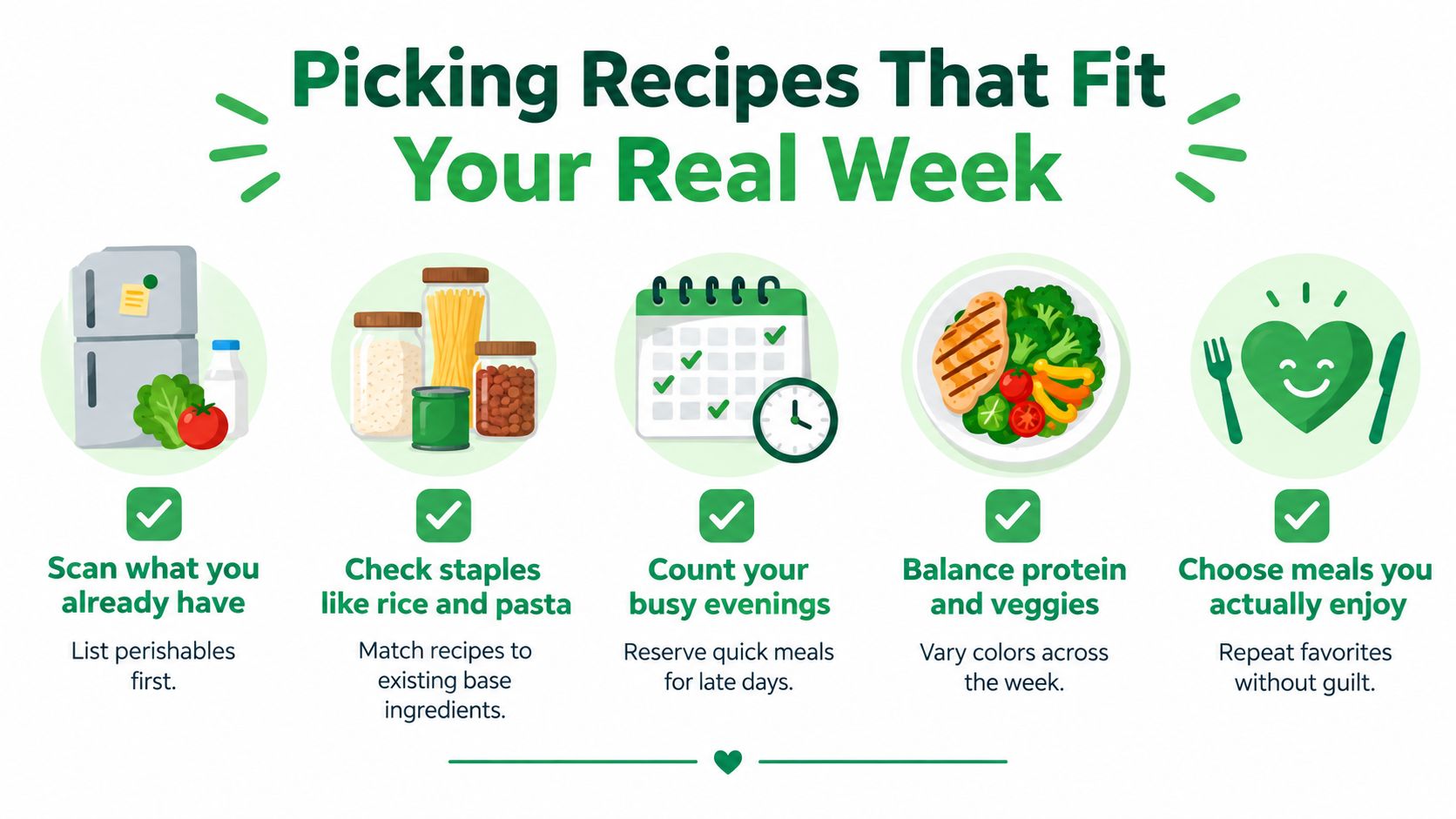
Start with what's already there. If you've got spinach that's about to wilt, chicken in the freezer, and rice in the pantry, those aren't random facts, they're dinner leads. A smart week begins with perishables first, then staple ingredients, then recipes that use both without forcing another expensive grocery haul.
Build the week around reality, not ambition
I'd rather see five cooking events than seven fully planned dinners. Leave two slots open for leftovers, takeout, or the night everybody's late. That one decision keeps the week from collapsing the moment someone has practice, a meeting runs long, or nobody wants to stand at the stove.
Mix the cooking styles on purpose. Put a sheet-pan night next to a no-cook lunch, then a soup, then a quick stir-fry, then something that makes leftovers on purpose. Ingredient overlap helps more than people admit, because onions, garlic, rice, tortillas, and greens can carry several meals instead of sitting in the fridge waiting for a miracle.
Plan for the week you actually live, not the one you wish you had.
If you keep a digital library of saved recipes, that's where the speed comes from. A tool that lets you pull from what you already trust makes this whole choice process less annoying. For leftover-heavy nights, this leftover recipe generator is useful when the fridge needs a rescue plan.
If you're shopping from recipes instead of from the pantry, that's a good time to compare systems too. For people who want meal kits or subscription-style setups, compare Shopify subscription tools for meal kits and then decide whether a subscription model even fits your household. Most homes don't need more choice. They need fewer mismatched choices.
Building the Grocery List and the Leftovers Plan
Many shoppers do this backwards. They shop first, then try to build dinners from the receipt, then wonder why the fridge is full and nothing makes sense. The cleaner move is to read the week once, write one consolidated grocery list, and then assign leftovers before you shop.
Write the list from the plan, not the other way around
Go through each meal and pull ingredients into one list by aisle. Produce, dairy, meat, pantry, frozen, bread, and household extras belong in separate buckets because that's how you walk a store. A consolidated list cuts the duplicate-buy problem fast, and it also makes pickup or delivery easier because you're not hunting through three different notes.
Then handle leftovers like they matter, because they do. USDA guidance says perishable leftovers should go into the fridge within two hours, held at 40°F (4°C) or below, and eaten or frozen within four days. Reheated leftovers should reach 165°F (74°C), and shallow containers cool faster than a giant deep tub of soup (USDA leftovers guidance).
Here's the part people skip: portioning. Don't make enough pasta for a neighborhood if you're feeding two adults and a kid. Mark the prep date, decide which meal gets the leftovers, and freeze anything that won't fit the safe window. The grocery list generator is handy if you want the shopping side to follow the plan instead of drive it.
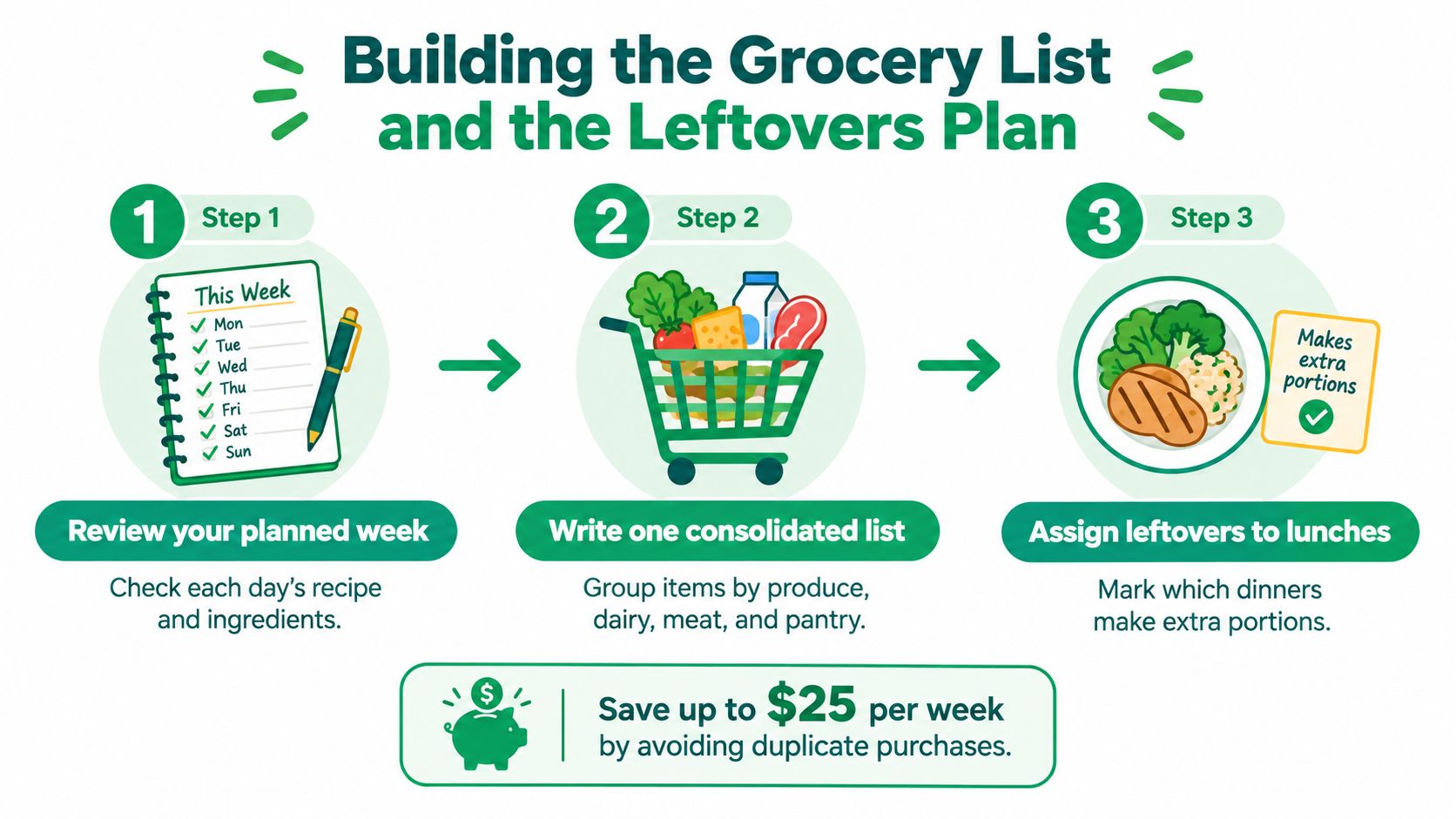
The USDA's leftovers rules also line up with a simple weekly habit, cook once, eat twice, freeze the extra. That's how a template becomes a system instead of a Sunday chore. If the week changes, the freezer becomes your backup plan.
Running the Same Template Digitally With Recipe One
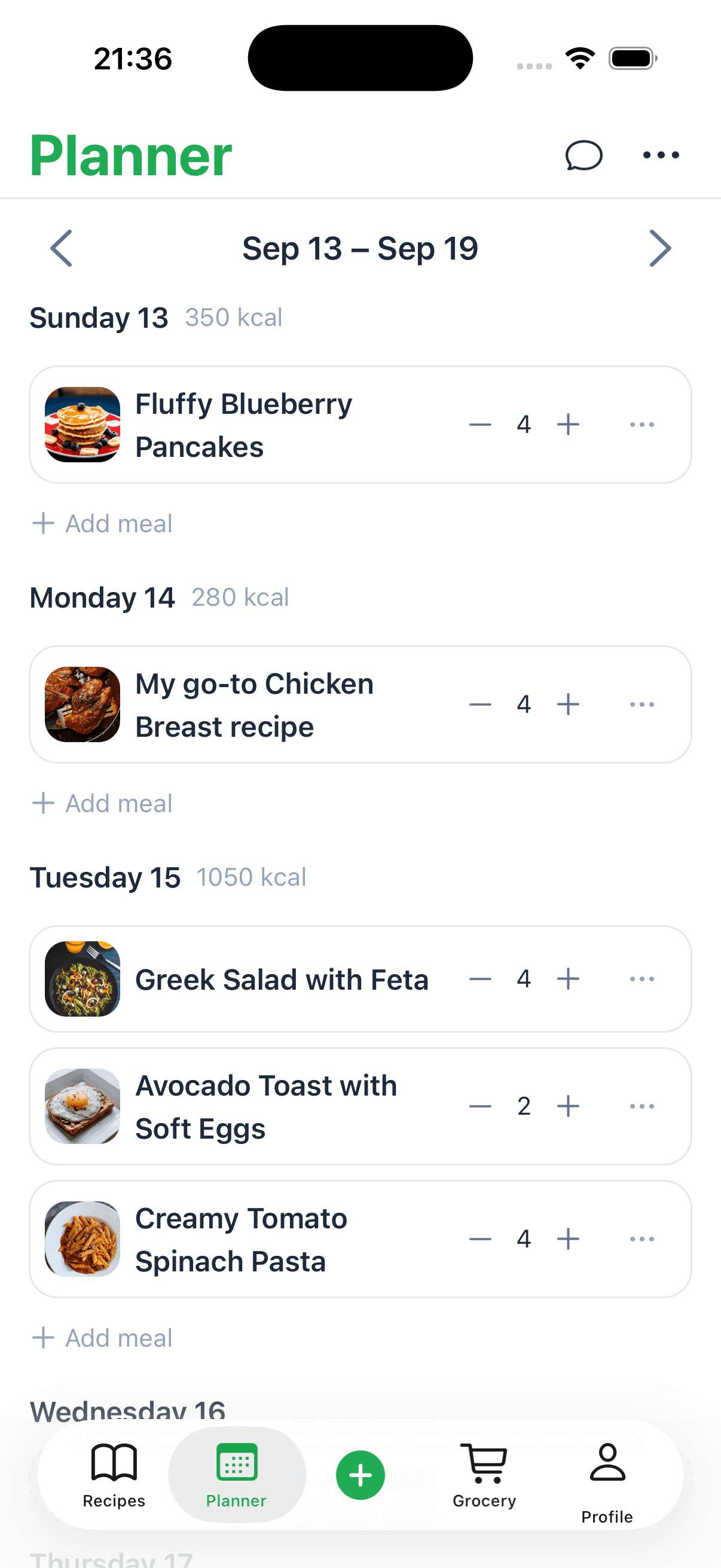
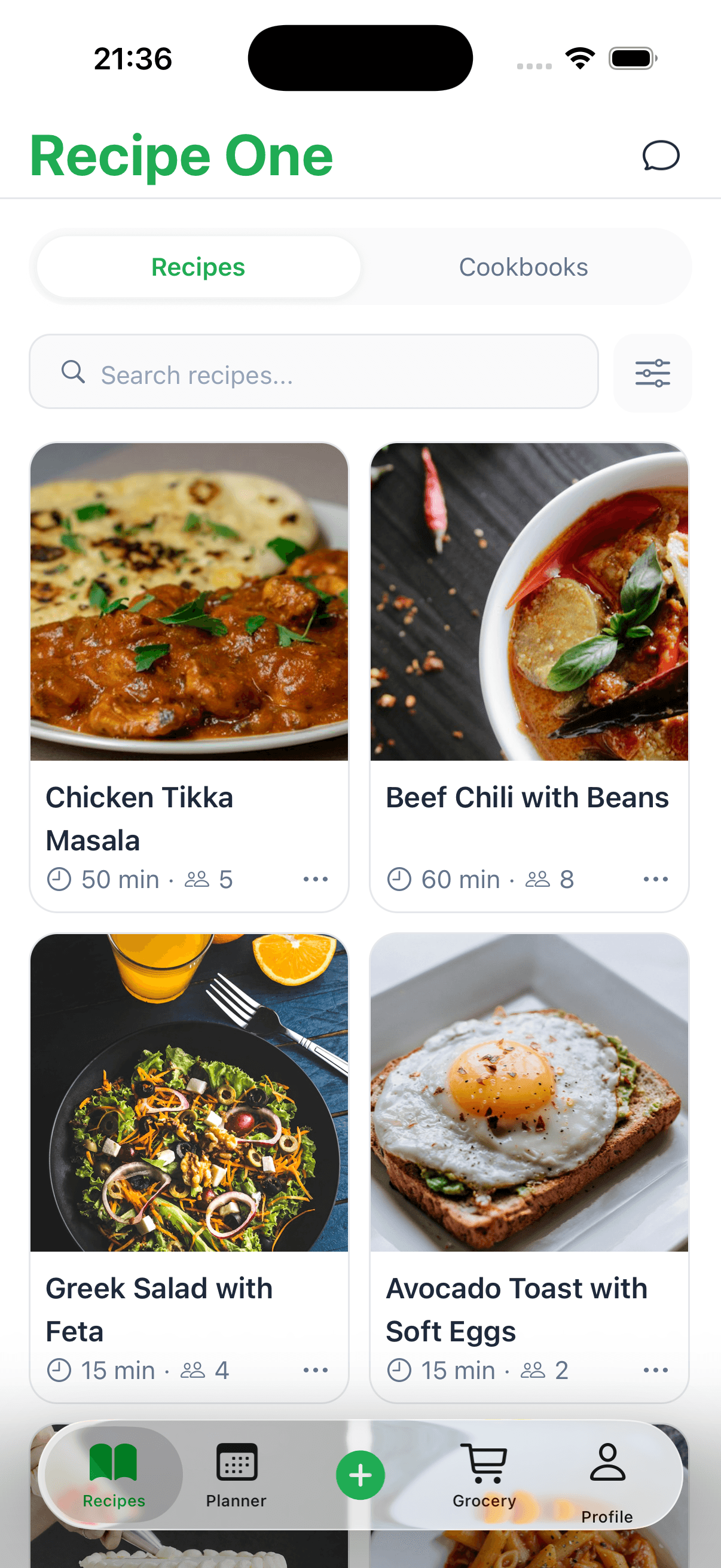
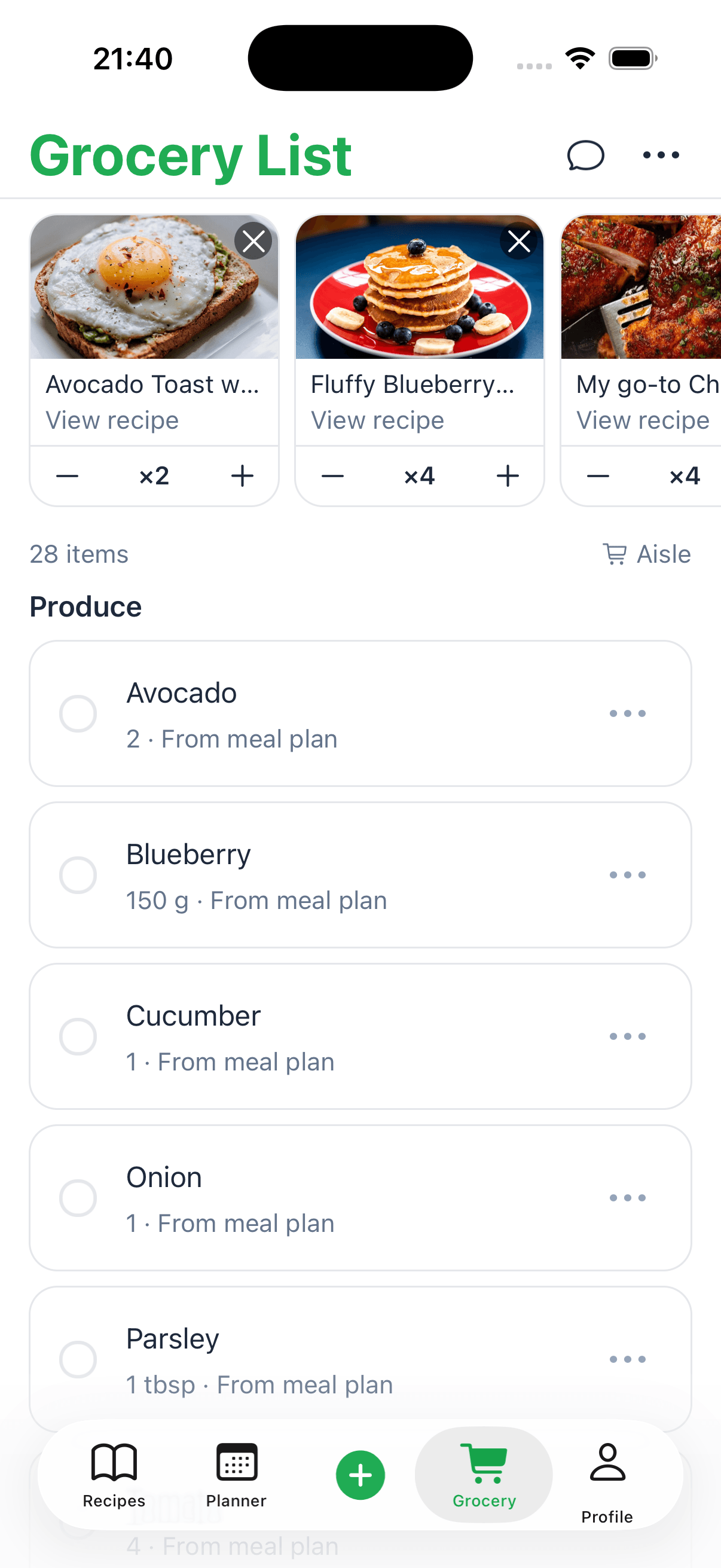
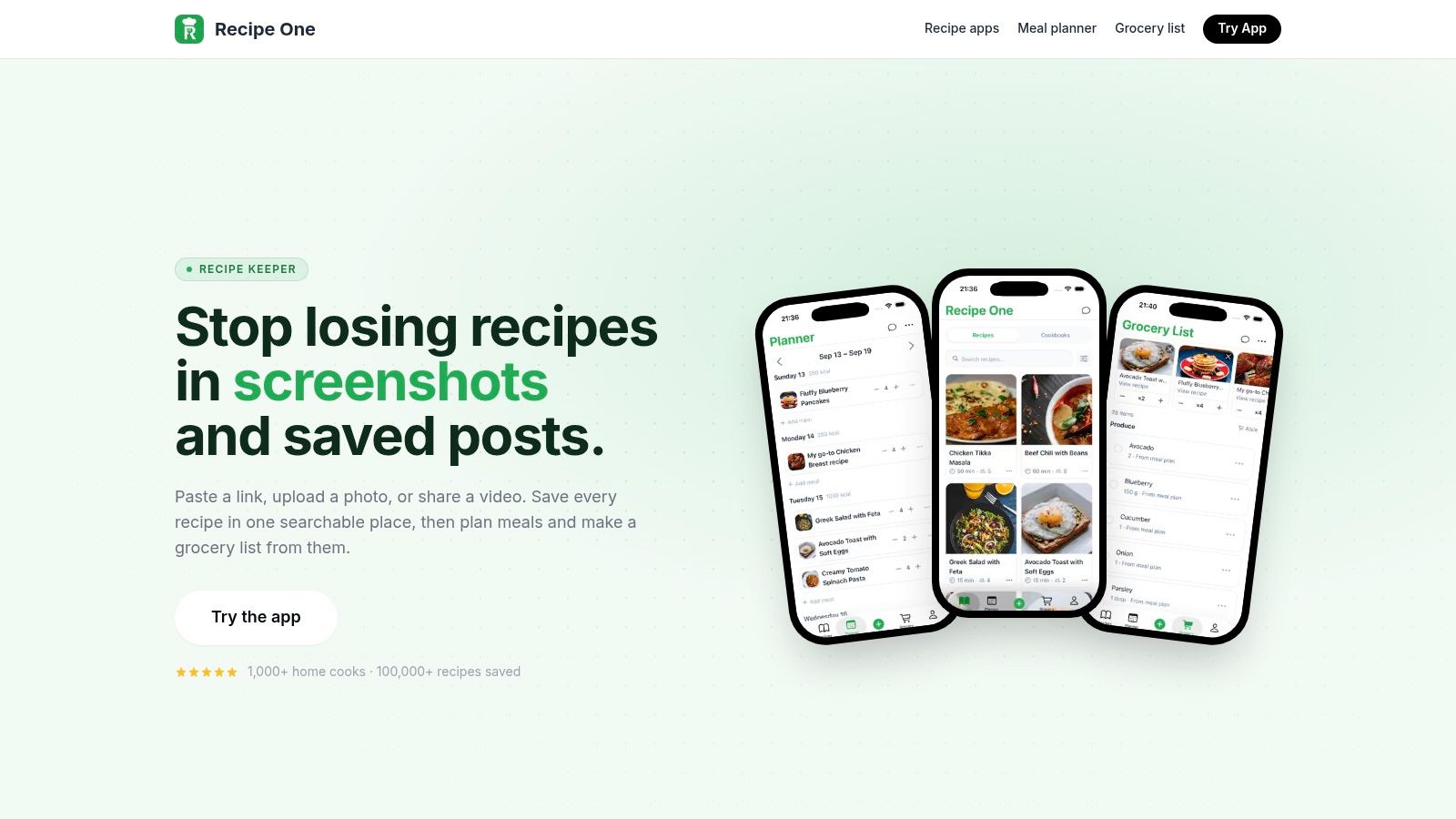
Paper works until your recipes live in five different places. Recipe One keeps the weekly meal planning template in one place, with saved recipes, a combined grocery list, and a Cook with Ingredients tool for nights when you need to use what is already in the kitchen. It also pulls recipes in from TikTok, Instagram, blogs, and recipe websites, so the whole routine stays in one library.
Use the app the same way you use the paper version, but faster. Check what you already have, drop a saved recipe onto the right day, and let the grocery list update before you shop. That keeps the template honest and stops the Sunday scramble.
Keep the related reads tight and useful. The weekly meal planner with grocery list on a budget is the one to open if cost control matters. The week-by-week planning habit helps too.
If you want one home for the template and the recipes you cook, Recipe One does the job without extra fuss. Open the app, load your recipes, plan the week, and shop from the list it builds from those meals.
Customizing for Dietary Needs, Budget, and Prep Time
A good template bends. It doesn't break when one person is vegetarian, another wants more protein, and somebody else just wants dinner to happen fast. Start by choosing anchor meals that work for the whole house, then swap sides, proteins, or toppings instead of rebuilding the entire menu.
If your budget is tight, choose meals with overlapping ingredients and repeat them with small changes. If your schedule is brutal, use one or two anchor dinners that create leftovers, then fill the rest of the week with quick meals or planned repeats. The EPA recommends planning weekly meals before shopping and matching purchases to the number of meals eaten at home, which is exactly the kind of discipline that keeps a template honest (EPA food-waste guidance).
For prep day, cook the meals that hold up well, then divide them into shallow containers right away. USDA guidance also says leftovers can be frozen for longer storage, and one USDA summary gives a three-to-four-month freezer period for leftovers while still keeping the refrigerator limit in mind (USDA leftovers summary). That means Sunday dinner doesn't have to become Tuesday's regret.
The budget-friendly version is plain and boring, and that's a compliment. Keep the meals repeatable, the ingredients overlapping, and the backup plan visible. The less you improvise at the store, the less you waste at home.
Habits That Keep the Template Working
Use the same planning day every week. Keep a running note of what's in the fridge, and glance at leftovers before you write the next plan. Freeze extra portions with a date on the container, and treat the grocery list as a checklist at the store, not a suggestion.
The best weekly meal planning template is the one you'll repeat. It should make fewer decisions, not demand perfect nutrition, perfect variety, or a perfect mood every night. Flexibility beats rigidity in a real household.
Recipe One keeps that same workflow moving, from saved recipes to shopping list to leftovers. Download it if you want the printable version and the app version to match instead of fighting each other.
Recipe One gives you one place to save recipes, plan the week, and turn dinner ideas into a grocery list that matches what you'll cook. If you want a weekly meal planning template that works on paper and in an app, Recipe One makes that routine easier to keep using.