You get home from work or school pickup, someone has practice in an hour, someone else is already asking what's for dinner, and the fridge looks full without containing a meal. That's the moment when meal planning for busy moms stops being a nice idea and starts feeling like survival.
Most weeks don't fall apart because a mom can't cook. They fall apart because dinner depends on a chain of small decisions that all have to happen before anyone eats. You have to notice the calendar, remember what's in the fridge, account for the kid who suddenly hates rice, and make sure dinner fits into the sliver of time between homework and leaving the house again.
A simple system works better than a perfect one. The goal isn't a beautiful seven-day menu that never changes. The goal is a plan that still works when Tuesday runs late, Thursday feels exhausting, and someone forgets to mention the team dinner until noon.
Why Meal Planning Feels So Heavy and How to Lighten It
A lot of meal advice treats dinner like the main task. In real family life, dinner is the final step. The heavy part starts earlier.
A 2026 family meal planning survey found that 82% of families have a default dining manager, and moms were more likely than dads to hold that role at 71% versus 58%. The same survey found parents spend 37 minutes a day deciding what to make and building the grocery list before cooking starts, and the full dinner workflow takes 115 minutes a day.
That explains why the question “What's for dinner?” can feel so irritating. It isn't one question. It's a stack of invisible jobs.
The work that happens before the stove turns on
For most moms, meal planning means:
- Calendar matching: figuring out which nights allow real cooking and which don't
- Inventory tracking: knowing what needs to be used first
- Preference management: balancing picky eaters without making two full dinners
- Shopping logic: buying enough for the week without overbuying perishables
Practical rule: If dinner feels hard every night, the problem usually isn't your cooking skills. It's that too many decisions are getting made too late.
Family dinners are still happening, but often under tight time pressure. A Family Dinner Project summary reports that 74% of respondents get dinner on the table in under an hour, and 30% do it in less than half an hour on most nights. That's why loose plans break so easily. There isn't much room for last-minute thinking.
If the planning side of life feels heavy in general, these mental load reduction tips are worth reading because they address the same upstream problem. You don't need to carry every reminder, every decision, and every follow-up alone.
What actually lightens the load
The most useful shift is this. Stop planning meals as isolated recipes. Start planning them as responses to your week.
That means anchoring dinner to the calendar first, using a repeatable template, and keeping fallback meals ready for rough days. Once you stop expecting every night to be equal, meal planning for busy moms gets much simpler.
Set Your Constraints and Build a Reusable Weekly Template
Generic meal plans fail because they ignore real life. The strongest meal plans start with constraints.
Research on family meal barriers points to schedule conflict, exhaustion, lack of ideas, and overscheduling as common breakdowns. In one parent sample, 69% reported time as a barrier and 19% cited lack of ideas, while another study found 48% of parents had family meals less often than desired, with schedule coordination being the hardest part, according to a review of barriers to family meals.
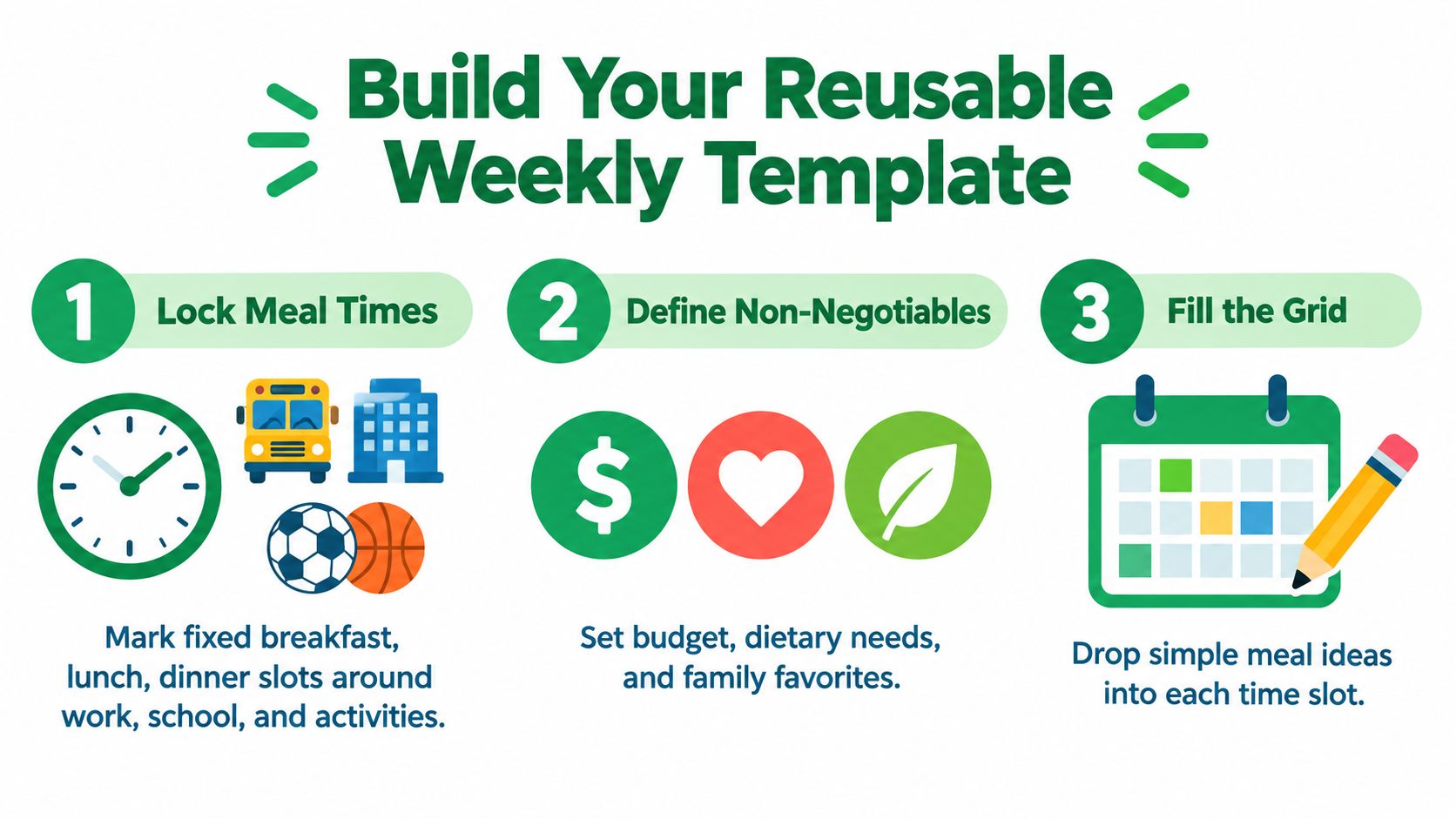
Lock the week before you pick recipes
Start with your calendar, not Pinterest.
Write down the nights that already have shape:
- Late nights: sports, lessons, meetings, long commutes
- Normal nights: enough time for basic cooking and cleanup
- Flexible nights: room for a new recipe or slower meal
- Out nights: leftovers, takeout, school events, dinner out
Once those are marked, assign meal types instead of exact meals. For example:
| Night type | Best fit |
|---|---|
| Late night | slow cooker meal, freezer meal, tacos, breakfast for dinner |
| Normal night | sheet pan meal, pasta, rice bowl, soup and sandwich |
| Flexible night | new recipe, bigger batch meal, roast |
| Out night | leftovers, snack plate, fend-for-yourself meal |
A reusable planner helps. If you like a ready-made structure, this meal prep planner template gives you a clean weekly framework you can keep using instead of rebuilding from scratch.
Define your non-negotiables
Every family has a few rules that matter more than variety. Get those clear before you shop.
Mine usually fall into these buckets:
- Time limit: what can realistically be cooked on your busiest night
- Budget pressure: where convenience is worth paying for and where it isn't
- Food needs: allergies, preferences, school lunch carryover, texture issues
- Energy level: what you can handle after a hard day
When the week is packed, a “good enough” dinner that everyone will eat beats an ambitious plan you abandon by Wednesday.
Use a repeatable pattern
A template removes daily decision-making. You're not choosing from every possible dinner. You're filling known slots.
A few patterns work well:
Theme nights
Think taco night, pasta night, soup night, breakfast night, leftovers night. Kids learn the rhythm fast, which cuts down on questions.
The 3 plus 2 plus 2 model
Cook three full dinners, plan two leftover or remix nights, and keep two fallback options in reserve. This works especially well for families whose schedules shift during the week.
Anchor meal rotation
Pick five to seven meals your family already accepts and rotate them with small changes. Different sauce, different vegetable, different starch. Same basic structure.
The best template is the one you'll reuse without thinking too hard.
Batch Your Shopping and Prep Without Losing Your Weekend
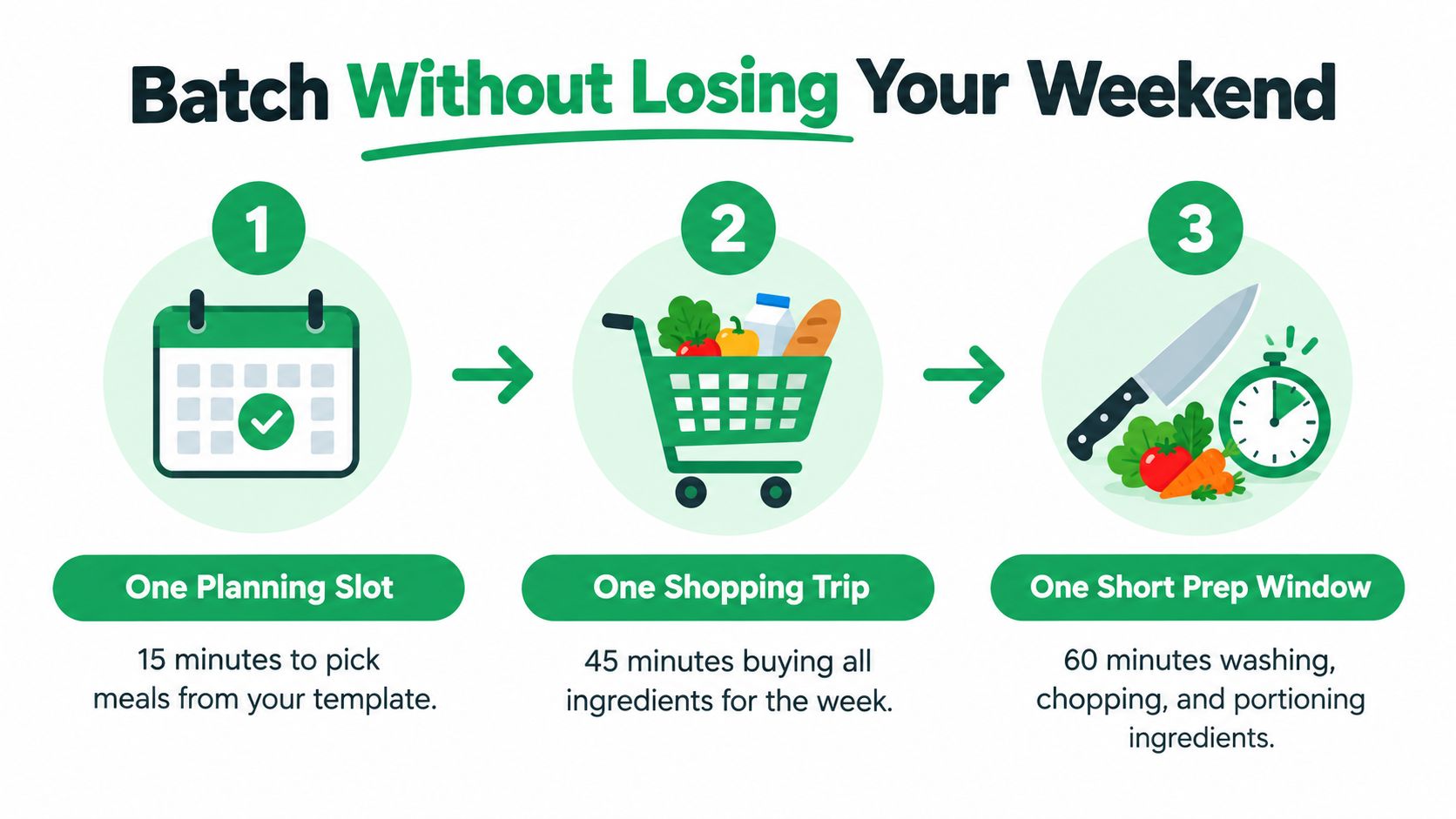
Weekend meal prep gets abandoned when it turns into a marathon. A shorter rhythm holds up better. I'd rather see a family do one planning block, one shop, and one prep session consistently than aim big once and dread it forever.
Keep the rhythm simple
A practical weekly flow looks like this:
-
Planning slot
Sit down with the calendar and your template. Pick meals that match the shape of the week, not your highest aspirations. -
Shopping trip
Build one list, grouped by produce, protein, dairy, pantry, and frozen. Consolidate ingredients before you leave so you don't buy three kinds of onions for three recipes. -
Short prep window
Wash produce, chop the vegetables you know you'll use, portion snacks, marinate one protein, and cook one base item like rice, pasta, or roasted vegetables.
That's enough to make weeknights easier without giving up half your Sunday.
Prep what saves friction, not what looks impressive
The best prep tasks remove the parts most likely to slow you down on a tired evening.
Focus on these:
- Wash and store produce: lettuce, berries, cucumbers, peppers
- Prep proteins: marinate chicken, brown ground meat, shred rotisserie chicken
- Cook one base: rice, quinoa, roasted potatoes, pasta
- Build two lunch helpers: wraps, cut fruit, snack boxes
- Set up one backup dinner: freezer soup, dumplings, or a simple pasta option
A lot of moms waste time prepping the wrong things. If your family won't eat the assembled mason jar salads, stop making them. Prep what gets used.
For meals you can stash for rough nights, these make-ahead freezer meals are useful because they support the fallback system, not just the ideal week.
Make your kitchen easier to scan
Visual order matters more than people think. When ingredients are labeled and visible, anyone in the house can help.
If you prep lunches, leftovers, or grab-and-go ingredients, InchBug's labeling guide has practical ideas for labeling containers and snacks so the system is easier to follow.
A meal plan only saves time if people can find the food, recognize the plan, and use what's already prepared.
One more rule helps here. Don't prep every ingredient for every meal. Prep the ingredients that create the most weeknight friction. That's usually produce, protein, and one starch.
Quick Recipes and Smart Swaps for Picky Eaters and Tight Nights
Not every dinner deserves a full recipe. Some nights call for a format.

Compare the fastest dinner formats
When time is short, these formats beat complicated recipes:
| Format | Why it works | Best use |
|---|---|---|
| Sheet pan meal | One surface, easy cleanup, simple seasoning | nights when you want protein and vegetables at once |
| One-pot pasta or soup | fewer dishes, easy to stretch | colder nights or pantry-heavy weeks |
| Tacos or bowls | flexible for picky eaters | families who need choices without making separate dinners |
| Breakfast for dinner | fast, familiar, inexpensive | nights with no energy left |
| Snack plate dinner | no-cook option with variety | extra busy evenings or post-practice nights |
The biggest advantage is flexibility. One base can serve different preferences without starting over.
Use a swap matrix instead of a new recipe
Here's a simpler way to adapt dinner:
- Protein swaps: chicken, ground turkey, beans, eggs, tofu
- Vegetable swaps: broccoli, green beans, peppers, frozen mixed vegetables
- Carb swaps: rice, pasta, tortillas, potatoes, bread
- Flavor swaps: taco seasoning, garlic butter, marinara, soy-ginger, pesto
So if taco bowls are on the plan, one child can have the ingredients in a tortilla, another can skip the salsa, and an adult can turn the same base into a salad bowl. Same dinner, different plate.
For more options in this style, these easy weeknight meals for families fit busy schedules without requiring a lot of last-minute prep.
Keep two backups that don't need thinking
This matters more than a full seven-day menu. Families under stress often drift toward quick, snack-like, or lower-quality eating choices when plans break down, as discussed in this research overview on family meal decisions and barriers. That's why a fallback system matters.
Keep two backup meals in reserve:
- Pantry backup: pasta with jarred sauce, quesadillas, tomato soup and grilled cheese
- Freezer backup: dumplings, meatballs, cooked chili, frozen burritos, soup
If Thursday collapses, pull the backup. Don't waste energy grieving the original plan.
A Sample Week and Auto Generated Grocery List You Can Copy
Here's what a normal school-week plan can look like when it's built around calendar reality instead of perfection.
Monday is often the easiest night to cook because groceries are fresh and energy is still decent. Thursday is often not. So don't assign both nights the same level of effort.
A copy-ready Monday to Friday plan
| Day | Breakfast | Lunch | Dinner |
|---|---|---|---|
| Monday | yogurt, fruit, granola | turkey wraps, cucumbers | sheet pan chicken, potatoes, broccoli |
| Tuesday | toast and eggs | leftovers or lunch box bento | taco night with rice and toppings |
| Wednesday | oatmeal with berries | pasta salad and fruit | one-pot pasta with spinach and garlic bread |
| Thursday | smoothies and toast | quesadilla wedges, peppers | freezer chili with shredded cheese and crackers |
| Friday | bagels and fruit | sandwich plates | personal pizzas and salad |
This kind of plan works because each night has a job. Monday uses fresh produce. Tuesday gives everyone choice. Thursday assumes lower energy and leans on backup food.
Turn recipes into one usable list
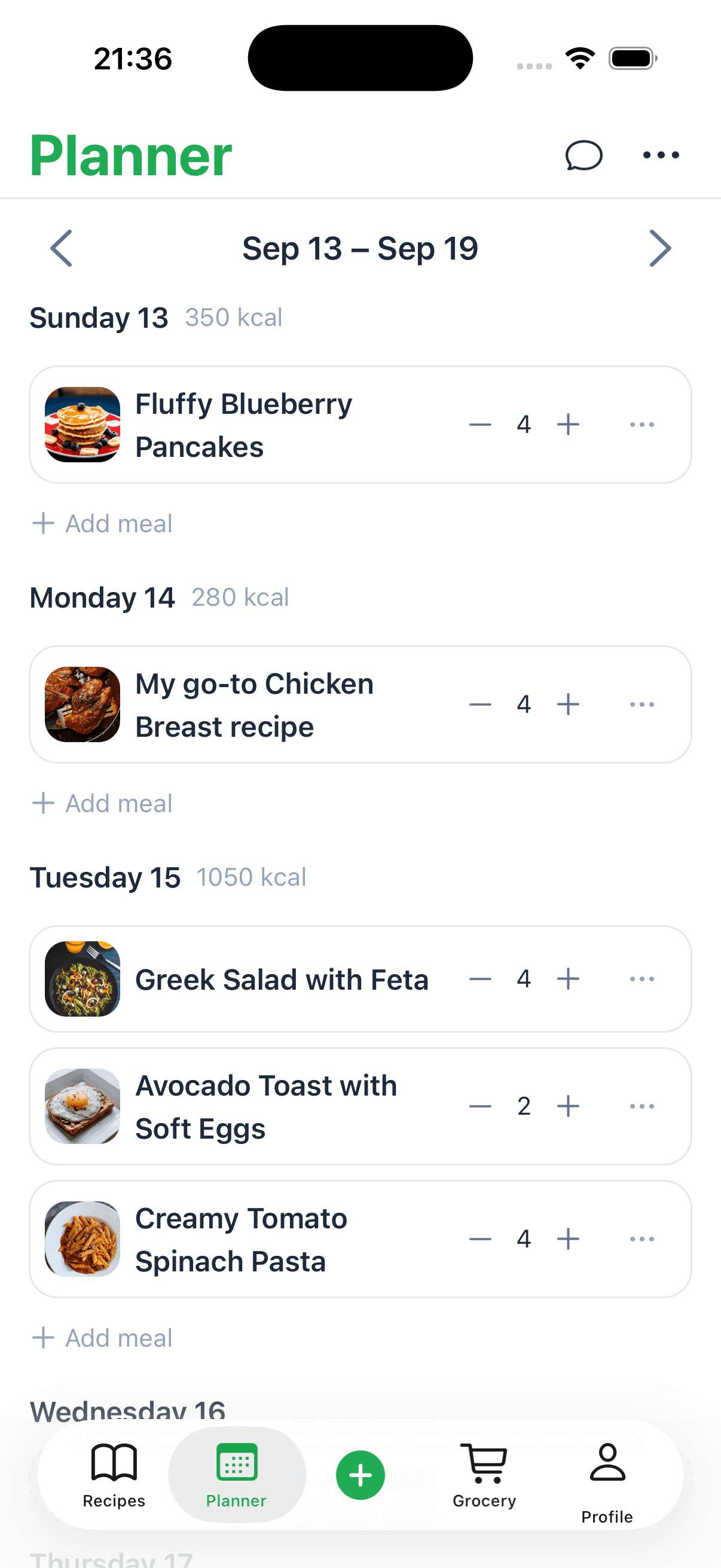
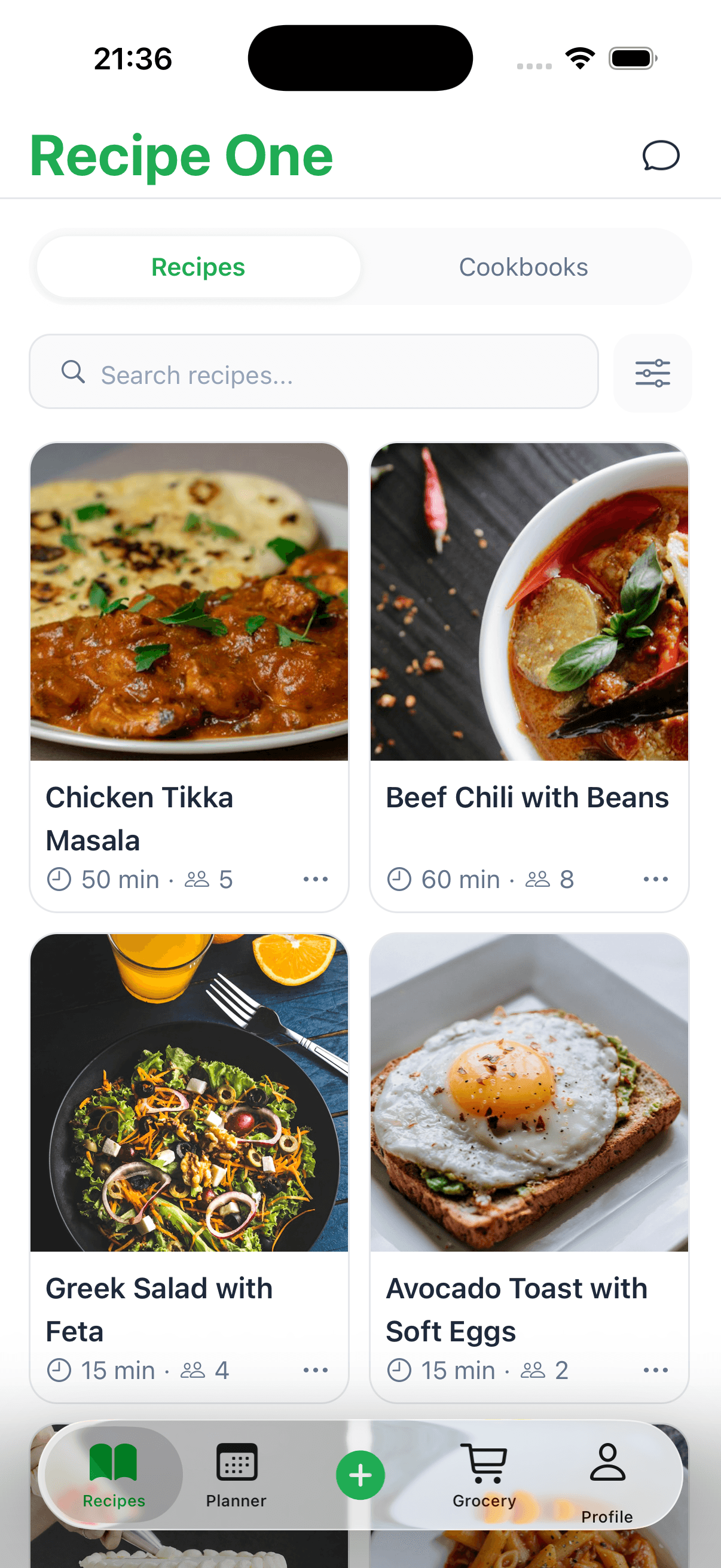
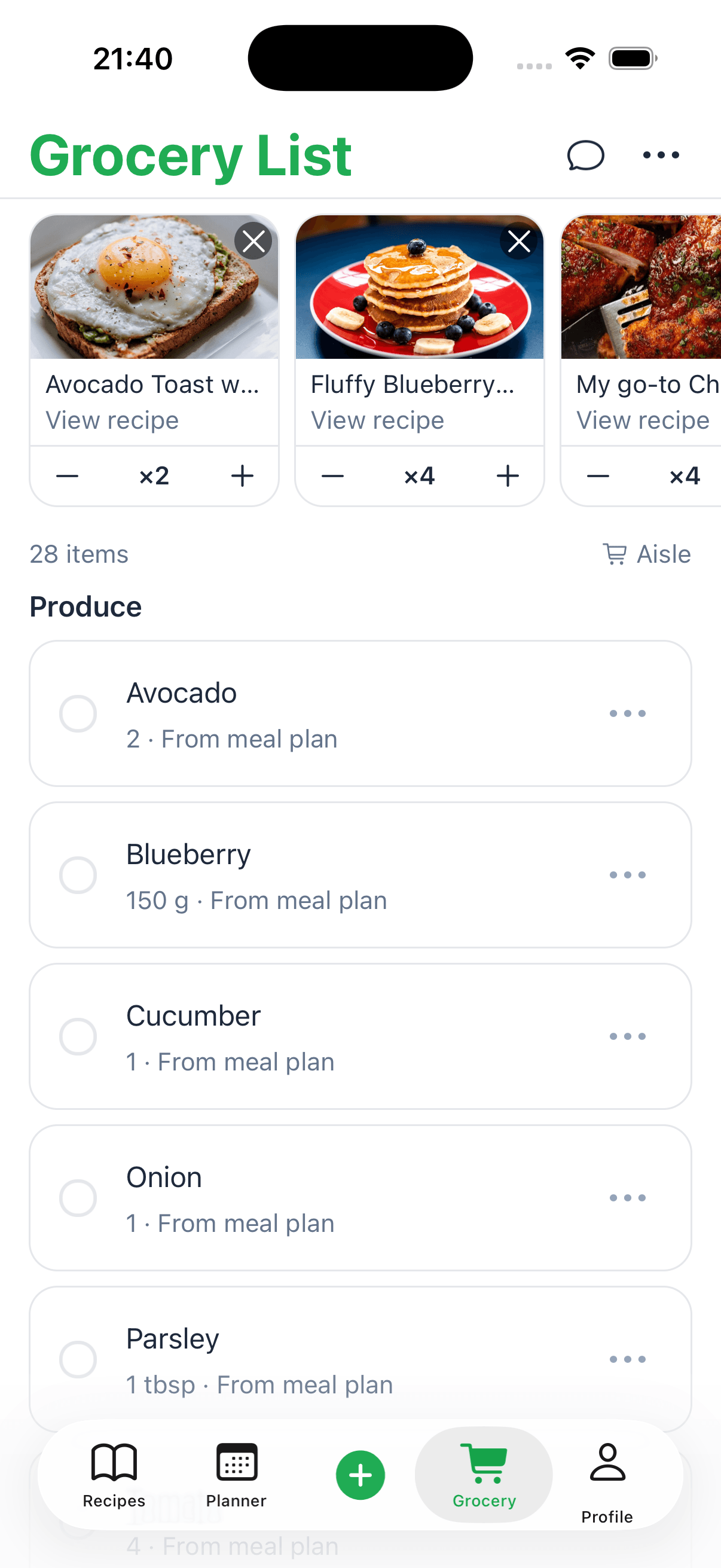
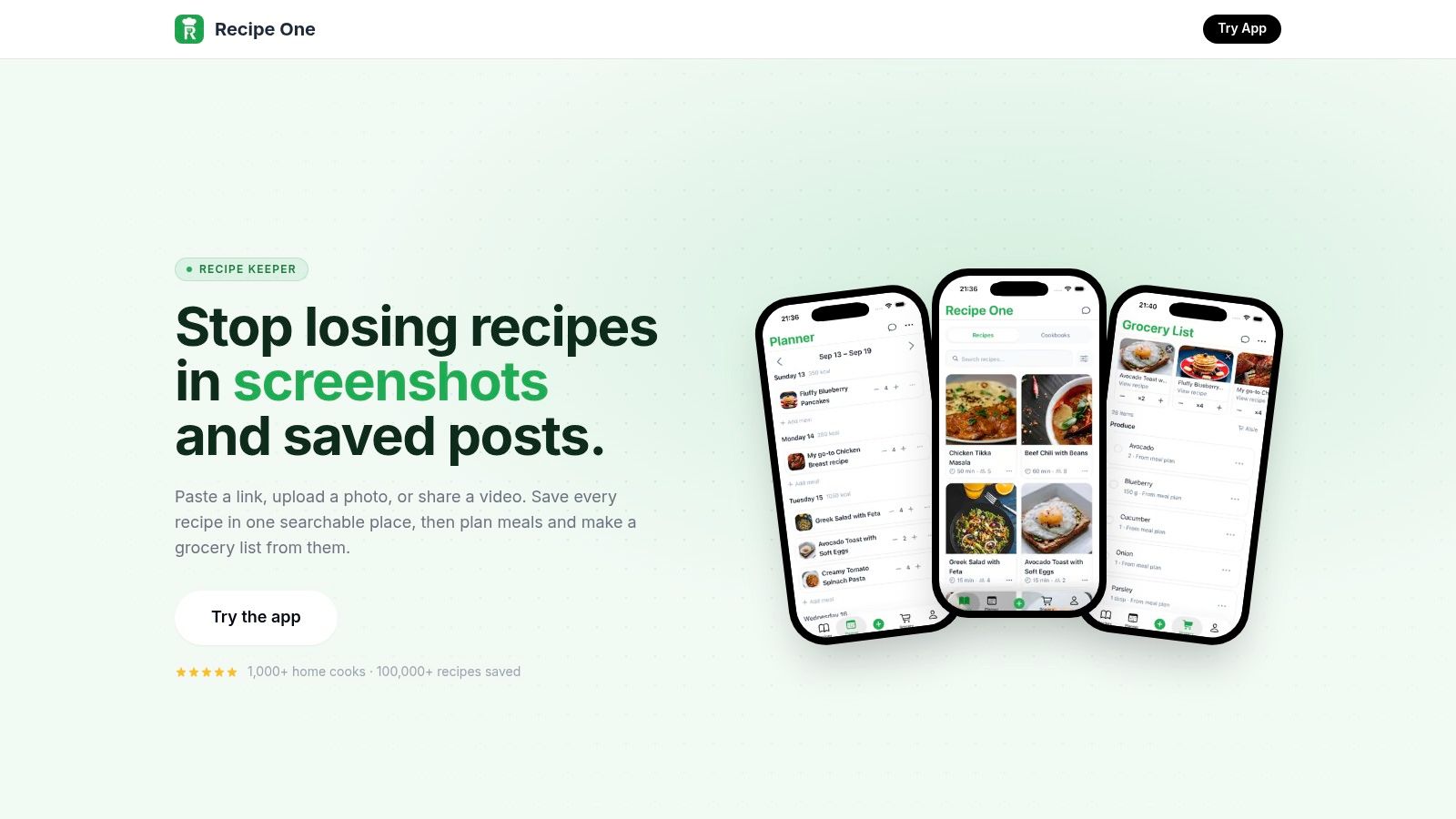
A good tool shortens the logistics, not just the inspiration phase. If you save recipes from Instagram, TikTok, screenshots, photos, or text notes, Recipe One lets you store them in one place, add them to a meal planner, and build a grocery list from what you're cooking. That's especially useful when your recipes live across too many apps and notes.
If your list-making step is the part that drags, an auto-generated grocery shopping list tool can cut out the repetitive work of rewriting ingredients by hand.
Here's a simple map from meals to list items:
Sample Week Meals to Grocery List Map
| Meal | Core Ingredients | Quantity Notes |
|---|---|---|
| Sheet pan chicken | chicken, potatoes, broccoli, olive oil, seasoning | buy enough for dinner plus lunch leftovers |
| Taco night | ground meat or beans, tortillas, rice, cheese, lettuce, salsa | keep extra tortillas for lunch use |
| One-pot pasta | pasta, spinach, garlic, broth, parmesan | pantry-friendly, low-prep meal |
| Freezer chili | pre-cooked chili, shredded cheese, crackers | use freezer stash, only buy toppings |
| Personal pizzas | naan or flatbread, sauce, cheese, toppings | choose toppings that overlap with taco night |
A visual walkthrough helps if you want to see that workflow in action:
The useful habit here is ingredient overlap. Broccoli can show up Monday and in lunch boxes. Taco cheese can become pizza cheese. Spinach can go in pasta, eggs, or smoothies. Less variety on paper often means less waste in real life.
Keep It Going With Time Savers and Troubleshooting Fixes
A meal plan that only works on calm weeks isn't a real system. The test is whether it survives the weeks when everyone is tired and the calendar gets messy.
Time savers that keep the routine alive
A few habits do more than they seem to:
- Cook double when it makes sense: soups, taco meat, pasta bakes, and chili usually reheat well
- Label leftovers clearly: name plus day, so people know what should be eaten first
- Share the dining manager role: one adult plans, another shops, older kids check lunch items or prep produce
- Use kitchen shortcuts freely: frozen vegetables, rotisserie chicken, bagged salad, microwave rice
If you want one place to organize meals, saved recipes, and the weekly plan itself, a meal planner app can help reduce the scattered-note problem that trips up follow-through.
Fix the breakdown, not the whole system
When meal planning for busy moms stops working, the answer usually isn't to quit. It's to identify the exact failure point.
If the week gets overscheduled, switch to a partial plan. Cover only the hardest nights. If you're too tired to cook, use one of your backup meals without guilt. If nobody follows the plan, move it into plain sight on the fridge or shared family calendar.
The plan doesn't need to impress anyone. It needs to feed your family on a Wednesday when nobody has much left.
A quick Sunday check helps:
- Check the calendar
- Pick the late nights
- Choose a few anchor meals
- Stock two backups
- Prep only the highest-friction ingredients
Keep adjusting until the routine fits your real life. That's what makes it sustainable.
If your recipes are scattered across social posts, screenshots, and notes, Recipe One gives you one place to save them, plan your week, and turn that plan into a grocery list you can shop from. It fits this kind of low-decision meal system well because it helps with the part that usually slows moms down most, which is turning meal ideas into an organized week.