It's 6 p.m., somebody's hungry, the fridge looks half-empty, and takeout is suddenly very persuasive. That's usually the moment a weekly meal plan earns its keep, not as a perfect calendar, but as a small, steady hand on the week. A good plan doesn't solve every dinner problem. It just keeps one bad evening from turning into seven.
Why a Weekly Meal Plan Changes the Whole Week
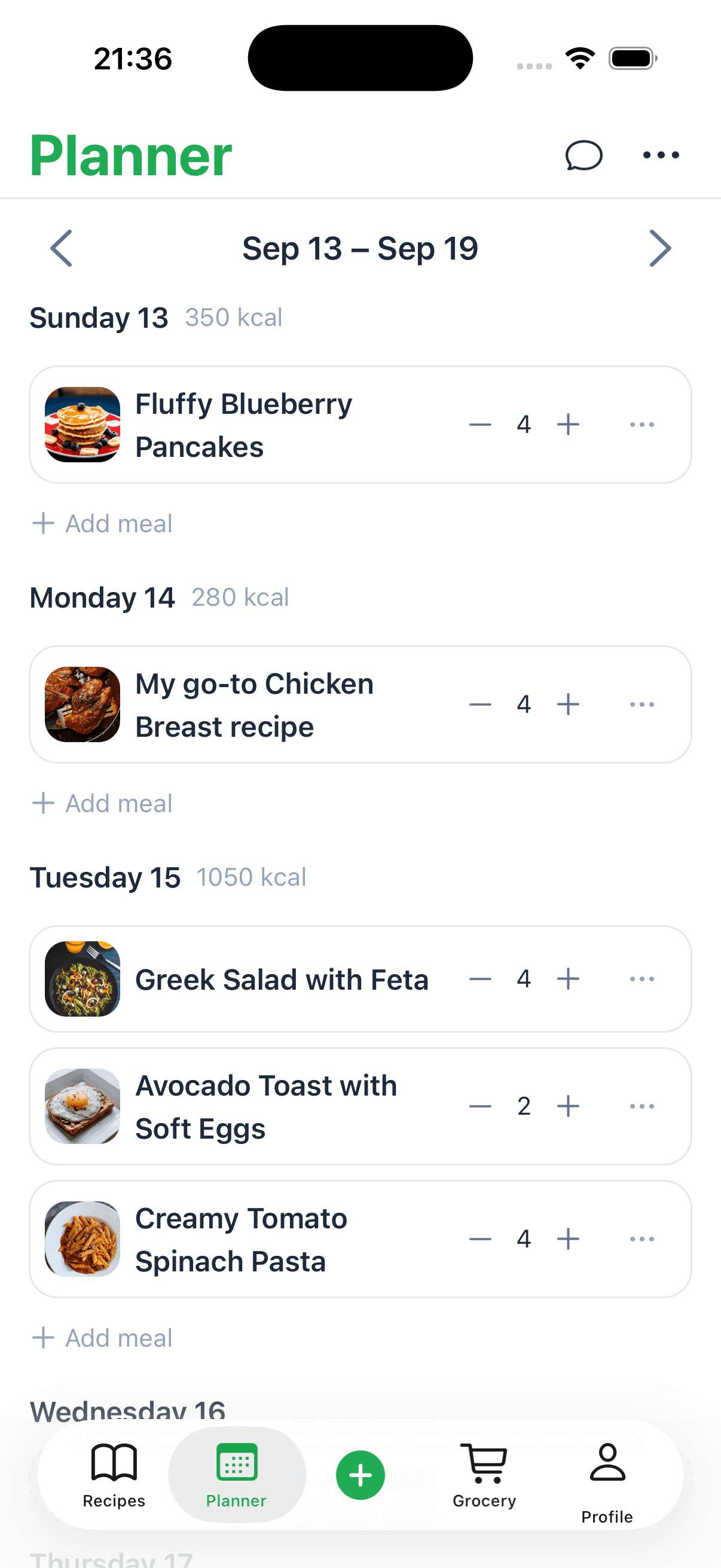
A weekly meal plan works because it changes the point of decision. Instead of opening the fridge and negotiating with yourself while someone asks what's for dinner, you already have the answer waiting on a page or a screen. That tiny shift matters more than it sounds like it should.
The practical payoff shows up in ordinary places. You order less on impulse, you waste less food that should've been used earlier, and grocery shopping stops feeling like a scavenger hunt. The EPA says one-third of all food in the United States goes uneaten, and about 96% of wasted household food ends up in landfills, combustion facilities, or down the drain. The same EPA source says the average family of four spends almost $3,000 per year on food that is not eaten. Weekly planning doesn't remove all waste, but it gives you a real way to shrink the part that starts at home.
Practical rule: if dinner planning feels hard, don't try to plan the perfect week. Plan the version of the week your household actually lives.
That's also why rigid plans often fall apart by Wednesday. One late meeting, one kid's activity, one forgotten thawing step, and the neat seven-day grid stops being useful. A better meal-planning system is built like Is breakfast really necessary, a guide that helps people rethink routines without turning them into rules. The point is to make the plan serve the household, not the other way around.
A useful routine usually has six parts, even if you keep them on one page: set up the kitchen first, pick flexible recipes, batch prep around real schedules, build the shopping list, leave room for disruptions, and finish with a closing check that makes next week easier. When those pieces work together, dinner gets simpler fast. Some nights become heat-and-serve. Others become leftovers that were meant to happen all along.
Setting Up Before You Plan a Single Meal
Start with the food you already own. Open the fridge, freezer, and pantry, then list what's there, what needs to be used first, and what's close to spoiling. That quick inventory keeps you from buying the same thing twice and helps the plan begin with reality instead of wishful thinking.
The fastest way to do this is to sort by urgency, not by recipe. Half a roast chicken, wilting spinach, two bell peppers, and rice in the pantry already point toward a few different meals. Chicken can become tacos, bowls, or a salad. Spinach can go into eggs, pasta, or a skillet meal. Rice can stretch whatever needs bulk.
If you want this step to be clean, use a pantry inventory tool like this pantry inventory workflow as a simple model for keeping ingredients visible before shopping. The method matters because forgotten food is expensive food. Once the food is visible, it's much easier to decide what actually needs buying.
Name the week before you name the meals
Write down the hard constraints first. How many dinners do you need? Which nights are you out? Which nights are late? Who's truly eating at home? A plan that ignores those facts gets abandoned fast, even if the recipes look beautiful on paper.
Then add the household basics. Note preferences, allergies, and one or two anchor proteins that can carry the week. A week with chicken and beans in the rotation needs less mental effort than a week where every dinner starts from zero. If your household has one strong favorite and one reliable fallback, those are not boring choices. They're structure.
A good meal plan starts as a list of limits, not a list of inspiration.
That's the difference between a fantasy menu and a working one. The setup stage keeps the week tied to what your household will eat, what's already on hand, and what's likely to go bad first. It also keeps your shopping list from drifting into duplicate buys and random extras that never get used. In practice, that means fewer surprises when you open the fridge on Thursday night.
Choosing Recipes and Building a Flexible Week
The best weekly plan usually isn't a parade of brand-new recipes. It's a short rotation of dishes that share ingredients, reuse leftovers well, and fit the way your household eats across the week. I've found that if three recipes can share one bunch of cilantro, one bag of potatoes, or one container of yogurt sauce, the whole week gets easier to manage.
That's why it helps to think in roles instead of just meals. You need a build-ahead main, a sheet-pan or one-pot dinner, and a no-cook assembly meal. Those three categories cover most real households without asking every night to feel special. They also make it easier to compare options when you're tired and standing in the kitchen at 9 p.m.
For a solid framework on balance, understanding a well balanced meal is a useful companion read, especially if you want your dinners to feel complete without becoming complicated. Balance matters, but so does repeatability. A plan that takes too much effort to repeat is a plan that won't survive the second week.
Here's what a flexible week can look like in practice:
- Monday: build-ahead main, like a grain bowl or baked pasta that creates leftovers.
- Wednesday: sheet-pan chicken, tofu, or sausage with vegetables.
- Friday: no-cook assembly dinner, like wraps, salads, or a snack-style plate.
- Open slot: leftovers remix, freezer meal, or whatever needs using up.
That open slot is not a failure. It's a pressure valve. If you cook a roast chicken on Sunday, you can use part of it for Monday dinner, part for lunch, and the rest for a soup or salad later in the week. The week bends around the food you've got, and that's what keeps waste low.
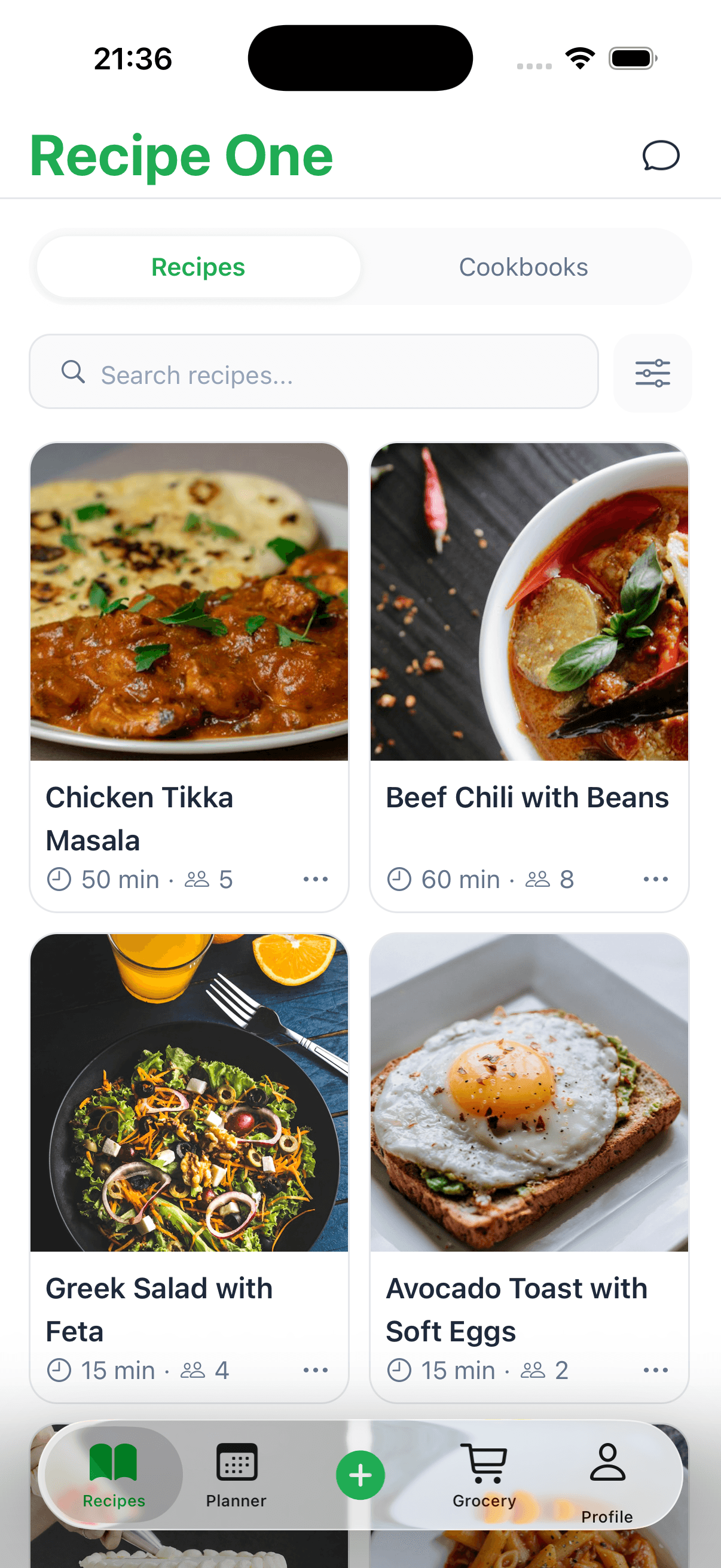
If you save recipes in Recipe One, give each one a clear title, servings, and a tag you'll search later. A saved recipe stops being a one-time idea and starts becoming part of a reusable system. I'd use find recipe by ingredients on hand as a reminder that the smartest plan often starts with what you already have.
Batching and Prep That Matches Real Schedules
A Sunday prep session should support the calendar, not control it. A long cooking marathon feels efficient until plans change, dinner gets delayed, and prepared food sits untouched. Smaller prep sessions hold up better because each one has a clear job and a nearby use.
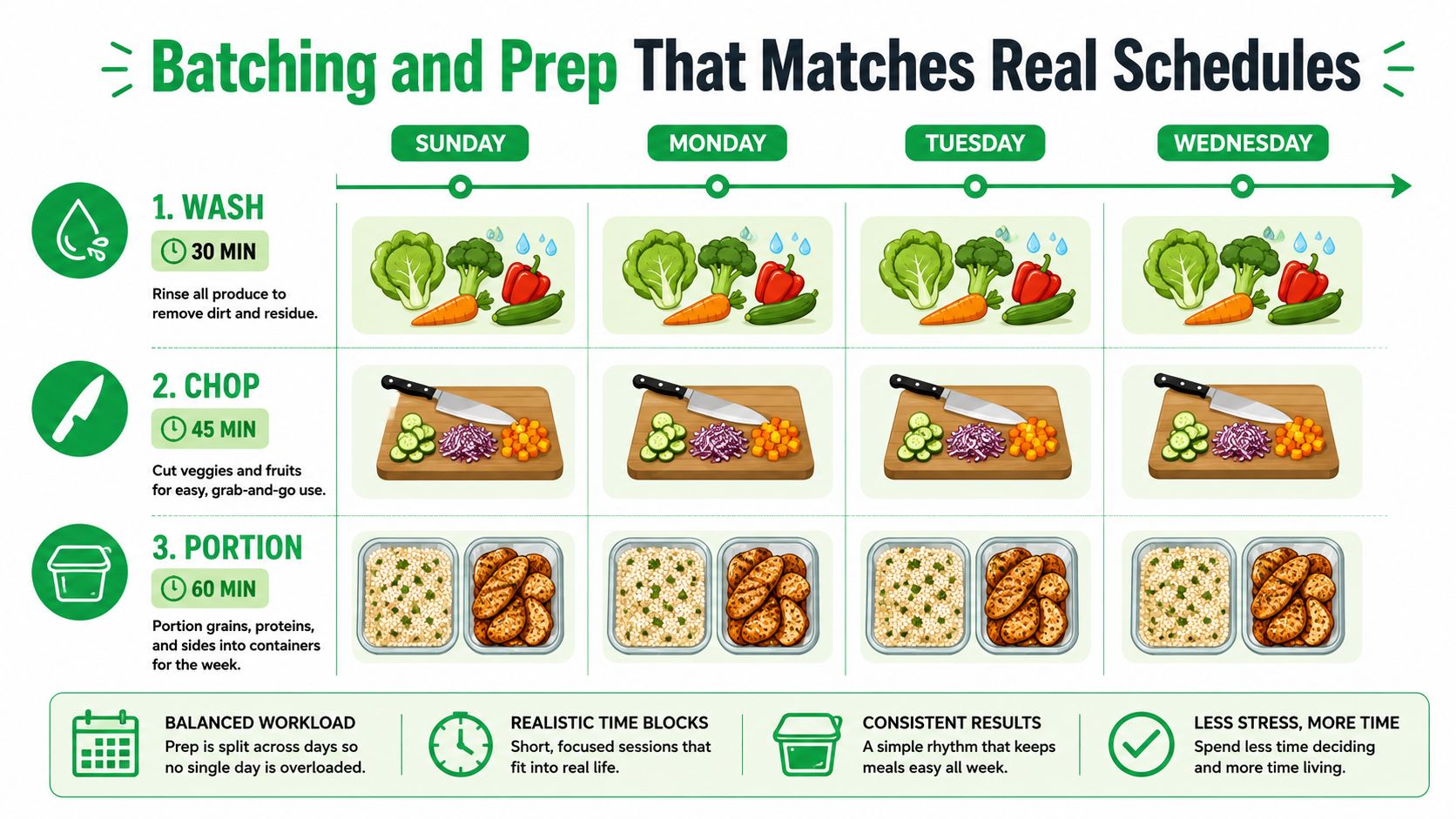
Divide prep into three buckets
Use these buckets to decide what to prepare, when to prepare it, and how much refrigerator space it deserves:
- Washed, chopped, and portioned: vegetables, cooked grains, and marinated proteins that can move into several meals.
- Cook once and transform: a roast chicken, pot of beans, or tray of vegetables that becomes different meals across the week.
- Fully finished dishes that only need reheating.
The categories keep one day from carrying every task. They also match effort to the week's energy levels. Start longer-cooking items earlier, then reserve quick assembly for busy nights. A short Wednesday reset can refresh the refrigerator without repeating the entire Sunday session.
A simple meal prep planner template can record both the prep task and the day you expect to use it. Attach those notes to the saved recipe in your app, so the plan records practical details such as whether vegetables held their texture or a portion was too large.
Storage affects whether the routine lasts. Rectangular glass containers with snap-lock lids work well for meals that go from refrigerator to reheating, while small stackable containers suit chopped toppings and sauces. Choose pieces that fit your shelves and clean easily. meal prep containers dishwasher safe matters when washing a box by hand would make you avoid using it again.
A workable schedule looks like this:
- Sunday, 90 minutes: wash greens, chop vegetables, cook grains, roast one protein, and portion two dinners.
- Wednesday, 20 minutes: refresh chopped produce, move one backup meal forward, and assemble a low-effort dinner from what remains.
- Weeknight use: reheat one dish, assemble one no-cook meal, and turn one component into leftovers.
Save the timing with the recipe in your app. When the dish returns to the plan, you will know how much prep it requires instead of rebuilding the process from memory.
Turning the Plan Into a Clean Shopping List
A meal plan only helps if the grocery list comes out clean. The fastest way to lose that advantage is to write everything down twice, once in the plan and again in a messy list with duplicates. I've done that, and it always turns a simple shop into a scavenger hunt.
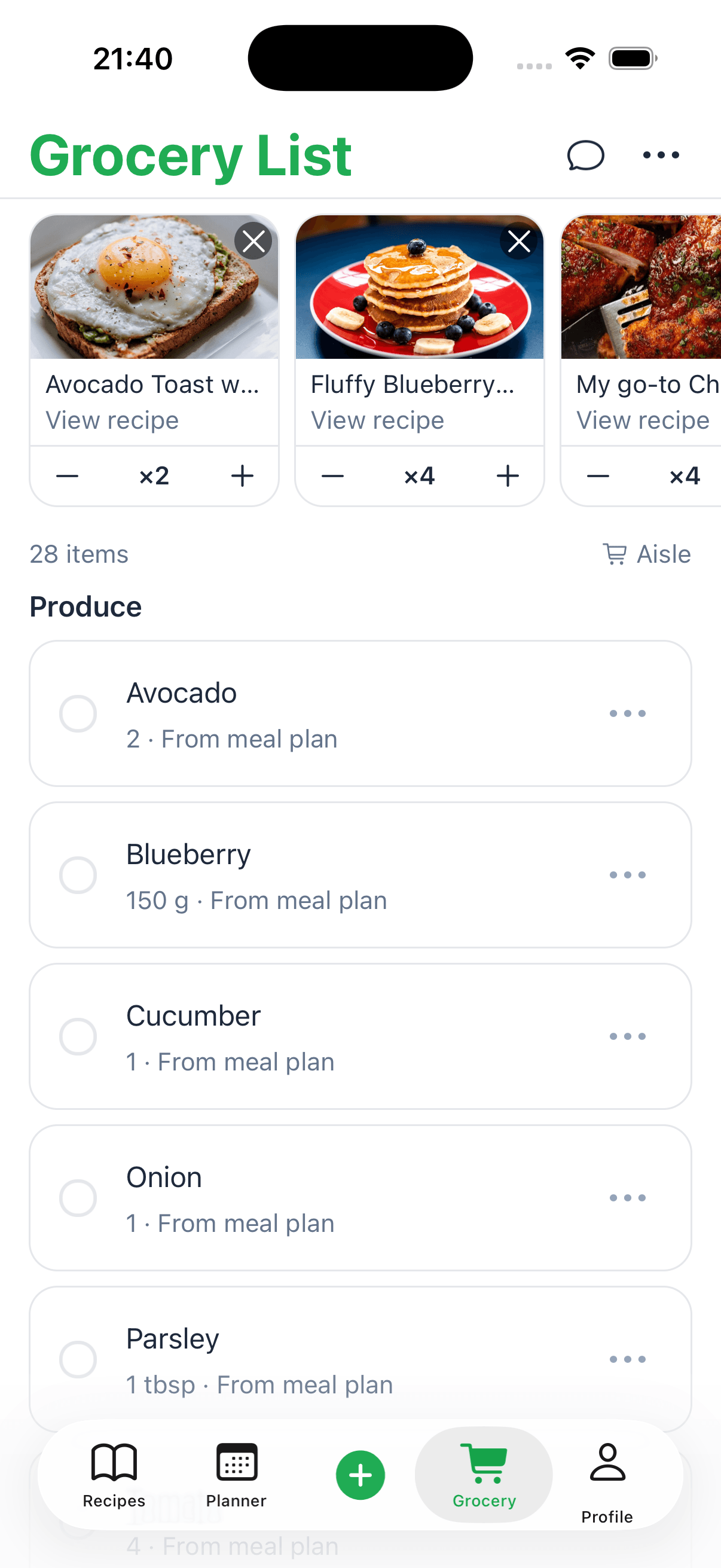
The fix is to let the plan generate the list, then collapse overlaps. If two recipes need onions, that should become one onion line with a quantity that covers both dishes. Same with garlic, spinach, tortillas, or broth. Once the ingredients are grouped, the list should be sorted by store section so the trip moves fast.
A scribbled list usually looks like this:
- onions
- more onions
- chicken
- chicken thighs?
- spinach
- lettuce
- rice
- maybe crackers
- yogurt
- salsa
A tidy list looks more like this:
- Produce: 3 onions, 2 bell peppers, 1 bag spinach, 1 head lettuce
- Pantry: rice, crackers, salsa
- Dairy: yogurt
- Protein: chicken thighs
That second version is easier to shop from because it answers the two questions that slow people down most, what do I need, and where is it in the store? When your recipes are saved in Recipe One, the ingredient list can be pulled from the meals you've already chosen, so the same grocery flow gets easier each week. I'd point people to grocery list generator from recipes if they want the mechanics behind that kind of workflow.
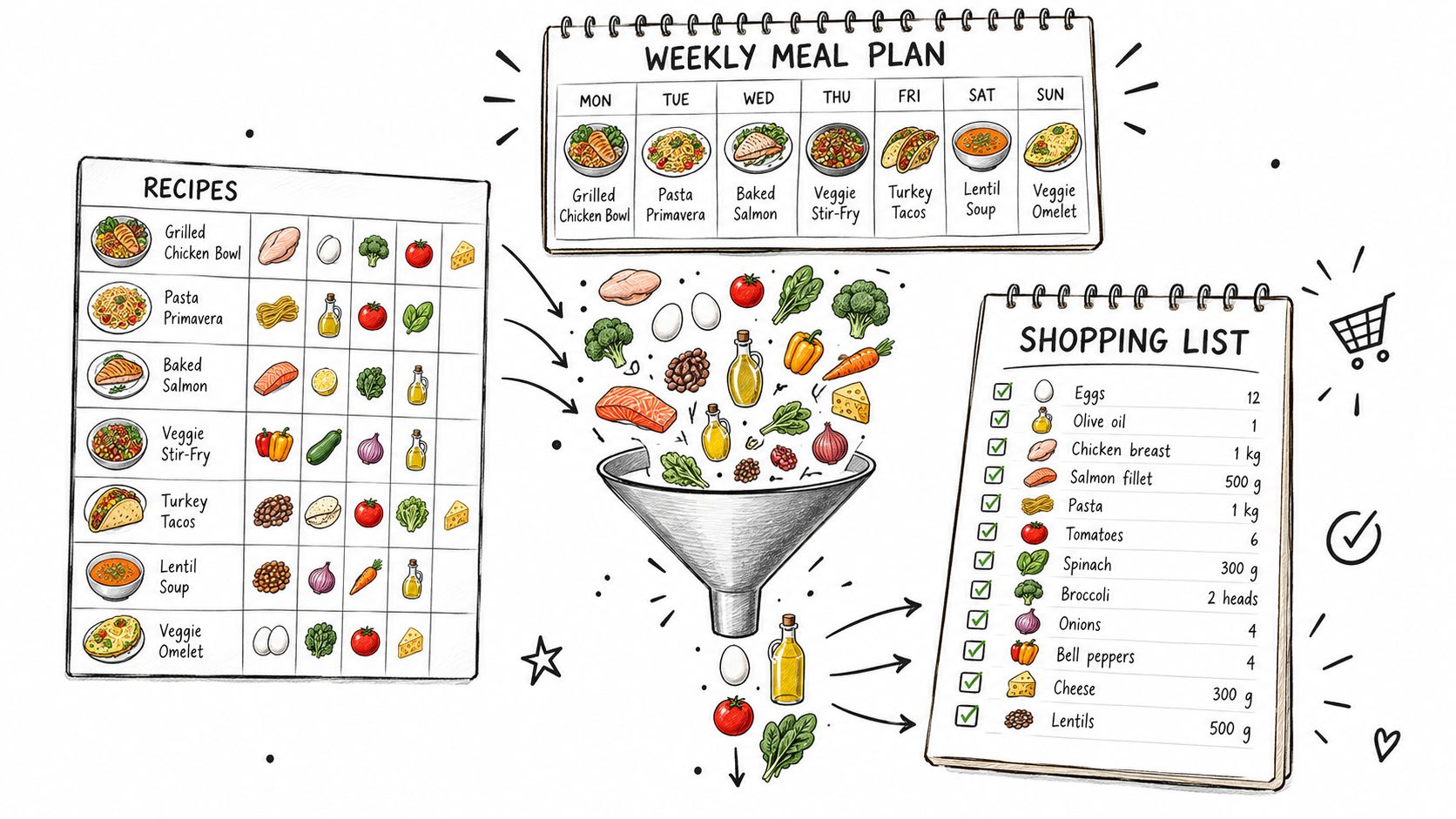
The genuine advantage isn't just speed. It's repeatability. Once the same recipes keep coming back through the planner, the ingredients don't need to be re-entered from scratch. That means fewer misses, fewer duplicate purchases, and less mental work every Sunday.
Designing the Plan to Survive Disruptions
The prettiest meal plan is rarely the most useful one. The useful one expects the week to change and leaves room for that. That's why I always want one flex night on the calendar, because a meal plan that can absorb a bad day is more valuable than one that looks organized in a screenshot.
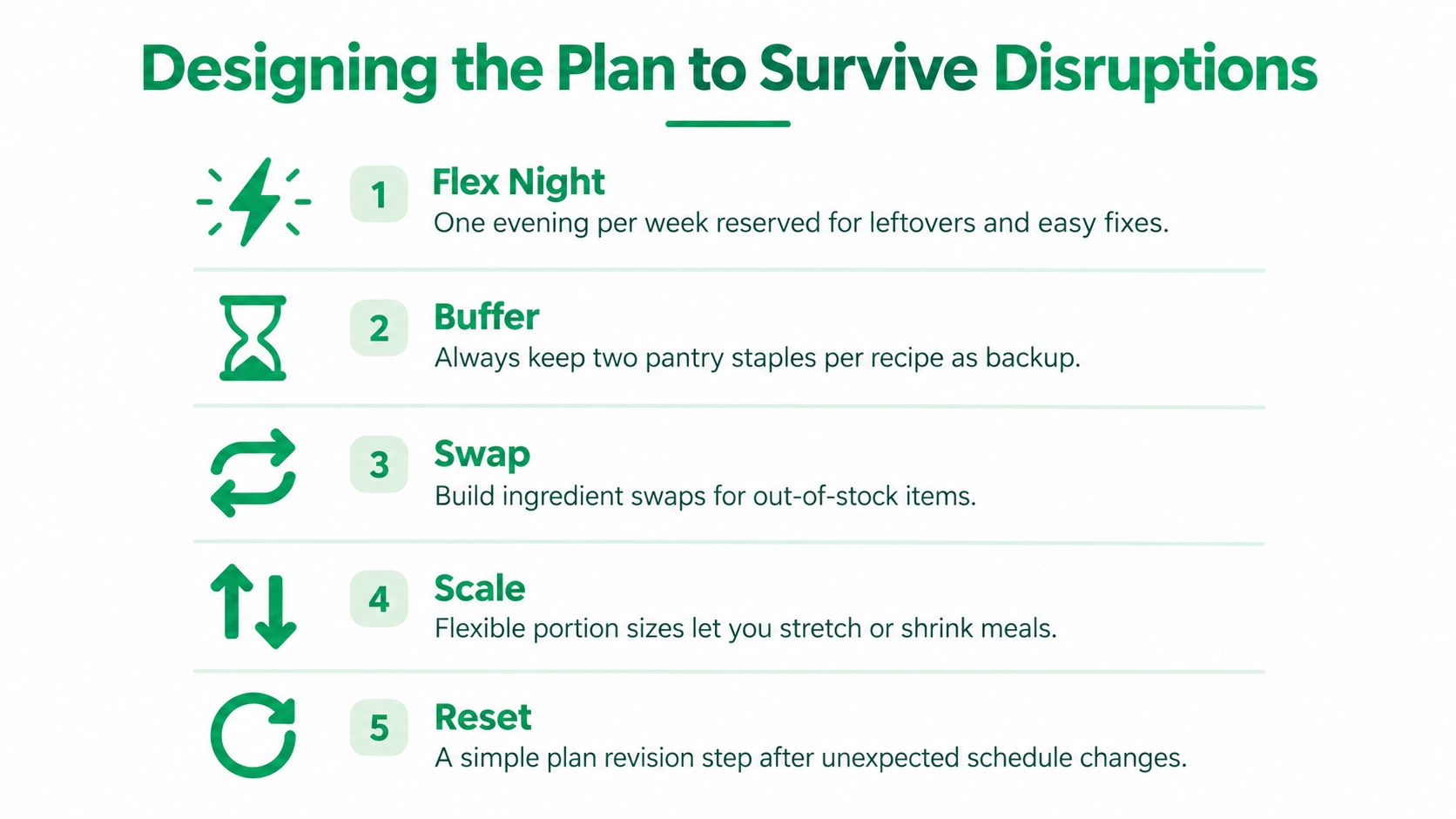
Build the backup before the disruption hits
A missed grocery trip is easier to handle if the pantry already holds one meal's worth of backup staples. An unexpected dinner guest is easier if one recipe stretches without much effort. A late work night is easier if you can move a cooked meal forward instead of starting from scratch. A kid rejecting Tuesday's dinner is easier if the substitute is already in your saved library.
That's where a plan with interchangeable meals pays off. If one recipe can become lunch the next day, you've created another buffer without adding more work. If one backup freezer meal is already chosen, you don't have to negotiate with yourself when the evening goes sideways. The plan absorbs the change instead of breaking.
One of the clearest gaps in meal-planning advice is leftover reincorporation. A lot of people can write a shopping list. Fewer people can turn half-used ingredients into a second meal without making the whole process feel like cleanup. The better habit is to plan leftovers on purpose, then give them a place to go.
For busy families, meal planning for busy moms is often really just meal planning for reality, which means making swaps, shrinking portions, or changing the dinner order without starting over. Saved recipes make those pivots simpler because you're not rebuilding the whole week from zero. You're just moving one piece of the plan into a better spot.
A disruption-friendly week usually includes a few recovery moves:
- Flex night: use leftovers, takeout, or a freezer meal.
- Swap rule: keep at least one meal that can become lunch.
- Backup shelf: hold pantry staples that can stand in for a missing ingredient.
- Reset habit: if the week changes, revise the plan once instead of improvising every night.
That's the version of meal planning you can live with for more than a week. It gives you a plan without trapping you inside it.
Your Repeatable Weekly Meal Planning Routine
The weekly routine works when it gets shorter, not longer. By the time it's familiar, you should be able to run the whole thing on Sunday in under forty-five minutes without making a mess of the rest of the day. The point isn't to be more ambitious. It's to be more repeatable.
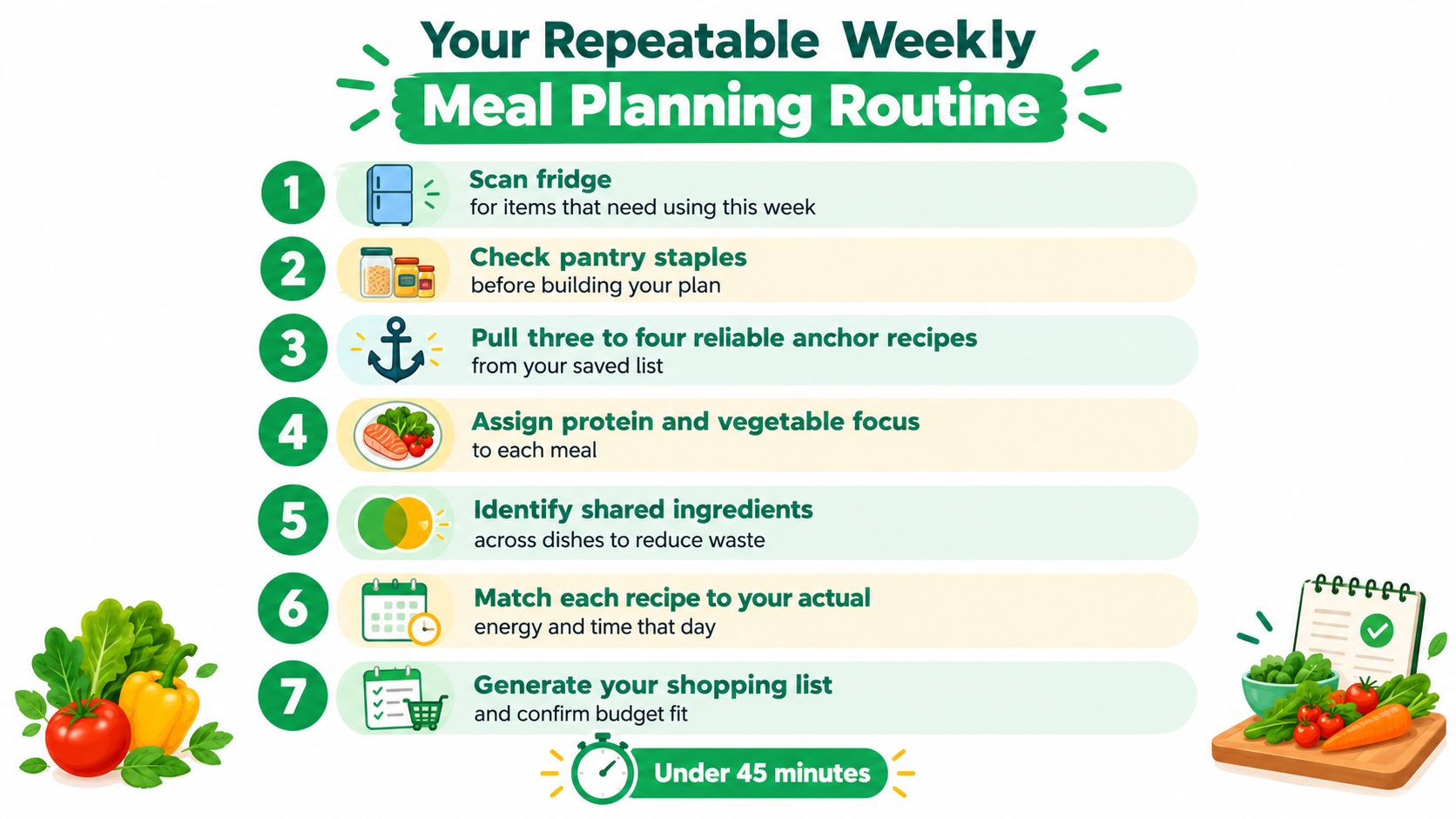
A Sunday checklist that actually holds up
- Scan the fridge. Use what needs using first.
- Check the pantry. Confirm the staples before choosing recipes.
- Pull three or four anchor recipes. Save them from your organized recipe library.
- Balance the week. Make sure proteins, vegetables, and effort levels aren't all uneven on the same days.
- Spot shared ingredients. Let one ingredient support more than one meal.
- Match meals to energy. Put the hardest dish on the easiest night.
- Generate the list. Then confirm the plan still fits your budget and schedule.
A meal planning routine gets easier every time you use it because the tags improve, the unused recipes get trimmed, and the keepers become obvious. The same Sunday process that feels clunky the first week starts feeling natural after a few rounds. Over a month, then a season, then a year, that turns dinner planning from a recurring chore into a background habit.
Recipe One gives you one place to save recipes, build a weekly meal plan, and turn that plan into a grocery list without hunting through scattered screenshots or bookmarks. If you want a calmer way to handle dinner, start organizing the recipes you already use and try Recipe One.