For 1 teaspoon of pumpkin pie spice, use 1/2 teaspoon cinnamon, 1/4 teaspoon ginger, 1/8 teaspoon nutmeg, and 1/8 teaspoon allspice. The same proportions are published by the University of Maine Extension, and the amounts total exactly 1 teaspoon.
A store-bought jar isn't the only way to get that familiar warm, cinnamon-forward flavor. You can mix a measured replacement from pantry spices, but the proportions matter: a published ratio is a true volume-for-volume blend, while a pinch swap is only an approximation.
Spoon Ratios That Replace the Blend
A 4:2:1:1 blend and McCormick's 3:2:2:1 blend use different proportions, so their flavors won't be identical. The table scales each formula to replace either 1 teaspoon or 1 tablespoon of pumpkin pie spice.
| Formula | Replaces 1 tsp | Replaces 1 tbsp | Source |
|---|---|---|---|
| Extension 4:2:1:1 | 1/2 tsp cinnamon, 1/4 tsp ginger, 1/8 tsp nutmeg, 1/8 tsp allspice | 1 1/2 tsp cinnamon, 3/4 tsp ginger, 3/8 tsp nutmeg, 3/8 tsp allspice | University of Maine Extension; the tablespoon is three times the teaspoon formula |
| McCormick homemade 3:2:2:1 | 3/8 tsp cinnamon, 1/4 tsp ginger, 1/4 tsp nutmeg, 1/8 tsp allspice | 1 1/8 tsp cinnamon, 3/4 tsp ginger, 3/4 tsp nutmeg, 3/8 tsp allspice | McCormick's published homemade ratio, scaled to the volume being replaced |
| McCormick part example | Not a 1 tsp swap | — | — |
A “part” is a measuring unit, not a fixed amount. In McCormick's example, the ratio has eight parts. To match the amount your recipe calls for, scale each ingredient proportionally. For help converting kitchen measures, see this cooking measurement conversion guide.
Use ground spices. If starting with whole spices, grind them before measuring. Choose one formula for the recipe rather than combining rows. Professional kitchens make equipment decisions too, including oven selection for restaurant kitchens.
Swaps When a Spice Is Missing
A single spice can suggest pumpkin pie spice, but it cannot reproduce the blend. Use the table to distinguish a measured substitution for one ingredient from a rough stand-in for the full mix.
| What you have | Published guidance | What changes |
|---|---|---|
| Cinnamon alone | McCormick calls cinnamon the main ingredient. It does not publish an equal-volume amount for replacing 1 tsp of the blend. | Ginger, nutmeg, and allspice are missing. |
| Cinnamon and ginger | The extension's 1 tsp formula uses 1/2 tsp cinnamon and 1/4 tsp ginger. These are two parts of that formula, not a complete replacement. | Nutmeg and allspice are missing. |
| Cinnamon and nutmeg | Keep cinnamon as the larger measure and use nutmeg as a small accent. | Ginger and allspice are missing. |
| Allspice alone | — | — |
| Apple pie spice, chai, or garam-style blend | — | The result will reflect the other blend's spices, so expect a different flavor. |
Cinnamon is the closest one-spice approximation because McCormick identifies it as the leading ingredient. Treat that as a flavor cue, not an equal-volume formula. See McCormick's guide to pumpkin pie spice for the source details.
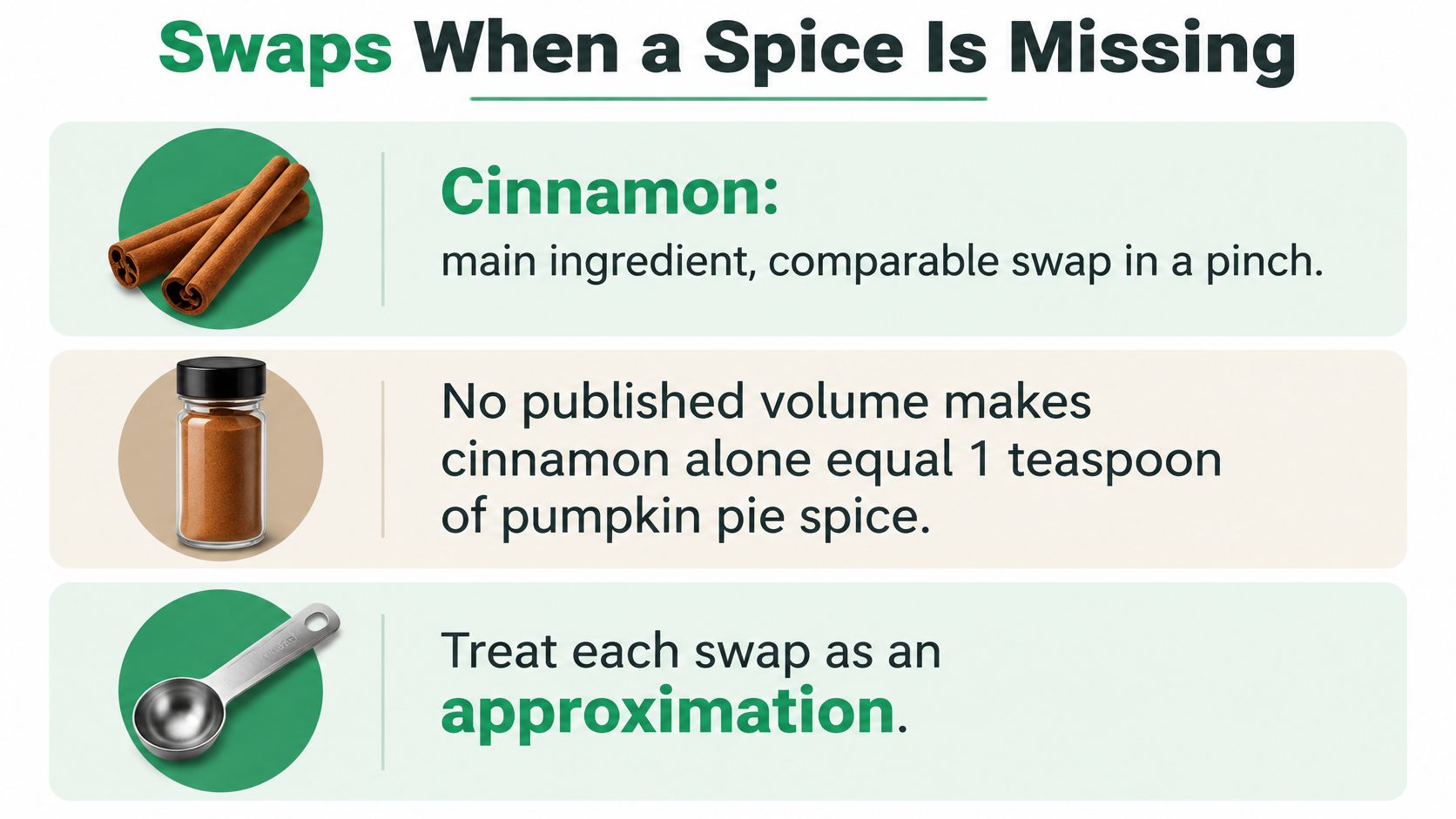
With cinnamon and nutmeg only, let cinnamon lead and use nutmeg as a small accent. There is no sourced precise ratio for that pair. Apple pie spice, chai, and garam-style blends also lack a verified one-for-one amount here; check their ingredients and expect their distinct flavors. Ingredient substitutions can shift a dish's flavor, as the guide to a substitute for chili flakes also illustrates.
If all four spices are available, choose either the extension formula or McCormick's formula from the first table. Use McCormick's version to match that blend, or the extension formula as a household reference. Keep to one formula for the whole pie. If a spice smells faint, replace it rather than adding an unsupported extra amount.
What the Store Jar Contains
A pumpkin pie spice jar doesn't contain pumpkin. McCormick's product listing identifies its blend as cinnamon, ginger, nutmeg, and allspice, in that order, along with sulfiting agents. Its flavor comes from the spices, not from pumpkin itself.
Other products sold under the same general name may use a different mix. Some include cloves or mace, which can make a blend taste sharper or rounder. There's no single mandatory formula or international standard, so don't assume that every jar matches McCormick's ingredients.
Check the label on the jar you're replacing, especially if you're trying to match a familiar pie recipe. If it lists cloves, the blend may have a sharper note than a four-spice version without them. The first table gives two complete, sourced formulas; use one of those if you want a measured homemade alternative.
Why Homemade Blends Differ
Homemade pumpkin pie spice blends can taste familiar without using identical proportions. The extension formula and McCormick's suggested homemade ratio both combine cinnamon, ginger, nutmeg, and allspice, but the amounts differ. Clove is not part of either four-spice formula.
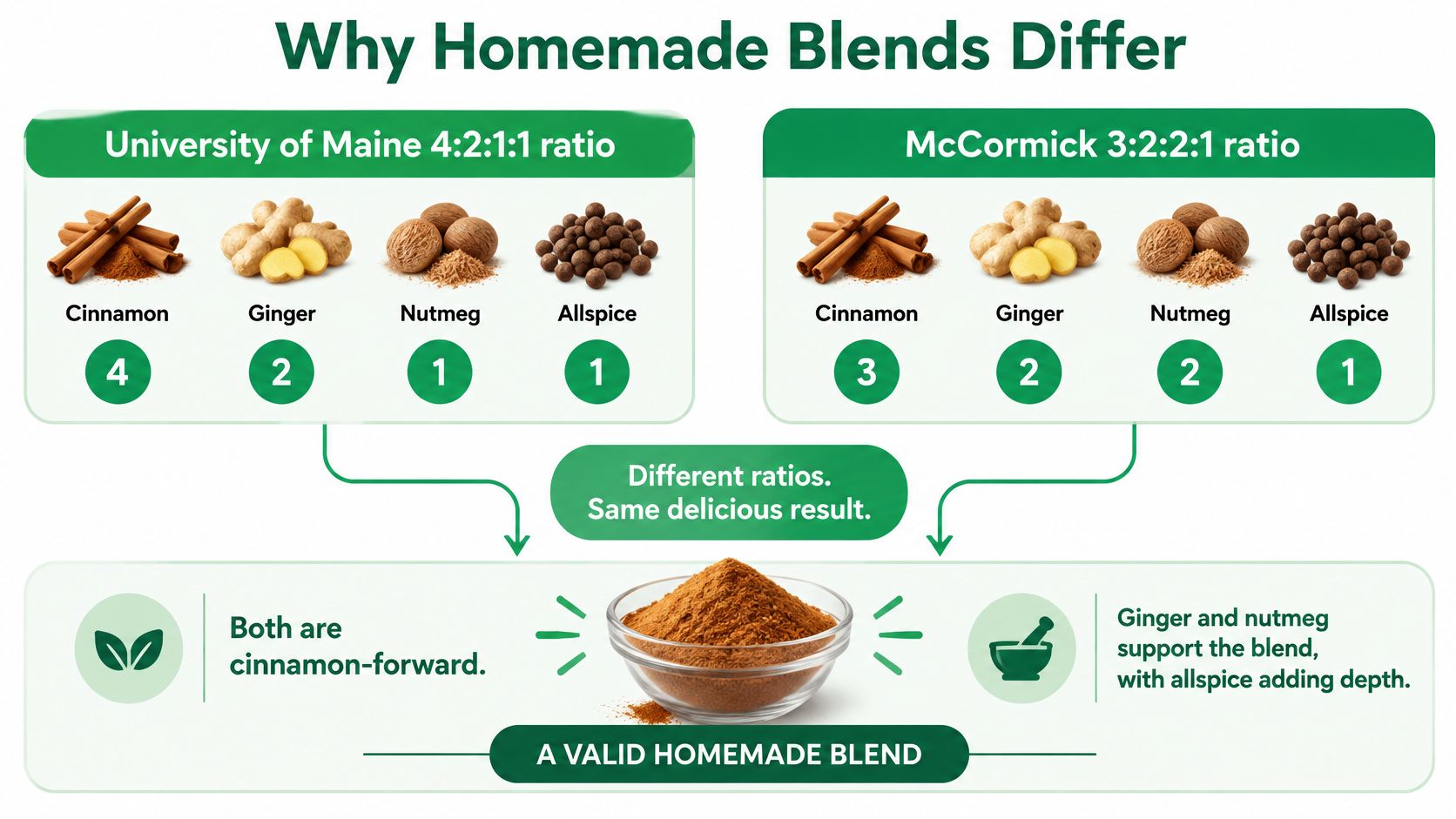
Choose the formula that best matches the blend named in your recipe, then use it consistently. If the recipe specifies McCormick, use its ratio; if it calls for pumpkin pie spice, the extension formula is another published reference. The difference is in proportion, much like adjusting the balance of a chord while keeping the same notes. A medium roast with pumpkin spice pairs those familiar warm flavors with coffee.
Clove Strength and Spice Freshness
Cloves are optional. If you choose to include them, add them sparingly; the four-spice formulas do not require them.
Smell each spice before measuring. Its aroma should be clear, not musty or faint. A faded cinnamon jar may contribute less of the blend's leading note, even when measured accurately. Replace spices that smell weak rather than compensating with extra.
Ground spices gradually lose aroma when exposed to heat, light, air, and humidity. Keep jars tightly sealed in a cool, dark, dry place, away from the stove and damp cupboards. Use aroma as your guide: a spice that smells faded may contribute less flavor.
Before you measure: Smell the spices, then level the spoons. Mix the finished blend into the dry ingredients so nutmeg or clove doesn't collect in a concentrated pocket.
How to Mix a Small Batch
Make only what the recipe needs. A small batch is easier to measure accurately, and it keeps you from treating a part-based ratio as though it automatically makes a spoonful of a particular size.
-
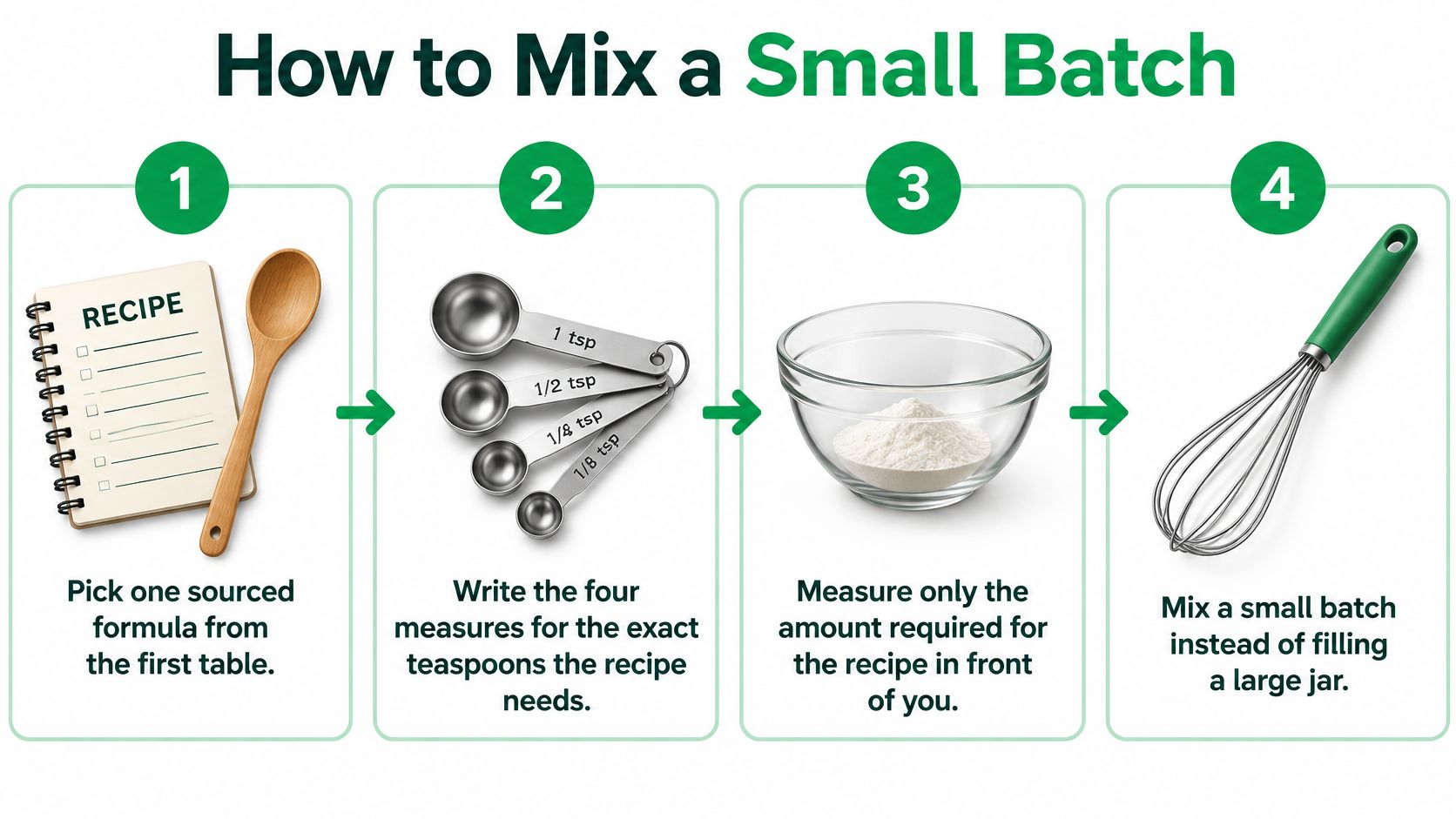
Pick one sourced formula. Write down the four measures for the exact amount the recipe calls for. For a teaspoon, the extension formula already totals 1 teaspoon; for a tablespoon, use a full tablespoon entry from the first table.
-
Use ground spices. Measure ground cinnamon, ginger, nutmeg, and allspice. If you're starting with whole spices, grind them first and measure after grinding.
-
Level each spoon. Sweep off the excess rather than heaping the spices, especially the smaller nutmeg and allspice measures. A level spoon keeps the proportions closer to the chosen formula.
-
Stir in a small bowl. Combine the four spices until their color looks even. If you're converting a recipe's volume while planning the batch, this guide to tablespoons in a cup can help keep kitchen measures clear.
-
Add the blend to the dry ingredients. Whisk it through the flour or other dry ingredients before adding wet ingredients. That spreads the seasoning through the batter and helps prevent a concentrated pocket in one slice.
For a larger pantry jar, choose the total amount you want to make before scaling a parts-based formula. Label the jar with the formula and the date, then store it sealed in a cool, dark, dry place. The finished blend should smell sweet and warm, with cinnamon still leading.
Save the Pie and Note the Swap
A clear note beside the recipe makes the spice choice easy to repeat. Save the pie recipe in Recipe One by sharing its link or snapping a photo. Recipe One extracts the ingredients and steps without ads or extra content.
Record the formula you used, such as “extension measures” or “McCormick 3:2:2:1.” Recipe One lets you save recipes in cookbooks, including one for baking, so the recipe and your note stay together.
If a spice is missing, compare any suggested swap with the sourced amounts in this guide before baking. Add the week's baking to your meal plan, and the grocery list will include the week's ingredients. For holiday planning, use the Thanksgiving meal planner; for other ingredients in a bake, see the condensed milk substitute and buttermilk substitute.
Recipe One is available on the App Store.
Common Questions
Can I use cinnamon alone instead of pumpkin pie spice?
McCormick identifies cinnamon as the main ingredient, but cinnamon alone leaves out the ginger, nutmeg, and allspice notes, so the result tastes simpler than a full blend.
Is apple pie spice the same as pumpkin pie spice?
There's no verified one-to-one ratio between them in the cited sources. Read the apple pie spice label and taste the batter rather than assuming the blends have the same ingredients or strength.
How do I know if a homemade mix is still good?
Smell it before measuring. The aroma should be distinct rather than musty or faint, and the spices should be kept sealed in a cool, dark, dry place.
Should I add cloves?
Cloves aren't part of the default four-spice formulas, so treat them as optional. If you add them, use a small amount.
For another baking swap, see this guide to a buttermilk substitute.
Save your pie recipe in Recipe One, note which pumpkin pie spice formula you used, and keep the ingredients and steps together for the next bake. Add baking to your weekly plan so the grocery list includes any spices you still need, then visit Recipe One to organize recipes from wherever you find them.