If you’ve ever found yourself mid-recipe, staring at a measuring cup and wondering how many tablespoons you need to fill it, you're not alone. The answer is simple and one of the most useful bits of kitchen knowledge you can have: there are exactly 16 tablespoons in 1 standard US cup.
Getting this measurement right is a game-changer, especially in baking, where precision is everything.
How Many Tablespoons Are in a Cup
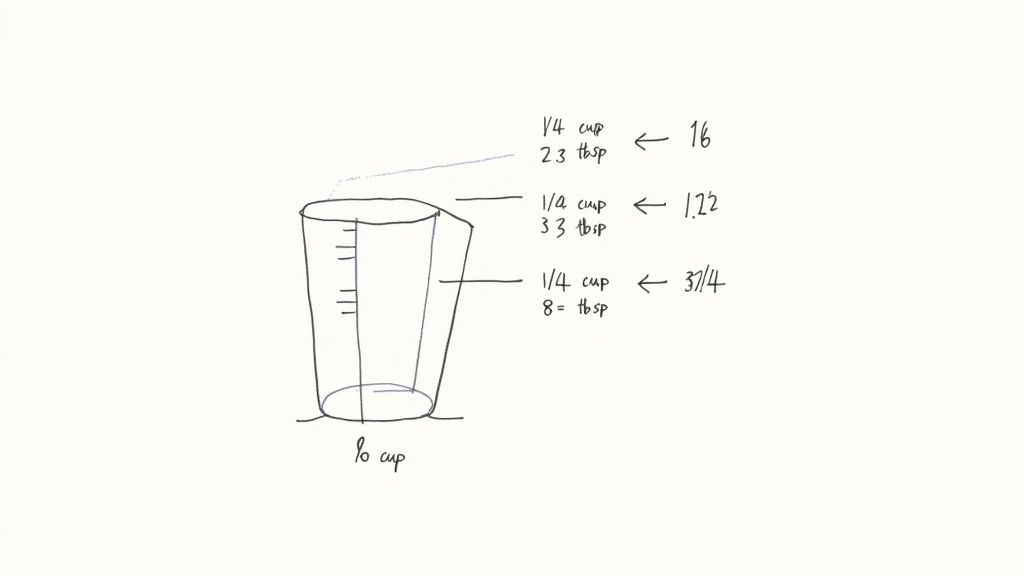
This 16 to 1 ratio is a cornerstone of the US customary system used in most American recipes. It doesn't matter if you're measuring a liquid like water or a dry ingredient like flour; the volume conversion stays the same.
Think of it this way: each tablespoon is just a small fraction of a cup. To be precise, 1 tablespoon is equal to 1/16 of a cup, or 0.0625 cups. Knowing this little fact can save you a lot of guesswork and help make your cooking consistently great.
To save you some mental math, here’s a quick chart for the most common measurements you’ll see in recipes.
Quick Conversion Chart Tablespoons to Cups
This handy table breaks down the most common conversions you'll likely need. Having these memorized or bookmarked can really speed up your prep time.
| Tablespoons (tbsp) | Cups (US customary) | Milliliters (ml) |
|---|---|---|
| 16 tbsp | 1 cup | 236.6 ml |
| 12 tbsp | 3/4 cup | 177.4 ml |
| 8 tbsp | 1/2 cup | 118.3 ml |
| 5 1/3 tbsp | 1/3 cup | 78.9 ml |
| 4 tbsp | 1/4 cup | 59.1 ml |
| 2 tbsp | 1/8 cup | 29.6 ml |
| 1 tbsp | 1/16 cup | 14.8 ml |
Once you get comfortable with these volume conversions, you might find yourself curious about other details, like the olive oil calories per tablespoon.
And when a recipe calls for weight instead of volume (like grams of flour), you can use our suite of free kitchen tools at https://www.recipeone.app/tools to get every measurement spot on.
A Guide to Standard US Kitchen Measurements
Ever found yourself staring at a recipe and wondering why on earth there are 16 tablespoons in a cup? It might seem random, but it's all part of the US customary system. This system was designed to make scaling recipes up or down surprisingly straightforward once you know the basics.
It all starts with a simple, foundational rule: 3 teaspoons make up 1 tablespoon. From there, everything else scales up. According to the National Institute of Standards and Technology (NIST), 1 tablespoon is officially defined as 1/2 a fluid ounce, which is roughly 15 ml. This standard is what ensures a tablespoon of oil in a recipe from California is the same as one from New York. You can dive deeper into the official specs by checking out the US government guidelines on kitchen measurements.
The Building Blocks of a Cup
Once you see how the units are related, kitchen math becomes a lot less scary. It’s not just a jumble of numbers but a logical system built for everyday cooking.
Here’s a quick breakdown of how common liquid measurements relate to each other:
- 3 Teaspoons = 1 Tablespoon
- 2 Tablespoons = 1 Fluid Ounce
- 8 Fluid Ounces = 1 Cup
- 2 Cups = 1 Pint
- 4 Cups = 1 Quart
This structure means the math stays consistent, whether you're figuring out how many tablespoons are in a quarter cup or converting pints to quarts. These conversions are just as vital for solid ingredients measured in cups, like butter. For a great practical example, see our guide on how much is in 1 cup of butter, where we break down these very principles.
Getting these fundamentals down gives you the freedom to tweak recipes with confidence. If you need to cut a recipe in half, you'll know that half a cup is just 8 tablespoons—no tricky fractions needed. This kind of knowledge is what separates someone who just follows instructions from a cook who truly understands their craft.
The recipe converter halves or doubles a full ingredient list, including fractions.
Why Your International Recipe Might Have Failed
Have you ever followed a recipe from a UK or Australian blog only to have it turn out… wrong? You're not alone. It's a frustratingly common problem that usually comes down to one simple thing: a cup isn't always a cup, and a tablespoon isn't always a tablespoon.
The difference between a perfect bake and a kitchen disaster can hinge on these subtle but crucial measurement variations. For example, a standard US cup holds about 240 milliliters (ml). But in Australia and Canada, their metric cup is a slightly larger 250 ml. That small 10 ml difference can be enough to throw off the delicate balance of a cake or bread dough.
Tablespoons are another culprit. A US tablespoon is approximately 14.8 ml, while the UK uses a clean 15 ml metric tablespoon. And then there's Australia, where a standard tablespoon is a full 20 ml! It's easy to see how things can go sideways if you're not aware of your recipe's origin.
International Measurement Comparison (US vs UK vs AUS)
To put it all into perspective, let's break down the common measurements across the United States, the United Kingdom, and Australia. Keeping this little chart handy can be a real lifesaver when you're diving into international recipes.
| Measurement Unit | United States (US) | United Kingdom (UK) | Australia (AUS) |
|---|---|---|---|
| 1 Cup | ~240 ml | ~284 ml (Imperial) | 250 ml (Metric) |
| 1 Tablespoon | ~14.8 ml | 15 ml (Metric) | 20 ml (Metric) |
As you can see, the differences are significant enough to impact your final result. The best advice is to always note where your recipe comes from. If it’s from the UK or Australia, using your standard US measuring cups might not give you the intended outcome. For guaranteed accuracy, nothing beats a kitchen scale.
Want to become a pro at adapting recipes? Check out our complete guide on how to convert recipe measurements for foolproof results every time.
Practical Techniques for Accurate Measuring
Knowing how many tablespoons are in a cup is only half the battle. Your actual measuring technique is what makes or breaks a recipe. A few simple habits can make sure your measurements are spot-on every time, leading to much better, more consistent results.
For dry goods like flour, sugar, or spices, the "scoop and level" method is your best friend. Don't just scoop directly from the bag. Instead, use a spoon to lightly pile the ingredient into your measuring cup or spoon, then use the flat edge of a knife to sweep away the excess. Packing it down, unless a recipe specifically says to, can throw off your measurements by as much as 25%.
The Right Tools for the Job
You wouldn't use a hammer to turn a screw, right? The same logic applies here. Using the right measuring tools is essential for getting things just right in the kitchen.
- For Dry Ingredients: Stick with a set of nested measuring cups and spoons. They’re designed with flat rims, which are perfect for that all-important leveling technique.
- For Liquid Ingredients: A clear glass or plastic measuring cup with a spout is what you need. To get an accurate reading, place it on a level surface and bend down so you’re looking at the measurement line at eye level.
The image below shows just how much tablespoon and cup sizes can vary between the US, UK, and Australia, which is another reason why your technique is so important.
As you can see, a US tablespoon is about 14.8 ml, but an Australian one is a full 20 ml. That's a huge difference, especially when you're adapting recipes from other parts of the world.
Getting your measurements right isn't just for bakers. It’s key for all sorts of dishes, from perfecting a sauce to cooking grains. For instance, our guide on how to cook rice perfectly explains how the right water-to-rice ratio—measured accurately—is the secret to fluffy rice every single time.
Getting a few key tools can make your life in the kitchen so much easier and your cooking more precise. You don't have to break the bank, either; there are plenty of affordable kitchen gadgets out there that can help.
When to Measure by Weight Instead of Volume
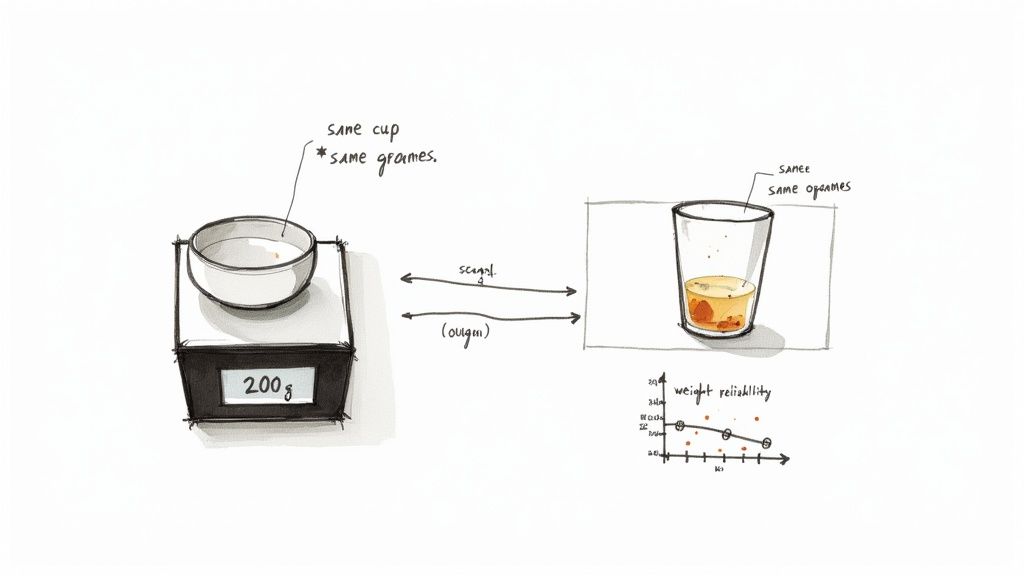
While knowing how many tbsp in a cup is a must-have skill for everyday cooking, you’ll find that most professional bakers ditch their measuring cups altogether. Their secret weapon for getting flawless results every single time? A simple kitchen scale.
Measuring ingredients by weight (in grams or ounces) instead of volume is the key to consistency. Volume can be surprisingly unreliable. How you scoop your flour or pack your brown sugar can dramatically change how much you're actually adding.
Think about flour. A single cup can weigh anywhere from 120 to 150 grams depending on whether you spoon it lightly into the cup or scoop it straight from the bag. That 30-gram difference might not sound like much, but it’s enough to make a cake dry and crumbly instead of perfectly moist. Measuring by weight eliminates all that guesswork.
Why Density Matters in the Kitchen
The big reason weight is king in baking comes down to one word: density. An ingredient’s density affects how much of it can fit into a cup. For instance, a cup of dense, packed brown sugar weighs far more than a cup of light, fluffy powdered sugar. But on a scale, 100 grams is always 100 grams, no matter what the ingredient is.
A scale really shines in situations like these:
- Baking Bread: The flour-to-water ratio (hydration) has to be spot-on for the right texture.
- Making Pastries: Fussy recipes like macarons depend on exact ratios. There's no room for error.
- Dividing Dough: Using a scale is the only way to guarantee every dinner roll or loaf is exactly the same size.
Using a kitchen scale takes the variables out of the equation. It doesn't matter if it's a humid day or how tightly you pack an ingredient—your measurements will be identical to the recipe developer's. This leads to predictable, successful results you can count on.
If you’re ready to up your baking game, a digital kitchen scale is one of the best investments you can make. And to help you get started, we've built a handy tool for adapting your favorite recipes. Our guide on converting cups to grams makes it easy to switch from volume to precise, weight-based measurements.
Frequently Asked Kitchen Conversion Questions
Even when you've got the basics down, certain questions always seem to pop up right in the middle of a recipe. Getting a quick answer can be the difference between a culinary triumph and a frustrating mistake. Let's tackle some of the most common questions that come up in the kitchen.
Getting these little details right, from butter to spoons, is key to making sure your dish turns out exactly like it's supposed to. Here are a few things that often trip people up.
How Many Tablespoons Are in a Stick of Butter?
This is a great one because the answer makes life so much easier. A standard stick of butter in the U.S. is equivalent to 1/2 cup, which means it contains exactly 8 tablespoons.
Most butter wrappers even have handy markings for each tablespoon. You can just slice off what you need without getting a measuring spoon dirty. It’s a perfect example of how knowing these simple conversions simplifies your cooking.
Is a Dessert Spoon the Same as a Tablespoon?
Nope, they're definitely not the same, and mixing them up can throw off your recipe. A standard U.S. tablespoon is a specific unit of measurement that holds about 15 ml. A dessert spoon from your silverware drawer is smaller and usually holds only about 10 ml.
When a recipe calls for a tablespoon, especially in baking where precision is king, always reach for a proper measuring spoon, not the one you eat with.
Does It Matter If I Use a Liquid or Dry Measuring Cup?
Yes, it absolutely matters. Using the right tool for the job is critical for getting accurate measurements.
- Dry Measuring Cups are made to be filled right to the top and then leveled off with something flat, like the back of a knife. They’re perfect for ingredients like flour, sugar, or cocoa powder.
- Liquid Measuring Cups have a pour spout and measurement lines printed below the rim. That extra space at the top is there to prevent spills and lets you get an accurate reading by checking it at eye level.
Using the wrong cup can easily lead to adding too much or too little of an ingredient, which can really mess with the texture and flavor of what you're making.
For instance, if you try to measure flour in a liquid measuring cup, you'll almost always use too much because you can't level it off properly. This is a classic culprit behind dry, dense cakes and cookies.
Why Do Some Recipes Use "Scant" or "Heaping" Tablespoons?
You'll often find these terms in older family recipes passed down through generations. A "heaping" tablespoon is pretty much what it sounds like—as much of the ingredient as you can pile onto the spoon. A "scant" tablespoon means just a little bit less than a full, leveled-off spoon.
While these terms have a certain charm, they aren't very precise. For the most reliable and repeatable results in modern cooking, it’s always better to stick with exact, leveled measurements. That way, your dish will turn out perfectly every single time.
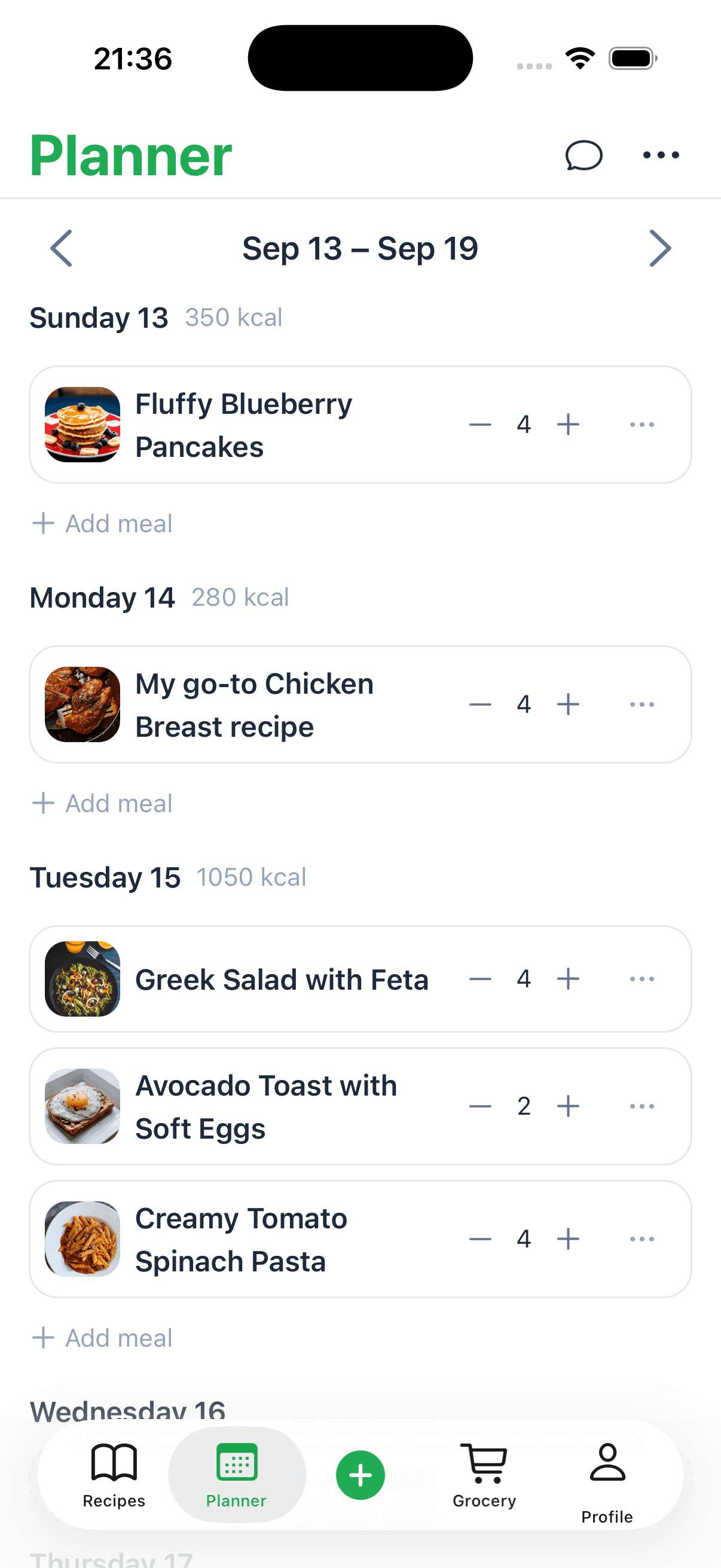
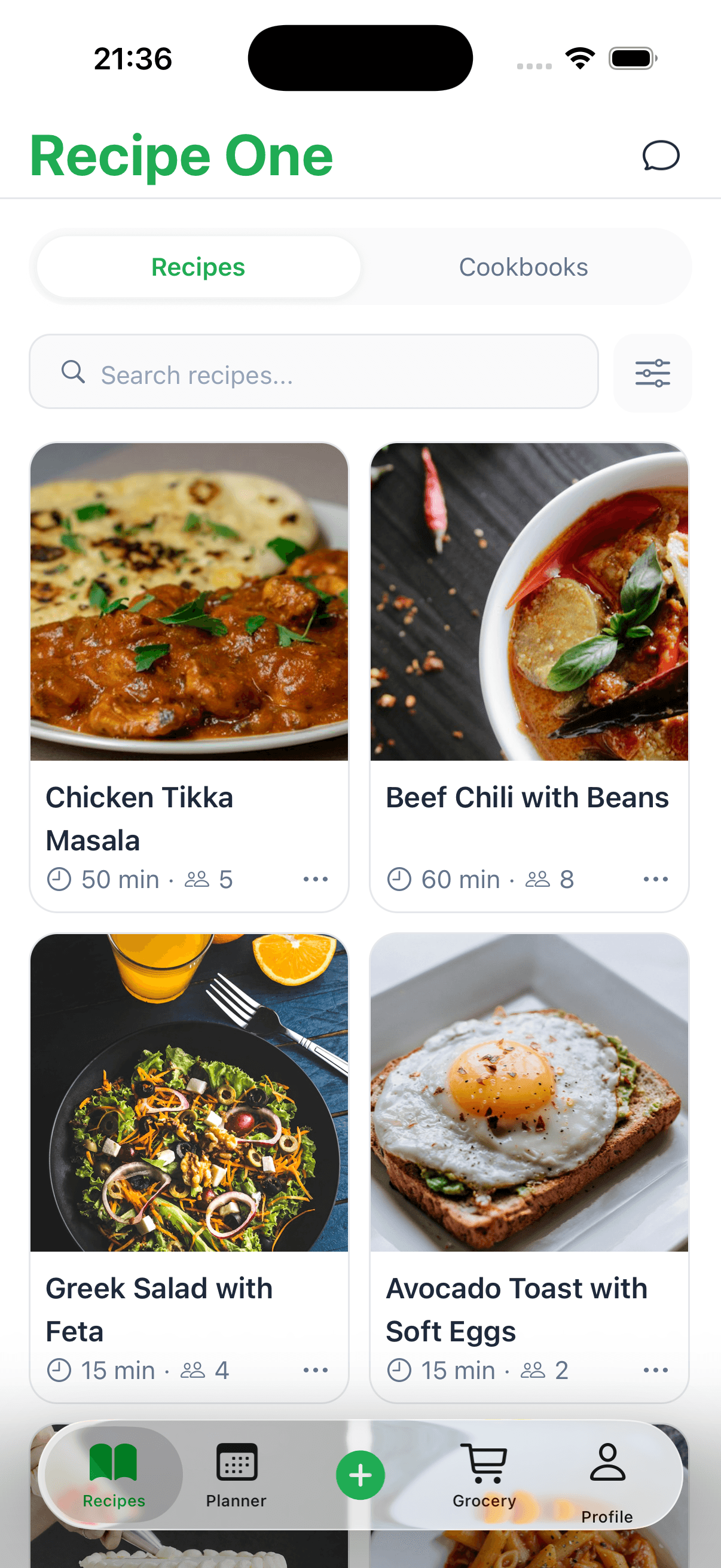
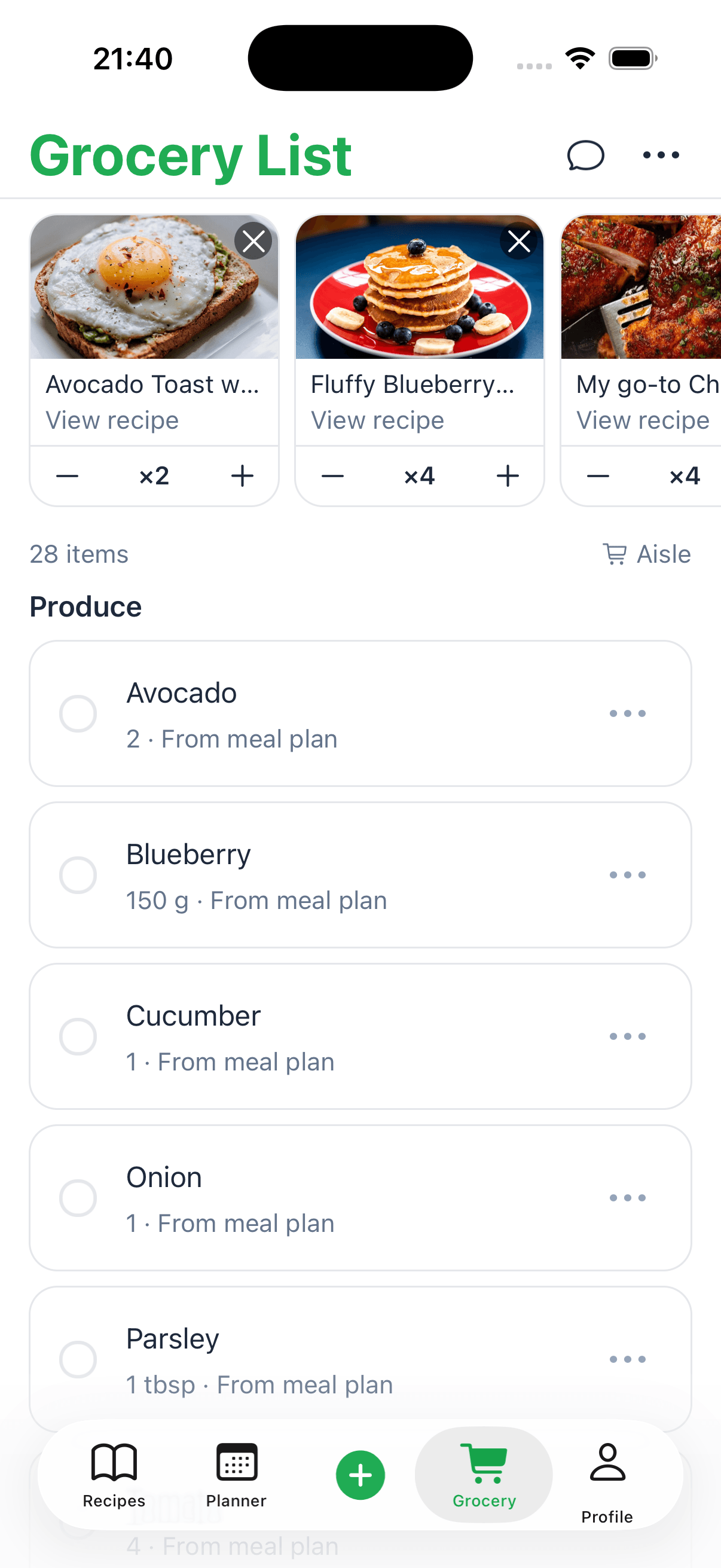
For more confidence in the kitchen, let Recipe One be your culinary sidekick. Our app not only helps you organize your favorite recipes from all over the web but also includes a bunch of free tools, like measurement converters, to take the guesswork out of cooking. Stop losing track of great recipes and start cooking smarter by visiting https://www.recipeone.app/.