You're halfway through a recipe—a vibrant pasta sauce, a zesty marinade, or a perfect pizza topping—when you reach for the chili flakes and find the shaker empty. It's a common kitchen crisis that can leave a dish feeling flat and one-dimensional. But the solution isn't to abandon the recipe; it's to understand the alternatives. Heat is more than just a sensation; it's a critical flavor component that brightens, deepens, and balances other ingredients.
Red pepper flakes, typically made from a blend of dried red chili peppers, offer a moderate, straightforward heat and a pleasing texture. Finding the right substitute for chili flakes means considering not just the spice level but also the flavor profile and how it will interact with your dish. Beyond common flakes, other regional variations like Thai chili powder offer distinct profiles, adding a pungent heat to your dishes.
Whether you need a subtle warmth or an intense kick, this guide will walk you through eight reliable options. We provide precise substitution ratios, best-use cases, and practical tips to ensure your meal is as flavorful as you intended. From common pantry staples to more adventurous choices, you'll find the perfect swap to save dinner and maybe even discover a new favorite way to add spice.
1. Cayenne Pepper Powder
When you need a reliable substitute for chili flakes, cayenne pepper powder is often the first and best option to reach for. Made from finely ground, dried cayenne chili peppers, it delivers a clean, consistent heat that integrates seamlessly into almost any dish. Its fine texture means the spice disperses evenly, ensuring every bite has a uniform level of spiciness without the textural interruption of flakes.
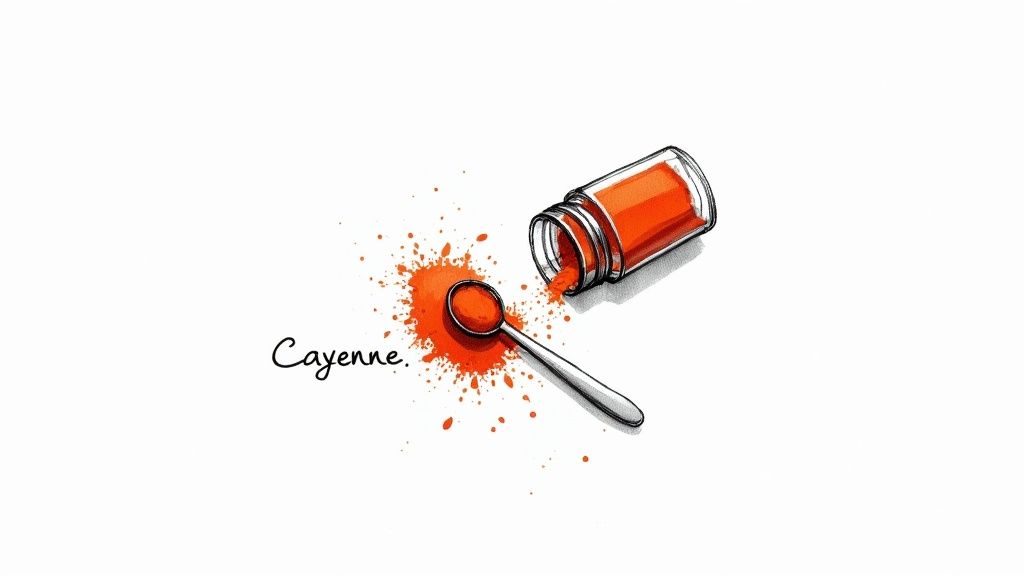
This vibrant red powder is a cornerstone in many cuisines, from Creole and Cajun cooking to Indian and Mexican dishes. Its direct, pungent heat comes from capsaicin, the same compound found in chili flakes, making it a nearly perfect flavor match.
How to Substitute
Because cayenne powder is more concentrated than flakes, you need to use less of it. A good starting point is crucial to avoid overpowering your food.
- Substitution Ratio: Use 1/2 to 3/4 teaspoon of cayenne pepper powder for every 1 teaspoon of chili flakes called for in your recipe.
- Heat Level: Medium to Hot (30,000–50,000 Scoville Heat Units), providing a similar punch to standard red pepper flakes.
- Flavor Profile: Neutral and peppery with a clean, straightforward heat.
Best Use-Cases
Cayenne's fine grind makes it ideal for dishes where a smooth consistency is important.
- Sauces and Soups: It dissolves easily into liquids, perfect for tomato sauces, curries, and chilis.
- Rubs and Marinades: The powder clings well to meat and vegetables, creating an even, spicy crust.
- Spicy Dips: Mix it into creamy bases for dips and spreads. Creating spicy condiments is a great way to use cayenne, similar to how it can be used to whip up a spicy aioli as a creative alternative for mayonnaise.
Quick Tip: To prevent cayenne powder from clumping, mix it with other dry ingredients or a small amount of oil before adding it to wet mixtures. This simple step ensures even distribution.
2. Paprika (Hot/Smoked)
For those seeking a substitute for chili flakes that offers nuanced flavor alongside gentle heat, hot or smoked paprika is an excellent choice. Made from ground dried peppers, paprika brings a rich, vibrant color and a more complex taste profile than the straightforward heat of cayenne. Hot paprika provides a mild warmth, while smoked paprika introduces a deep, woodsy aroma that can transform a dish entirely.
This versatile spice is a star in Hungarian cuisine, famously featuring in goulash, and is essential in Spanish dishes like chorizo. Its ability to add depth, color, and a touch of smokiness makes it a sophisticated alternative to standard red pepper flakes.
How to Substitute
Since paprika is milder and has a different flavor concentration, you'll need to adjust the amount to get the desired effect. The key is to add enough to feel the warmth without making the dish taste only of paprika.
- Substitution Ratio: Use 1.5 to 2 teaspoons of hot or smoked paprika for every 1 teaspoon of chili flakes.
- Heat Level: Mild (1,000–2,000 Scoville Heat Units), making it suitable for dishes where you want flavor and color without intense heat.
- Flavor Profile: Can range from sweet and mild to hot and smoky, with earthy and slightly fruity undertones.
Best Use-Cases
Paprika’s fine texture and rich flavor make it a fantastic addition to a variety of recipes, especially where color and aroma are just as important as heat.
- Rubs and Seasoning Blends: It adds a beautiful red hue and smoky depth to rubs for chicken, pork, or potatoes.
- Stews and Braises: Perfect for slow-cooked dishes like Hungarian goulash or Spanish-inspired stews.
- Egg and Vegetable Dishes: Sprinkle it over deviled eggs, roasted vegetables, or potato salads for a pop of color and flavor. Its complex notes are a great match for acidic ingredients, much like how a well-chosen substitution for tarragon vinegar can elevate a vinaigrette.
Quick Tip: To unlock its full flavor potential, "bloom" the paprika by gently heating it in a small amount of oil for about 30 seconds before adding other ingredients. This releases its aromatic compounds.
3. Fresh Chili Peppers (Jalapeño, Serrano, Thai)
Using finely chopped fresh chili peppers is a fantastic way to introduce not just heat but also a vibrant, bright flavor that dried flakes cannot replicate. While chili flakes offer concentrated, smoky heat, fresh peppers like jalapeños, serranos, or Thai chilies provide a crisp, grassy, and zesty kick. This substitute for chili flakes adds both moisture and a distinct character, elevating dishes from salsas and stir-fries to marinades.
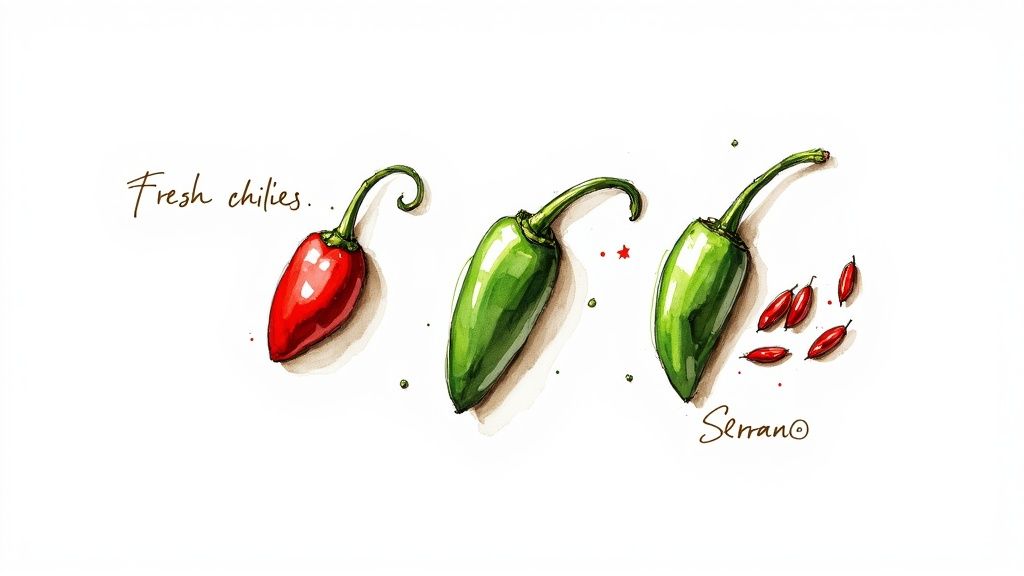
This method is central to many world cuisines, from the foundational jalapeños and serranos in Mexican salsas to the fiery Thai chilies essential in Southeast Asian curries. The choice of pepper allows you to precisely control the heat level and flavor profile of your final dish.
How to Substitute
Since fresh peppers contain water and have a different texture, the substitution isn't a direct one-for-one swap. The key is to mince them finely to mimic the size of flakes and adjust the quantity based on the pepper's heat.
- Substitution Ratio: Use 1 to 2 teaspoons of finely minced fresh chili for every 1 teaspoon of chili flakes. Start with less and add more to taste.
- Heat Level: Varies widely. Jalapeño (Mild, 2,500–8,000 SHU), Serrano (Medium, 10,000–23,000 SHU), Thai Chili (Hot, 50,000–100,000 SHU).
- Flavor Profile: Bright, zesty, and grassy with a sharp, fresh heat.
Best Use-Cases
Fresh chilies shine in dishes where their vibrant flavor and crisp texture can be appreciated.
- Salsas and Guacamole: Their fresh bite is essential for authentic flavor.
- Stir-fries and Curries: Add them near the end of cooking to preserve their bright taste.
- Marinades and Dressings: Infuse oils and vinegars with a fresh, spicy kick. Their freshness can balance rich ingredients, similar to how a fruit-based alternative to condensed milk can lighten up a dessert.
Quick Tip: To reduce the heat of a fresh chili, remove the seeds and the white pith (membrane) inside, as this is where most of the capsaicin is concentrated. Always wear gloves when handling very hot peppers to avoid skin irritation.
4. Black Pepper (Coarsely Ground)
While it doesn't bring the same type of heat, coarsely ground black pepper is a surprisingly effective substitute for chili flakes, offering a pungent warmth and aromatic complexity all its own. Its heat comes from a compound called piperine, not capsaicin, resulting in a different kind of spiciness that is sharp and woody rather than fiery. When freshly and coarsely cracked, it also provides a pleasant textural crunch similar to chili flakes.
This pantry staple is foundational in global cuisines, from French steak au poivre, where it is the star, to the comforting broths of Vietnamese pho. Its ability to add depth and a mild bite makes it a versatile choice when you want flavor and gentle warmth without the intense burn of chili.
How to Substitute
Using black pepper requires adjusting for its unique flavor and milder heat. Freshly ground pepper is key to unlocking its full aromatic potential.
- Substitution Ratio: Use 1/2 to 1 teaspoon of coarsely ground black pepper for every 1 teaspoon of chili flakes. Start with less and add more to taste.
- Heat Level: Mild. The heat is pungent and aromatic rather than searing.
- Flavor Profile: Earthy, woody, and pungent with a sharp, biting warmth.
Best Use-Cases
Black pepper works best in dishes where its distinct aromatic character can shine and a milder heat is desired.
- Creamy Sauces: It adds a lovely contrast to rich cream or cheese-based sauces, like in a classic cacio e pepe.
- Meat and Roasts: An excellent choice for seasoning steaks, roasts, and other meats where a peppery crust is desirable.
- Soups and Broths: Enhances the savory notes in soups and stews without overpowering other ingredients.
Quick Tip: For the best flavor and a texture that mimics chili flakes, always use freshly cracked peppercorns. Add it near the end of cooking to preserve its volatile oils and pungent flavor, which can diminish with prolonged heat.
5. Hot Sauce (Sriracha, Frank's RedHot, or Tobasco)
Turning to a bottle of your favorite hot sauce is a convenient and flavor-packed way to find a substitute for chili flakes. Unlike dry spices, hot sauces are liquid and bring their own distinct character to a dish, combining chili peppers with ingredients like vinegar, garlic, and salt. This means you’re not just adding heat, but also acidity and complex undertones that can elevate your recipe.

From the garlic-forward sweetness of Sriracha to the tangy, cayenne-based punch of Frank’s RedHot, the options are vast. Historic brands like Tabasco offer a sharp, fermented heat that has been a staple in Louisiana Creole cooking for over a century. The choice of sauce allows you to customize the flavor profile far beyond simple spiciness.
How to Substitute
Using a liquid substitute requires a bit of adjustment, especially regarding moisture and flavor concentration. Always start with a small amount and taste as you go, since heat levels vary dramatically between brands.
- Substitution Ratio: Use 1/2 to 1 teaspoon of hot sauce for every 1 teaspoon of chili flakes.
- Heat Level: Varies widely, from Mild (e.g., Frank's RedHot at ~450 SHU) to Hot (e.g., Tabasco at 2,500–5,000 SHU).
- Flavor Profile: Can be tangy, garlicky, smoky, or sweet, depending on the brand.
Best Use-Cases
Hot sauce is ideal for wet preparations where it can be incorporated smoothly, adding both heat and its signature flavor.
- Soups and Stews: Stirs effortlessly into broths, chilis, and hearty stews for an instant kick.
- Marinades and Dressings: The vinegar base in many hot sauces acts as a tenderizer and adds a bright note to marinades. It works similarly to other acidic ingredients; you can find more on this in our guide on cooking substitutes for white wine.
- Finishing Sauces: A final drizzle over tacos, eggs, or pizza provides a burst of heat and flavor.
Quick Tip: When adding hot sauce to a recipe, consider reducing other liquids like water or broth slightly to maintain the intended consistency of your dish.
6. Crushed Red Pepper (Pepponcini or Pepper Flakes in Oil)
For a substitute that brings both heat and a luxurious texture, crushed red pepper flakes preserved in oil are an excellent choice. This condiment, often found on the tables of Italian pizzerias, infuses oil with the fiery essence of chili flakes, creating a versatile ingredient that enhances flavor and adds richness. The flakes maintain their moisture and are often steeped with garlic or herbs, adding layers of complexity not found in their dry counterparts.
Popular in Mediterranean and Italian cuisine, this style of chili flake offers a two-in-one benefit: you get the spicy flakes and a flavorful finishing oil. This makes it a fantastic substitute for chili flakes when you also want to add a bit of fat and savory depth to your meal.
How to Substitute
Since the flakes are suspended in oil, the heat is slightly mellowed but distributed differently. The substitution is straightforward, but you can adjust based on how much oil you want to incorporate.
- Substitution Ratio: Use 1 teaspoon of oil-based pepper flakes for every 1 teaspoon of dry chili flakes.
- Heat Level: Mild to Medium, though this can vary depending on the type of chili used and how long it has been infused.
- Flavor Profile: Moderately spicy with a rich, savory, and often garlicky or herbaceous undertone from the infused oil.
Best Use-Cases
The combination of flakes and oil makes this substitute ideal for dishes where you want to add both heat and a finishing drizzle of flavor.
- Pizza and Pasta: Drizzle over a finished pizza or toss with pasta for an instant flavor and heat boost.
- Sandwiches and Breads: Perfect for drizzling over focaccia or adding to a panini for a spicy, savory kick.
- Salad Dressings: Use the infused oil as a base for a vinaigrette to give your salads a unique warmth.
Quick Tip: Stir the jar well before each use to ensure you get an even mix of flakes and oil. If you only want the heat without the extra fat, you can lightly drain the flakes on a paper towel before adding them to your dish.
7. Habanero or Ghost Pepper Powder
For the adventurous cook seeking to elevate their dishes to a fiery new level, habanero or ghost pepper powders are the ultimate substitute for chili flakes. These are not for the faint of heart; they represent a significant step up in heat, offering a complex and intense spiciness that standard flakes cannot match. Habanero powder brings a distinctive fruity, almost floral note, while ghost pepper powder imparts a smoky, lingering heat.
Popularized by hot sauce enthusiasts and integral to cuisines like Caribbean and Central American cooking, these powders deliver a powerful capsaicin punch. They are perfect for when you want the heat to be the star of the show, transforming a simple dish into an exhilarating culinary experience.
How to Substitute
Extreme caution is required when using these powders. Their heat is far more concentrated than chili flakes, so start with a minuscule amount and adjust carefully.
- Substitution Ratio:
- Use 1/4 teaspoon of habanero powder for every 1 teaspoon of chili flakes.
- Use a tiny pinch, less than 1/8 teaspoon of ghost pepper powder for every 1 teaspoon of chili flakes.
- Heat Level: Extremely Hot (Habanero: 100,000–350,000 SHU; Ghost Pepper: 800,000–1,000,000+ SHU).
- Flavor Profile: Habanero is fruity and floral; ghost pepper is smoky with a slow-building, intense heat.
Best Use-Cases
These powders are best reserved for dishes where their potent heat and unique flavors can be appreciated without overwhelming other ingredients.
- Hot Sauces and Salsas: Create homemade, super-hot condiments with a complex flavor profile.
- Chilis and Stews: A small amount can add incredible depth and heat to large-batch recipes, much like how a concentrated flavor base can enrich a dish, a technique also seen when finding a substitute for beef bouillon cubes.
- Spicy Marinades: Infuse meats with a serious kick before grilling or roasting.
Quick Tip: Always wear gloves when handling these powders to avoid skin irritation. Never touch your face or eyes. Keep dairy products like milk or yogurt on hand to cool your palate if the heat becomes too intense.
8. Ginger Powder or Fresh Ginger
For a completely different kind of warmth, ginger powder or fresh ginger can serve as an unconventional yet effective substitute for chili flakes. Instead of the sharp, burning heat from capsaicin, ginger provides a pungent, warming spiciness through a compound called gingerol. This creates a cozy, aromatic heat that adds depth and a slightly sweet, zesty character to your dish.
This root is a staple in many Asian cuisines, from Thai curries to Chinese stir-fries, where its distinctive flavor is often used to balance and complement other spices. While its heat is less intense and has a different profile, it's an excellent choice when you want to add a spicy kick without the traditional chili burn.
How to Substitute
The form of ginger you use-powdered or fresh-will determine the substitution ratio. Fresh ginger offers a brighter, more potent flavor, while the powder is more concentrated and earthy.
- Substitution Ratio: Use 1/2 teaspoon of ginger powder OR 1 tablespoon of fresh, finely grated ginger for every 1 teaspoon of chili flakes.
- Heat Level: Mild, providing a warming and pungent sensation rather than a fiery burn.
- Flavor Profile: Zesty, aromatic, and slightly sweet with a pungent, warming finish.
Best Use-Cases
Ginger's unique flavor makes it a fantastic addition to dishes that benefit from an aromatic, non-traditional heat.
- Asian-Inspired Dishes: Perfect for stir-fries, noodle dishes, and marinades where its flavor is a natural fit.
- Soups and Broths: Adds a comforting, warming element to soups like pho or chicken noodle.
- Beverages: Infuse it into teas or tonics for a soothing, spicy drink. For those interested in growing their own flavorful heat sources, this guide on cultivating Myoga Ginger also covers how to harvest and cook with it, highlighting its fiery, pungent kick.
Quick Tip: To maximize its flavor, "bloom" your ginger by briefly sautéing it in hot oil at the beginning of the cooking process. This releases its aromatic oils and deepens its spicy notes.
8 Chili-Flake Substitutes Compared
| Item | 🔄 Implementation Complexity | ⚡ Resource Requirements | 📊 Expected Outcomes | 💡 Ideal Use Cases | ⭐ Key Advantages |
|---|---|---|---|---|---|
| Cayenne Pepper Powder | Low — simple measuring and blending | Low — shelf-stable powder, airtight storage | Consistent, potent heat; uniform dispersion | Sauces, rubs, powdered seasonings | Very potent per volume, long shelf life, even mixability |
| Paprika (Hot/Smoked) | Low — easy to use, quality sourcing recommended | Low — powder, buy reputable origin for best flavor | Mild heat with color and smoky/sweet depth | Goulash, chorizo, stews, finishing for color | Adds smoky/sweet complexity and vibrant color |
| Fresh Chili Peppers (Jalapeño, Serrano, Thai) | Medium — requires prep (seeding, chopping) | Medium — perishable, refrigeration, gloves advised | Bright, variable heat with fresh, grassy notes | Salsas, stir-fries, fresh-relief dishes | Fresh flavor, texture, adjustable heat (seed removal) |
| Black Pepper (Coarsely Ground) | Low — minimal prep (grind/crack) | Low — widely available, long shelf life | Peppery pungency (different heat mechanism) | Non-ethnic recipes, dressings, steaks | Universally available, affordable, textural substitute |
| Hot Sauce (Sriracha, Frank's, Tabasco) | Very low — ready-to-use liquid | Low–Medium — bottled, affects recipe moisture | Evenly distributed heat with layered flavors | Marinades, dressings, sauces, quick seasoning | Convenient, consistent brands, adds flavor complexity |
| Crushed Red Pepper (in Oil/Brine) | Low — ready-to-use, stir before use | Medium — oil adds fat, refrigerate after opening | Moist, aromatic flakes; infused oil for cooking | Pizza, Mediterranean dishes, finishing oils | Oil carries flavor evenly; added aromatics and visual appeal |
| Habanero / Ghost Pepper Powder | Medium — careful measuring and handling | Medium — specialty sourcing, protective handling | Extremely high heat, intense flavor if used sparingly | Extreme hot sauces, specialty condiments (small doses) | Extremely concentrated heat, complex fruity/smoky notes |
| Ginger (Powder or Fresh) | Low–Medium — fresh needs prep, powder is simple | Low — fresh perishable, powder shelf-stable | Warming pungency rather than capsaicin burn | Asian dishes, beverages, warming spice blends | Adds warm, bright spice and digestive/health benefits |
Mastering the Swap: Final Thoughts on Flavorful Heat
Navigating your spice cabinet when a key ingredient is missing doesn't have to be a source of kitchen stress. Instead, it can be an exciting opportunity to explore new dimensions of flavor and heat. As we've seen, finding a substitute for chili flakes is less about a perfect one-to-one replacement and more about understanding the specific role that heat and flavor play in your dish. The journey through alternatives like cayenne, paprika, fresh chilies, and even hot sauce reveals the incredible diversity available to the home cook.
Each substitute offers a unique profile. Are you aiming for the pure, straightforward heat that cayenne powder provides, or the complex, smoky undertones of smoked paprika? Perhaps your dish craves the bright, zesty kick that only a fresh jalapeño or serrano can deliver. The choice you make can fundamentally alter the final character of your meal, turning a simple substitution into a deliberate culinary decision.
Key Takeaways for Confident Cooking
To ensure your substitutions are always successful, keep these core principles in mind:
- Start Small, Adjust Gradually: This is the golden rule. Always begin with less than the recipe calls for, especially with potent powders like habanero. You can always add more heat, but you can't take it away.
- Consider the Flavor Profile: A substitute for chili flakes isn't just about heat. Paprika adds smokiness, ginger brings a warm and zesty bite, and hot sauces often introduce a vinegary tang. Choose the substitute that best complements the other ingredients in your recipe.
- Mind the Texture and Form: A powder like cayenne will dissolve seamlessly into a sauce, while coarsely ground black pepper will add a distinct textural element. Fresh chilies contribute moisture and a vibrant crunch that dried spices cannot replicate. Match the form to the function required by your dish.
Pro Tip: Remember that the heat from many spices, particularly dried ones, can "bloom" or intensify over time, especially in slow-cooked dishes like stews or braises. Add your chosen substitute in stages to maintain perfect control over the final spice level.
Embracing these alternatives does more than just solve the immediate problem of an empty spice jar. It empowers you to become a more intuitive and adaptable cook. You learn to trust your palate, experiment with confidence, and customize recipes to perfectly suit your taste. This flexibility is the hallmark of a skilled home chef, allowing you to transform any recipe into a dish that is uniquely your own. By mastering the art of the swap, you unlock a new level of creativity and control in your kitchen.
Ready to take the guesswork out of recipe adjustments for good? Recipe One allows you to save your favorite recipes and add personal notes about substitutions, so you'll never forget that perfect swap you discovered. Use its built-in measurement converters to ensure every ingredient is precise, and start building your personalized, perfected digital cookbook today at Recipe One.