Thursday night is when the fridge starts looking like a puzzle nobody asked for. There's a half cabbage on one shelf, three sauces with different labels, and a vague promise that someone was going to “figure out dinner later.” An AI meal planner is built for that moment. It helps organize recipes, turn them into a weekly plan, and convert that plan into a shopping list, so the cook spends less time deciding and fewer ingredients end up forgotten in the back of the fridge.
The best tools in this space do four things well, they save recipes, build weekly plans, generate grocery lists, and offer AI suggestions when the week changes. That can help busy families keep a routine, beginners follow clearer steps, and diet-focused planners keep an eye on calorie or macro targets. Privacy still matters, so check each app's policy before you sync household data or connect accounts, and expect every AI suggestion to need a quick human review. Recipe One belongs in the recipe-keeper lane, not the calorie-counter lane, so readers who need numeric targets should pair it with a dedicated nutrition app such as Eat This Much.
1. Recipe One
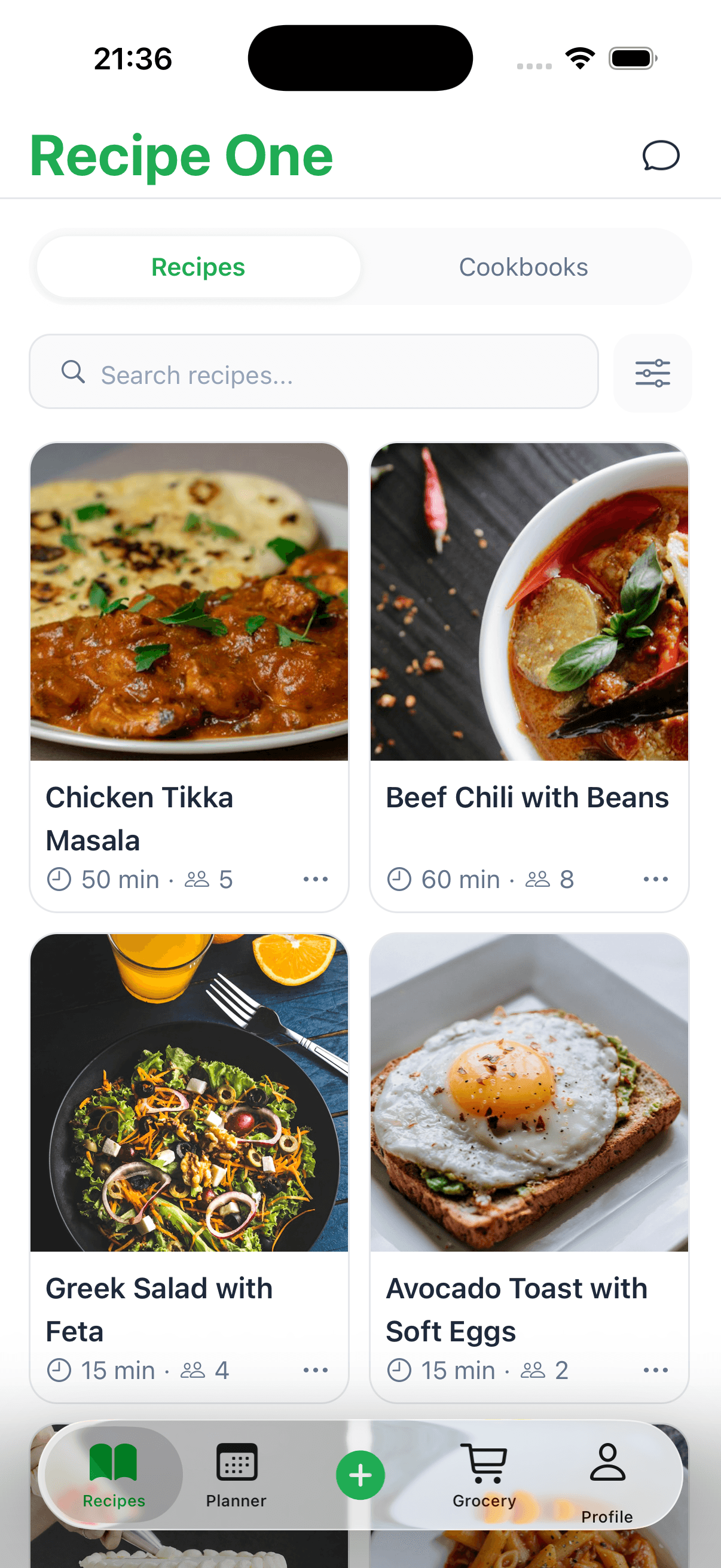
Recipe One fits cooks who find recipes in a lot of places and want one library for them. It saves from social videos, websites, photos, screenshots, and pasted text, then turns that material into a structured recipe with ingredients, steps, cook time, and measurements you can use. The value is practical. Less copying. Less hunting through old saves. More time cooking.
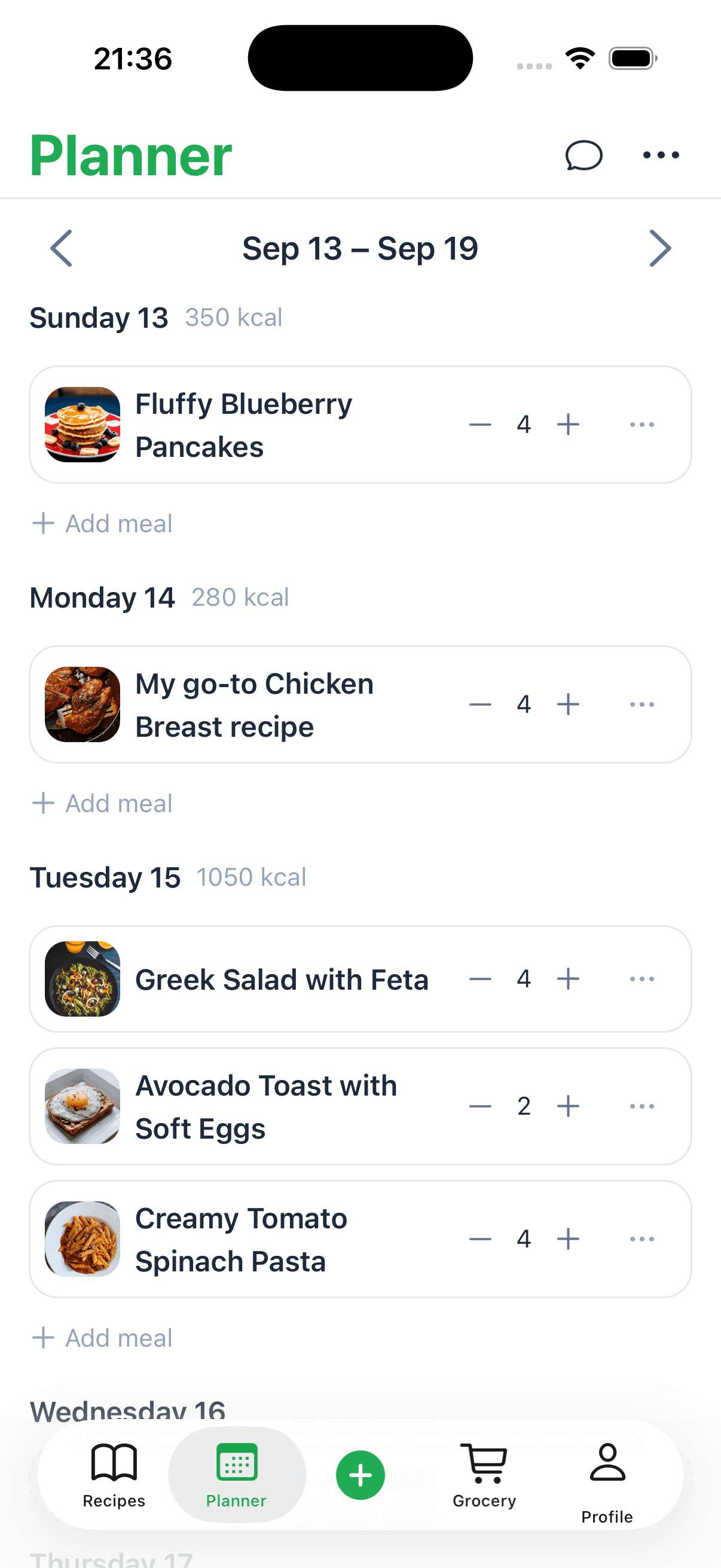
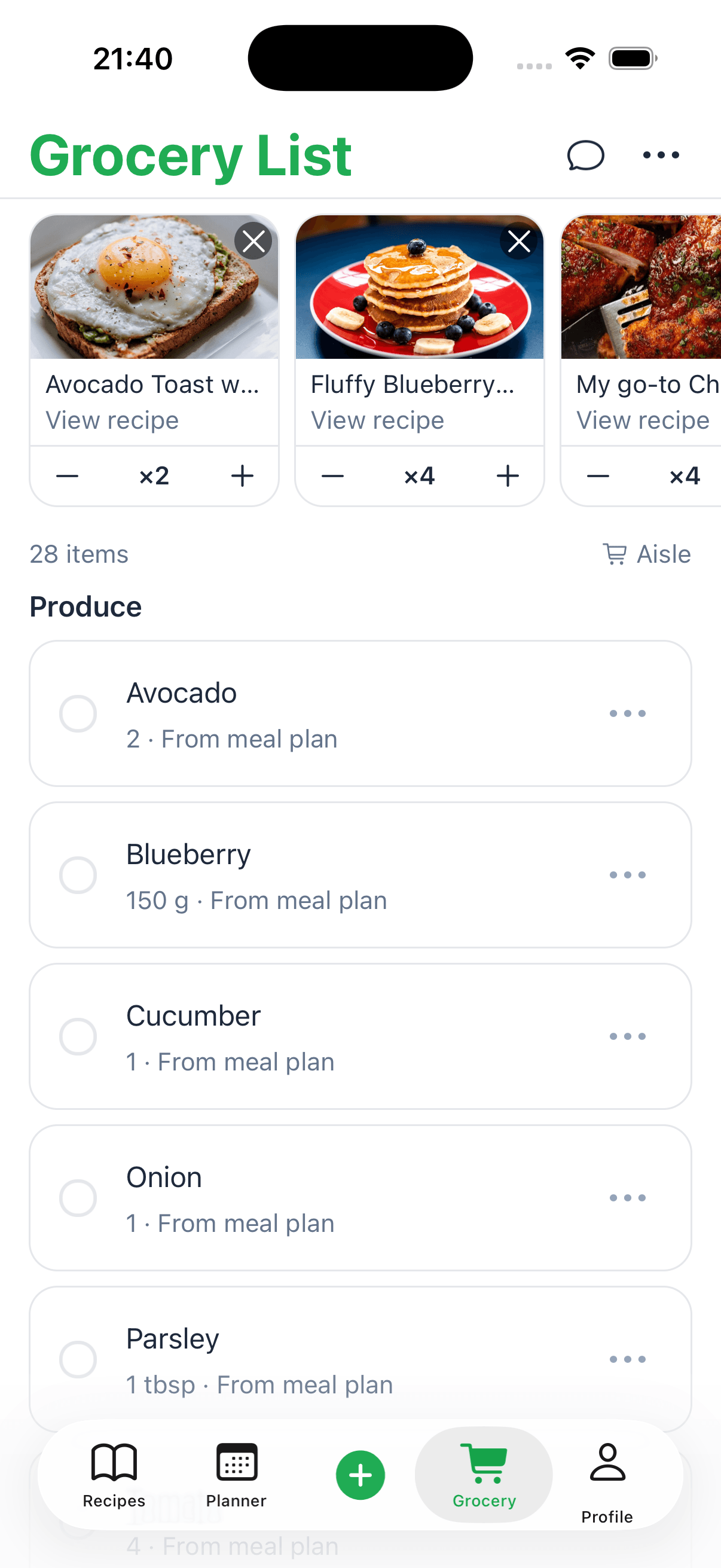
If your week starts with saved ideas instead of a fixed plan, Recipe One handles the organizing work quickly. You can sort recipes into custom cookbooks, search by ingredient or cook time, plan meals for the week, and turn those planned recipes into a grocery list for store use. It also syncs across devices and exports to PDF, which helps when one person plans and another person shops.
What it does best in real kitchen use
Recipe capture is the strongest part. A messy Instagram post, a handwritten card, or a blog post with too much scrolling becomes a cleaner recipe page with little effort. Recipe One also includes practical cooking helpers like cups-to-grams conversion, oven temperature conversion, rice-to-water ratios, and a leftover recipe generator. Those tools matter when you are cooking from memory or trying to rescue ingredients before they go to waste.
The product says it has 1,000+ home cooks and 100,000+ recipes saved. It is also ad-free in the cooking view and keeps the screen awake, which sounds minor until you are cooking with wet hands and do not want the display to sleep. The main limitation is simple. Pricing is not published on the site, so you need to check the App Store or Google Play for current plans.
Bottom line: pick Recipe One when recipe chaos, not calorie math, is the problem.
2. Samsung Food
Samsung Food works well for cooks who want a broad recipe-saving layer with a path toward more automation. The free product centers on importing recipes, organizing them, and turning them into weekly meals and shopping lists. For a lot of households, that is enough, because the app reduces the friction between “I found this recipe” and “I bought what I need.”
The premium Food+ tier adds more AI-personalized weekly planning and nutrition features, so the app becomes more useful once the free workflow feels limited. That makes Samsung Food a sensible middle ground for people who want the basics now and more guidance later. If you want a quick comparison against a recipe-keeper style workflow, this meal-planner roundup from Recipe One is a helpful adjacent read.
Where it fits and where it doesn't
Samsung Food's strength is flexibility. It lets you save and customize recipes from many places, then build a weekly plan without forcing a new cooking style. The grocery side is also practical, because the app can move from meal plan to shopping list and support grocery delivery options.
The trade-off is familiar. The most interesting AI personalization sits behind the paid tier, so the free experience is more about organization than deep automation. Grocery availability and delivery fees also depend on the retailer and location, which means the convenience layer isn't equally smooth everywhere.
When a tool gives you both free organization and paid automation, start with the free version and see whether your household actually needs the upgrade.
Samsung Food is a good fit for people who already collect recipes from different places and want a single planning hub. It's less compelling if you want a highly controlled diet system from day one.
3. SideChef
A busy Tuesday night is where SideChef earns its keep. It is built for the cook who wants guidance while cooking, not just a list of recipes before the shop. The app combines a weekly planner with step-by-step recipes, so a beginner can follow the dinner without having to design a whole workflow first.
The planning flow stays straightforward. SideChef gives calendar-style planning, shoppable recipes, and grocery delivery tie-ins, so it works more like a kitchen helper than a recipe archive. It also includes curated content, such as zero-waste themed plans, which can help a household make use of what is already in the fridge. For readers comparing app options on iPhone, see best cooking apps for iPhone.
Why beginners tend to get along with it
SideChef asks less of the cook than more advanced planners do. Instead of making the user build every part of the week by hand, it offers guided recipes and a basic structure for planning. That lowers the mental load for people who do not want to spend time setting up the system before they use it.
The trade-off is clear. SideChef is not built around strict macro or calorie tracking. If the main target is a numeric nutrition goal, a dedicated nutrition planner is a better fit. SideChef sits between recipe discovery, shopping, and hands-on cooking.
On a weeknight, the step-by-step mode is the part that matters. Open the recipe, follow the prompts, and keep dinner moving without switching between a recipe page and a separate planning note.
For homes that want a straightforward cook-and-shop flow, SideChef is practical. It gives you guided cooking and a plan you can follow, but it does not try to replace a full nutrition system.
4. Eat This Much
Eat This Much fits a week where the cook already knows the target and wants the app to handle the math. It builds daily or weekly meal plans from calorie, macro, diet-style, budget, and meal-count inputs, so the starting point is goals rather than a pile of saved recipes. For a fuller walkthrough, see our Eat This Much review. That makes it a different kind of tool from recipe-keeper apps, since the first job is deciding what the week should hit.
The app also adds smart grocery lists with delivery integrations, plus leftovers, recurring meals, and pantry-aware planning. Those features matter because the grocery step is where many meal plans break down. If the goal is to turn inputs into a usable week quickly, Eat This Much stays focused on that job.
Best for numeric targets, not kitchen browsing
Use it for macro-targeted planning. Someone following keto, vegan, or another structured diet can fill the week with less manual work, then lock favorite meals and adjust servings as needed. That keeps a bit of control in place while the app handles the repetitive parts.
The app optimizes for hitting numbers, so recipe browsing takes a back seat to the macro math. Variety and substitutions depend on its internal database and constraints, which makes it feel narrower than save-anything systems. The interface is also plain, so it does not try to compete on visual polish.
Set 1,800 calories and 40g protein per meal, and the week fills itself, favorites locked, servings scaled.
That trade-off works when the priority is structure, not inspiration. Cooks who want a flexible recipe library with more room for browsing may find it too rigid.
5. Cooklist
Cooklist is strongest when pantry tracking and store prices shape the meal plan. It watches what you already have, tracks expiration dates, and links planning to real retailer pricing. For households that want the app to account for the kitchen before suggesting another shop, that matters.
The flow starts with the pantry, moves to meal ideas, then builds a grocery list and sends it to retailers where supported. That keeps the plan tied to what needs buying, not just to what sounds good. For a broader comparison, see our best meal planner apps roundup.
Why it matters for waste and budgets
Cooklist fits people who want less friction between planning and buying. Grocery price comparison and loyalty-card linking can speed up store decisions, while pantry tracking can keep forgotten items from becoming waste. It works more like a shopping assistant than a recipe browser.
The trade-off is clear. Advanced features require a subscription, and the experience still depends on location and retailer support.
If your weekly loss comes from rebuying what you already own, Cooklist attacks exactly that gap.
For US shoppers who want that layer of control, Cooklist is a solid fit. For people outside its best-supported retail zones, the value drops quickly.
6. Jow
Jow takes a curated route. Instead of acting like a full save-anything system, it builds weekly menus from a recipe catalog and keeps the process fast, household-friendly, and budget-aware. That makes it feel less like a kitchen database and more like a guided shopping experience.
The app is built around a large curated set of recipes and planning adjusted to your diets, goals, servings, appliances, and preferences. It also emphasizes grocery workflows and deal-finding language, which helps people who care about time and cost at the same time. If the goal is to get a week's dinners planned without wandering through a large recipe internet, that approach works.
A good fit for families who want less choice, not more
Jow helps when a household wants to simplify the decision tree. The curated catalog means less endless browsing, and the shopping flow keeps the plan tied to real grocery actions. For families and busy professionals, that can be easier than managing a large personal recipe archive.
The limitation is clear. Curated systems are less open-ended than tools that save from anywhere. If someone already has favorite recipes saved in blogs, social posts, and screenshots, Jow will feel less flexible.
Availability of grocer integrations and specific deals varies by location, so the value depends on where you shop. It works best as a fast weekly menu and shopping tool, not as an open recipe warehouse.
7. Instacart Clementine AI Assistant
Instacart's Clementine AI Assistant fits a weeknight routine where the main goal is to get from meal idea to cart without extra steps. It offers conversational meal planning and recipe discovery, then turns that input into a grocery list and an Instacart cart for local retailers. It behaves as a shopping assistant first, with meal planning bolted onto the cart workflow.
The speed is the point. You can ask for meals that fit preferences, time, and budget, then move toward checkout with retailer-aware availability. If you mainly need the list itself, see our grocery shopping list generator guide. For people who already shop through Instacart, that cuts down the back-and-forth that usually slows down dinner planning.
Best when the cart matters more than the recipe library
Use Clementine when the planning question is really a shopping question. It focuses on grocery execution across many US grocers instead of building a separate kitchen archive. That works well for households that want a plan they can buy right away.
The trade-off is clear. It does not act like a full recipe library manager. If you want long-term saving, organizing, and structured recipe control, this is not the tool for that job. Delivery and service fees also vary by location and order, so the convenience layer can cost more than it first appears.
Ask Clementine for five dinners under $20, review the cart, and checkout happens before the fridge door closes.
It suits grocery-first planning. Cooks who want a deeper recipe system will need something else.
AI Meal Planners: 7-Tool Feature Comparison
| Product | Implementation complexity 🔄 | Resource requirements ⚡ | Expected outcomes 📊 | Ideal use cases 💡 | Key advantages ⭐ |
|---|---|---|---|---|---|
| Recipe One | Medium (🔄🔄), AI parsing + sync across devices | Low–Medium, iOS/Android app, internet; possible subscription | Structured, cookable recipes from varied sources; faster meal prep (📊) | Home cooks who save from social media, collectors who want organized cookbooks | AI extraction from videos/images/links; meal planner → grocery list |
| Samsung Food (Whisk) | Medium (🔄🔄), recipe save + planner; Food+ adds automation | Low, free core app; optional Food+ subscription for personalization | Robust weekly plans with optional AI-personalized plans & nutrition (📊) | Users wanting reliable free planning with an upgrade path to goal-based automation | Strong free workflow; Food+ for personalized planning |
| SideChef | Low–Medium (🔄🔄), calendar-style planner and guided recipes | Low, free personalized planner; grocery delivery links may vary | Beginner-friendly guided recipes and shoppable weekly plans (📊) | Beginners and households preferring step-by-step guidance | Calendar planner, step-by-step guidance, integrated shopping links |
| Eat This Much | Medium–High (🔄🔄🔄), automated calorie/macro generation | Low–Medium, web/mobile, premium features optional | Fast, calorie- and macro-targeted weekly/daily plans with grocery lists (📊) | Users focused on calorie/macro targets and automated meal fills | Excellent automation for macros/calories; pantry-aware options and exports |
| Cooklist | High (🔄🔄🔄), pantry tracking + retailer integrations | Medium–High, inventory tracking, retailer links, subscription for advanced features | Pantry-aware plans, real-time local pricing, reduced waste and streamlined shopping (📊) | Shoppers who want price visibility and waste reduction | Pantry inventory + expiration tracking; local price comparison; strong retail ties |
| Jow | Low (🔄), curated catalog + shopping | Low, app with curated recipes and retailer connections | Curated, budget- and time-focused weekly menus with shoppable lists (📊) | Families and busy professionals seeking quick, value-focused menus | Household-aware planning, in-app deal finding, streamlined weekly menu creation |
| Instacart (Clementine AI) | Low–Medium (🔄🔄), conversational assistant within shopping app | Low, Instacart account; delivery/service fees apply | Rapid plan→cart→delivery workflow tuned to local availability and pricing (📊) | Users who prioritize speed and home delivery over long-term recipe management | Conversational planning, direct basket building, broad national grocery coverage |
A One-Week Recipe One Routine You Can Start This Sunday
Start by using Recipe One the way a real cook works. Save recipes from a short video, a blog post, a photo of a handwritten card, or pasted text into one library, so every idea lives in one searchable place. That removes the need to chase links across apps and makes your week easier to review.
Next, pull five or six saved recipes into the weekly meal planner and generate the grocery list from those planned meals. Check that list against the fridge before you shop, because the fastest way to waste money is to rebuy ingredients you already have. If the list looks too long, cut one meal before you leave home.
Then use the premium AI Chef when you need a quick human-style adjustment. Tell it your household, allergies, or preferences, then ask it to swap an ingredient, scale a recipe to the servings you need, or suggest a recipe to add to the plan. It's a planning helper, not a full auto-pilot, so the final decision should still be yours.
A simple week might look like this, Monday a family dinner, Tuesday a batch-cook meal, Wednesday a fast weeknight meal, Thursday leftovers, Friday a flexible slot, Saturday a social or takeout night, Sunday a reset meal. That pattern keeps the week realistic instead of over-engineered. The point is consistency, not perfection.
Match the tool to your main friction, recipe chaos, diet targets, or shopping stress. Test one week, review the grocery list before you walk out the door, and then adjust the system based on what ended up cooked. Recipe One is the best fit when you want your saved recipes, weekly plan, and grocery list to live in one place, but it does not build a full week automatically. If numeric targets matter, keep a dedicated nutrition app in the mix.
Recipe One helps turn scattered recipes into a weekly cooking system, which is the core element many users need. If you want one place to save, plan, and shop without juggling extra tabs, visit Recipe One and try it in the middle of your own weekly routine.