It sounds incredibly simple, almost too obvious to mention, but here it is: the most important thing you can do before cooking is to read the entire recipe from top to bottom before you even think about touching an ingredient. This one small habit is the secret weapon that prevents most kitchen disasters. It's what separates a frantic, stressful scramble from a calm, enjoyable cooking session.
Your First Step to Better Cooking Is Reading the Recipe
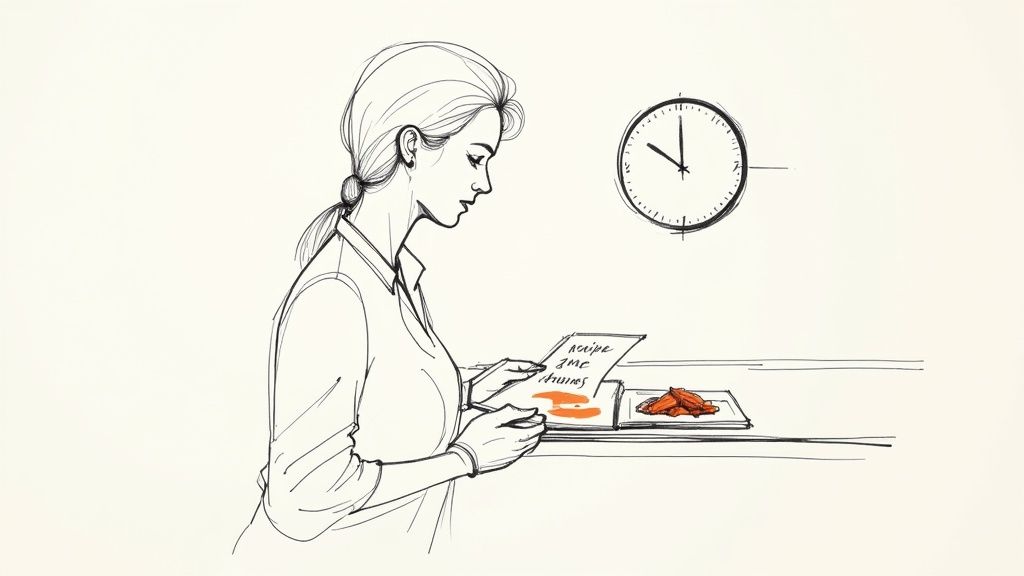
The real key to a great meal isn't some expensive gadget or a hard-to-find spice. It's simply understanding the plan before you start. Skipping this step is a roll of the dice.
We’ve all done it. You’re halfway through mixing a cake batter when your eyes land on the dreaded phrase, "chill for 4 hours." The panic sets in, and your dessert plans are officially ruined. A quick read-through at the beginning is the only thing that stands between you and that kind of chaos. It saves time, cuts down on stress, and frankly, makes cooking a whole lot more fun.
Shift Your Mindset
Try to think of a recipe less like a rigid set of rules and more like a conversation with its creator. The author is right there with you, guiding you through their process and pointing out potential pitfalls along the way. When you really learn how to read a recipe, you start to understand the why behind each instruction, which is the secret to cooking anything with confidence.
This initial review is your game plan. It helps you:
- Spot the Real Time Commitment: You’ll catch those hidden time sinks, like "marinate overnight" or "let dough rise for 2 hours," before they derail your dinner.
- Check Your Gear: No more frantic searching for a lemon zester or realizing you don't own the right-sized baking pan while your oven is preheating.
- Visualize the Workflow: By mentally walking through the steps, you create a roadmap in your head. You know exactly what’s coming next, so there are no surprises.
A well-read recipe is a well-made dish. Taking five minutes to review the instructions from start to finish is the most valuable prep work you can do. It’s the difference between controlling the process and having the process control you.
Making this a habit builds a solid foundation for every other skill in the kitchen. The more recipes you read, the quicker you'll get at spotting patterns and understanding techniques. It’s also a great way to curate your collection; if you need a better way to keep track of your favorites, our guide on how to organize recipes can help you build a system that works for you.
This simple habit can truly transform cooking from a chore into a creative and rewarding experience.
How to Decode the Ingredient List
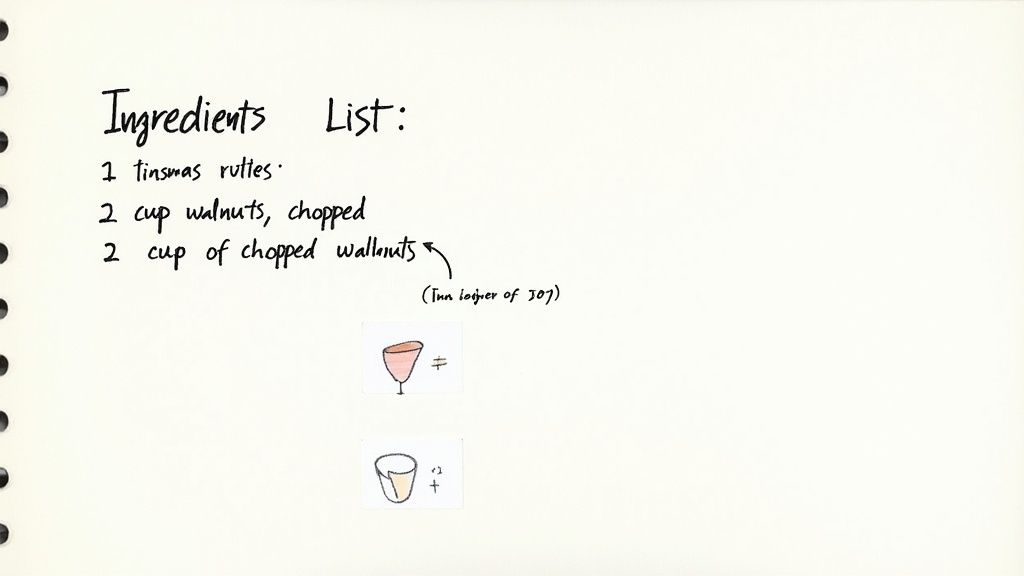
The ingredient list isn't just for shopping. Think of it as the recipe’s hidden map, giving you the first clues about how the cooking process will unfold. A well-written recipe will list ingredients in the exact order you’ll use them, which is a massive help.
For instance, if you see onions, carrots, and celery at the top of the list, you can bet your first real cooking step involves chopping and sautéing them. It's a subtle guide from the recipe creator, helping you prep everything logically before you even turn on the stove.
The Order of Operations
Here’s a detail that trips up a surprising number of home cooks: the comma. Where that little punctuation mark lands can completely change how you measure and prep an ingredient.
Let’s look at a classic example:
- "1 cup walnuts, chopped" tells you to measure out 1 cup of whole walnuts first, and then chop them.
- "1 cup chopped walnuts" means you need to do your chopping before measuring, and then fill your cup with the already-chopped pieces.
Why does this matter? A cup of chopped walnuts will have less air and pack more tightly, meaning you'll end up with more nuts than in the first scenario. For a stir-fry, it might not be a big deal, but in baking, that small difference can throw off the texture and balance of your final dish.
The Importance of Yield and Scaling
Before you pull out a single measuring cup, find the recipe's yield. This little note—"serves 4," "makes two dozen cookies"—tells you exactly how much food you’re about to make. It’s absolutely crucial for planning, especially if you need to feed a crowd or just cook for one.
But scaling a recipe isn’t always as simple as doubling or halving every single thing. Sure, you can probably double a soup recipe without much drama. Baking, however, is a different story. Ingredients like baking soda or yeast don't always scale neatly, and changing the volume can also mean you need to adjust your cooking times.
A good rule of thumb: for most savory dishes, you can adjust quantities with confidence. For baking, try to find a recipe written for the amount you need until you get a feel for the chemistry involved.
It also pays to know what you already have in the kitchen. Before you run to the store, take a quick inventory. You can even use tools that help you find a recipe by ingredients on hand to avoid an extra trip. Getting organized from the start is the secret to a smooth, stress-free cooking session.
Understanding Essential Cooking Terms and Measurements
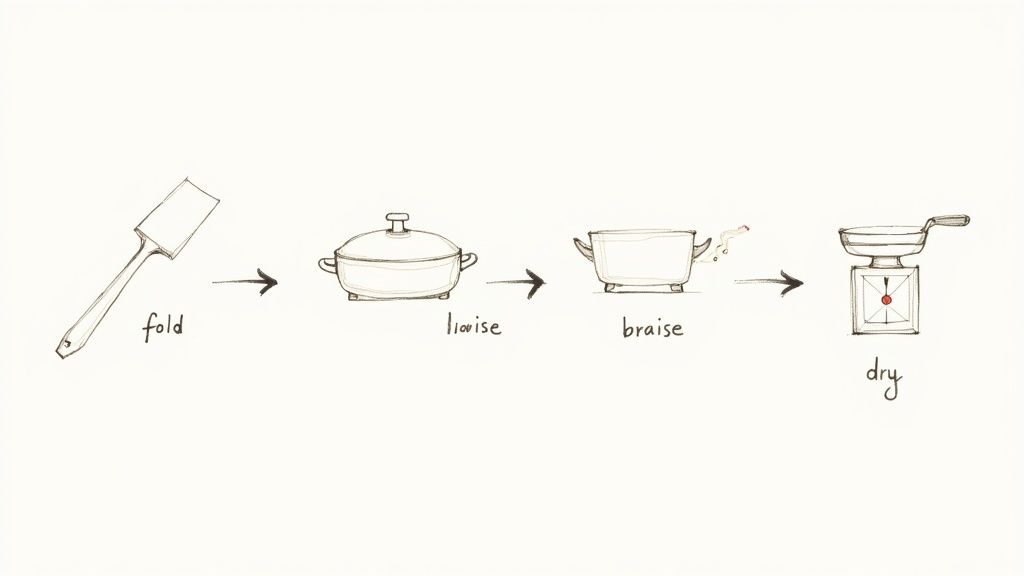
Alright, you've sorted through the ingredient list. Now comes the part that can feel like learning a new language: the instructions. Words like "braise," "fold," and "mince" aren't just there to sound fancy; they're specific commands that totally change the outcome of your dish. Getting them wrong is one of the most common tripwires for new cooks.
Think about it. If a recipe says to fold in egg whites, and you just stir them in like you’re mixing a drink, you’ve just knocked out all the air you worked so hard to whip in. The result? A sad, dense cake instead of a light, fluffy one. The vocabulary is everything because it's describing a physical action.
The Right Tool for the Job
Just as crucial as understanding the terms is using the right tools, especially for measuring. One of the biggest mistakes I see people make is using the same cup for everything. They both might say "1 cup," but liquid and dry measuring cups are built differently for a good reason.
- Liquid Measuring Cups: These are usually clear glass or plastic with a pour spout. The lines are printed below the rim so you can fill it to the 1-cup mark and walk to your bowl without sloshing it everywhere.
- Dry Measuring Cups: These are meant to be filled to the brim and leveled off with a flat edge, like the back of a knife. This is how you get a consistent, accurate amount of flour or sugar.
If you scoop flour with a liquid measuring cup, you'll almost always use too much because it’s nearly impossible to level it properly. That little bit of extra flour is exactly what leads to tough cookies and dense bread. This is why bakers are so obsessed with kitchen scales. Measuring by weight (grams or ounces) is always more accurate than by volume (cups), because it removes all the guesswork.
Key Takeaway: Accuracy is the bedrock of consistent cooking. A stew might forgive an extra carrot, but baking is pure chemistry. A kitchen scale is your best friend for nailing it every single time.
A Quick Guide to Common Terms
Feeling a bit overwhelmed by all the kitchen jargon? Don't be. Most recipes recycle the same core set of techniques. Get a handle on just a few key terms, and you’ll find yourself cooking with way more confidence. And if you're ever stuck juggling cups, grams, and ounces, our detailed guide to cooking measurement conversions can be a real lifesaver.
To help you get started, here's a quick cheat sheet for some of the most common terms you'll run into.
Common Cooking Terms and What They Really Mean
This table breaks down some of the cooking commands you'll see over and over again.
Term
What It Means
Quick Tip
Braise
Searing food in fat, then simmering it slowly in a bit of liquid inside a covered pot.
This is the secret to making tough cuts of meat like chuck roast or pork shoulder fall-apart tender.
Fold
A gentle way to combine a light, airy ingredient (like whipped cream) with a heavier one (like batter).
Use a spatula to cut down the middle, scrape across the bottom, and lift it over the top. Rotate the bowl and repeat.
Sauté
Cooking food quickly in a small amount of fat over fairly high heat.
Keep things moving! This ensures everything cooks evenly and prevents burning. Don't crowd the pan.
Mince
Chopping food into tiny, tiny pieces—much smaller than dicing.
This is usually for aromatic ingredients like garlic and herbs to release the most flavor possible into your dish.
Once you start recognizing these terms, you’ll see them everywhere. They're the building blocks of almost any recipe you’ll ever make.
Reading the Instructions and Managing Your Time
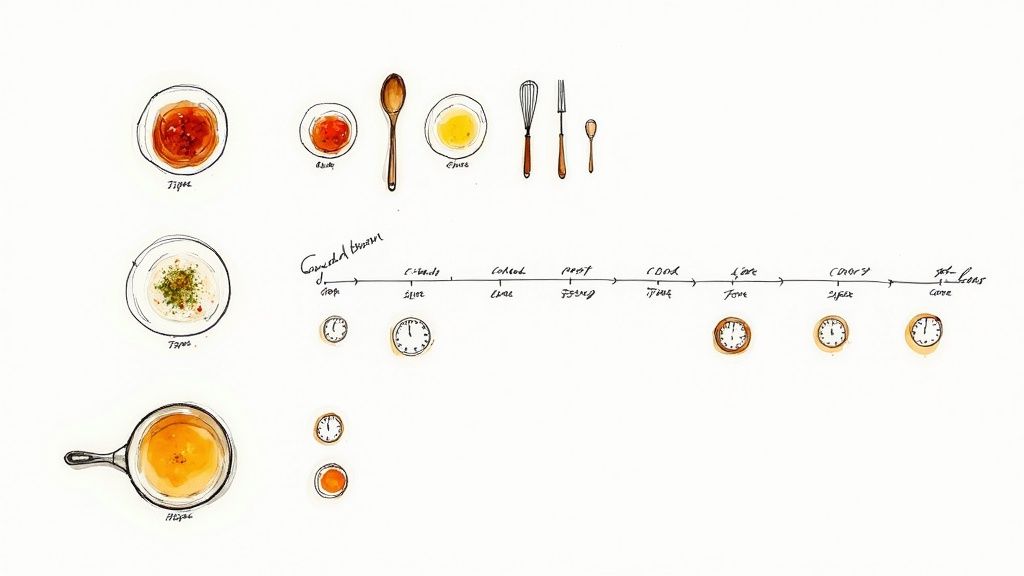
This is where the real cooking begins. The instructions are the heart of the recipe, but how you read them can mean the difference between a smooth, enjoyable process and total kitchen chaos. It all boils down to understanding time.
Most recipes will give you a prep time and a cook time. Take both seriously. The prep time covers everything before the heat comes on—the chopping, measuring, and organizing. The cook time is when things are actually on the stove or in the oven. The classic beginner's mistake? Underestimating the prep time and finding yourself frantically dicing an onion while your garlic is already browning in the pan.
The Art of Mise en Place
To sidestep that kitchen frenzy, you need to adopt a chef’s best-kept secret: mise en place. It’s a French term that literally means "everything in its place." Before you even think about turning on a burner, get every single ingredient prepped. Wash the veggies, chop the onions, measure out the spices, and arrange them all in little bowls on your counter.
It might feel like an extra step, but trust me, it’s a lifesaver.
- It kills the stress. No more digging through a cabinet for the paprika while something on the stove is about to burn.
- It prevents mistakes. When every ingredient is sitting right in front of you, you're way less likely to forget the salt or add too much of something.
- It helps your timing. With all the prep done, you can focus on the important part—the actual cooking. You get to watch, stir, and taste, not just scramble to keep up.
A clean workspace and ingredients that are ready to go are the foundation of a good meal. Taking 15 minutes to set up your mise en place can easily save you 30 minutes of stress and cleanup later.
If you love being efficient, you can even apply this idea to your whole week. We cover more strategies like this in our guide to the best meal prep planners, which can make your time in the kitchen so much more productive.
Reading Between the Lines
Now, let's talk about the instructions themselves. Don't just skim them; read them like a detective looking for clues. A recipe is a road map, not a rigid set of laws.
- Look for Action Verbs: Pay attention to words like "sauté," "simmer," "roast," or "whisk." Each one is a specific command that tells you how to cook something. Sautéing is very different from simmering.
- Mind the Temperature Cues: Phrases like "medium-high heat" or "375°F (190°C)" aren't just suggestions—they're crucial. The wrong temperature can take your dish from perfectly cooked to burned in a matter of minutes.
- Trust Your Senses: The best instructions have nothing to do with a timer. "Cook until golden brown," "simmer until the sauce thickens," or "bake until a toothpick comes out clean" are your most reliable guides. Every oven has its quirks and every stove has hot spots, but "golden brown" looks the same everywhere.
This need to better understand timing and instructions is a big reason why digital cooking tools have become so popular. In fact, the recipe app market is projected to grow to USD 14.27 billion by 2033, mostly because people want help breaking down these steps and managing their ingredients. These apps essentially translate old-school recipes into more interactive, easy-to-follow guides, proving just how important getting these fundamentals right really is.
How to Troubleshoot Common Recipe Problems
Let's be honest—even with the best recipe, things go wrong in the kitchen. It happens to all of us. The real skill isn't about avoiding mistakes altogether; it's about learning how to fix them on the fly. Knowing how to troubleshoot is what separates a good cook from a truly great one.
Many problems actually start before you even light a burner. Did you grab a glass baking dish when the recipe called for metal? That glass takes way longer to heat up, which will throw off your cooking time. On the other hand, that dark-coated cookie sheet absorbs more heat and can easily burn the bottoms of your cookies while the tops are still doughy. These tiny details, which are so easy to miss, really do make a difference.
Another big one? Not trusting your oven. Just because you set it to 400°F (200°C) doesn't mean it's actually 400°F in there. If your oven runs hot, you'll end up with food that's burnt on the outside and raw on the inside. A cheap oven thermometer is one of the best tools you can buy—it tells you the truth so you can adjust.
Common Fixes for Kitchen Mistakes
So, your sauce is watery and sad. Don't just let it simmer away into nothing. The quick fix is a slurry: just whisk a teaspoon of cornstarch with a tablespoon of cold water until smooth, then stir it into your simmering sauce. You'll see it thicken up in a minute or two. If you go too far and the sauce gets gluey, no problem—just thin it out with a little broth or water.
Overcooked your green beans? Don't toss them. If you catch them in time, plunge them into a bowl of ice water. This "shocking" technique stops the cooking process cold and can save some of their color and crunch. And if your cake comes out of the oven a bit dry, a simple syrup (just heat equal parts sugar and water until the sugar dissolves) can be a lifesaver. Brush it over the layers to add moisture right back in.
Your ability to adapt is your greatest kitchen tool. Don't see a mistake as a failure; see it as a chance to learn something new. Every problem you solve makes you a more confident, intuitive cook.
Sometimes a dish that seems intimidating is really just a series of simple skills. Getting a tricky risotto right often comes down to patience and stirring. You can build that same confidence by nailing your side dishes first. For a solid starting point, check out our guide on how to cook rice perfectly.
What to Do When Things Go Wrong
When you realize a dish is heading south, just stop. Take a breath and think about what's actually happening. Here’s how to handle a few common kitchen emergencies:
- It's way too salty: You need to add something to balance it out. A squeeze of lemon juice (acid), a pinch of sugar (sweetness), or a bit of cream or olive oil (fat) can work wonders. In a soup or stew, you can also toss in a raw, peeled potato to soak up some of the excess salt while it simmers.
- The meat is tough: If you've overcooked a steak or roast, lean into it. Add a bit of liquid like broth or water, cover the pot tightly, and let it simmer on low. You're essentially braising it now, which will help break down those tough connective tissues and make it tender again.
- The flavor is just... flat: A bland dish is usually just missing a final touch of brightness. Try adding a hit of acid, like a splash of vinegar or a squeeze of lime. A handful of fresh, chopped herbs can wake everything up. And never underestimate the power of a sprinkle of good flaky salt right before you serve.
Learning to anticipate these little hiccups is how you go from just following a recipe to actually understanding your food.
Got Questions? We’ve Got Answers.
Even with the basics down, you’ll run into a few head-scratchers when you're in the kitchen. Let’s walk through some of the most common questions I hear, so you can cook with a lot more confidence and a lot less guesswork.
What’s the Single Most Important First Step?
I can’t stress this enough: read the entire recipe from top to bottom before you touch a single ingredient. Seriously. Do it.
It's the only way to catch those little surprises, like finding out you need to marinate the chicken for four hours or realizing you don't have any buttermilk halfway through making pancakes. A full read-through gives you a mental map of the whole process and helps you nail the timing. It’s the difference between a chaotic scramble and a calm, enjoyable cooking session.
How Do I Know If I Can Swap an Ingredient?
This is where cooking becomes part art, part science. In savory dishes like soups, stir-fries, or roasted vegetables, you usually have a lot of wiggle room. Swapping out broccoli for green beans or chicken for tofu? Go for it.
Baking, however, is a different beast entirely. It’s chemistry. Every ingredient has a specific job. If you try to swap baking soda for baking powder without knowing the rules, you're in for a flat, disappointing result.
My go-to rule of thumb: When in doubt, do a quick online search. Something like, "best substitute for buttermilk in pancakes," will give you reliable options and the right ratios. This two-minute check can be the difference between a delicious treat and a total disaster.
Why Do Recipes Give a Range for Cooking Times?
Ever see a recipe that says, "bake for 20-25 minutes"? That range is there because every single oven is a little different. Yours might run a bit hotter or cooler than mine, or the one the recipe developer used. That range is a buffer for those inevitable variations.
Always, always start checking for doneness at the earliest time listed—so, at the 20-minute mark in our example. The clock is just a guide; your senses are the real test.
Recipes give you much better clues than a timer. Look for phrases like:
- "Bake until golden brown and bubbly."
- "Cook until a toothpick inserted in the center comes out clean."
- "Simmer until the sauce is thick enough to coat the back of a spoon."
Trust your eyes, your nose, and what you can feel. They'll tell you when your food is actually ready.
What Does It Mean When an Ingredient Is "Divided"?
If you see an ingredient listed with the word "divided" next to it, pay close attention. It means you’ll be using that ingredient in more than one step. For example, a recipe might call for "1 cup sugar, divided."
Later in the instructions, it will tell you exactly how to split it up, like "add a half cup of sugar to the dry ingredients" and then, "whip the remaining half cup of sugar with the egg whites." Catching this word during your initial read-through is critical. Dumping the whole cup in at the beginning is one of the most common—and easily avoidable—ways a recipe can fail.
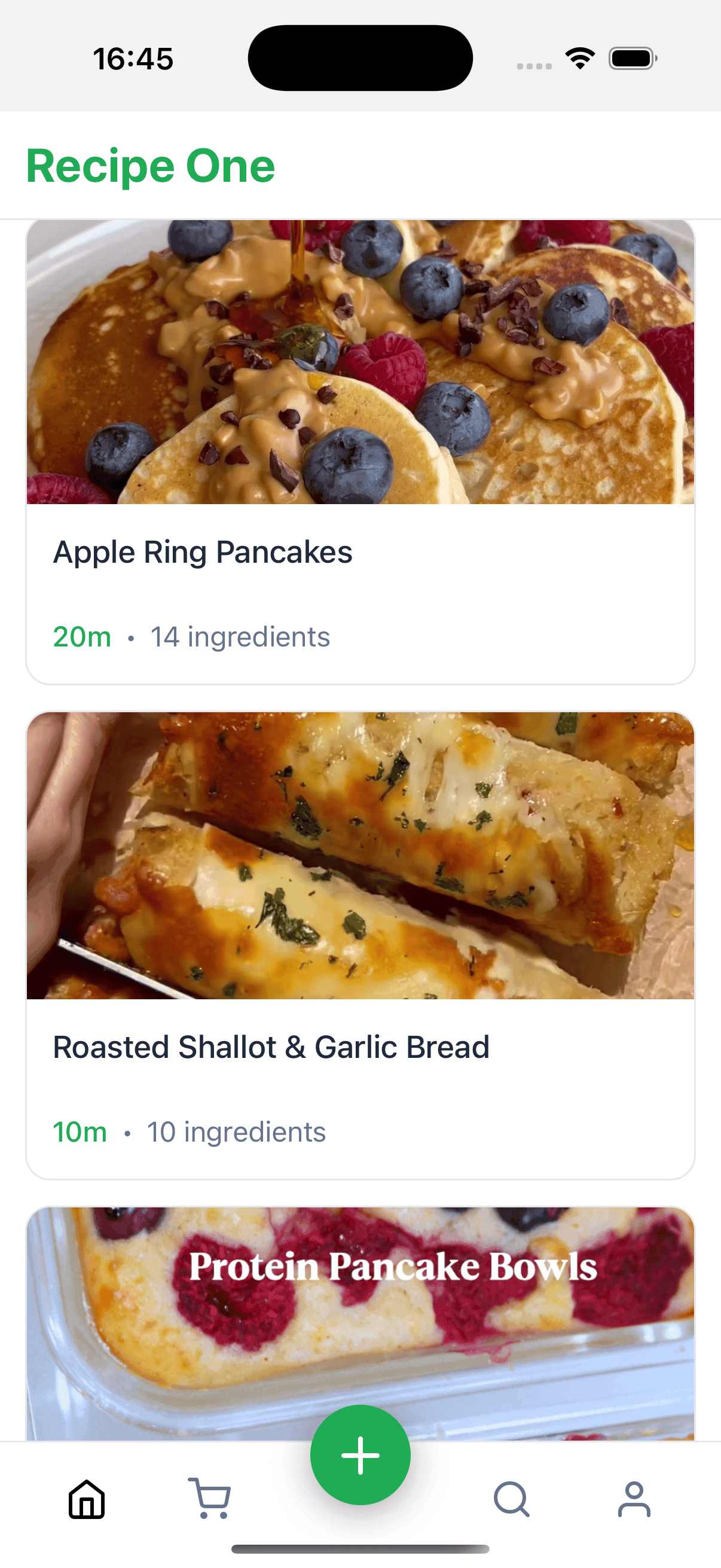
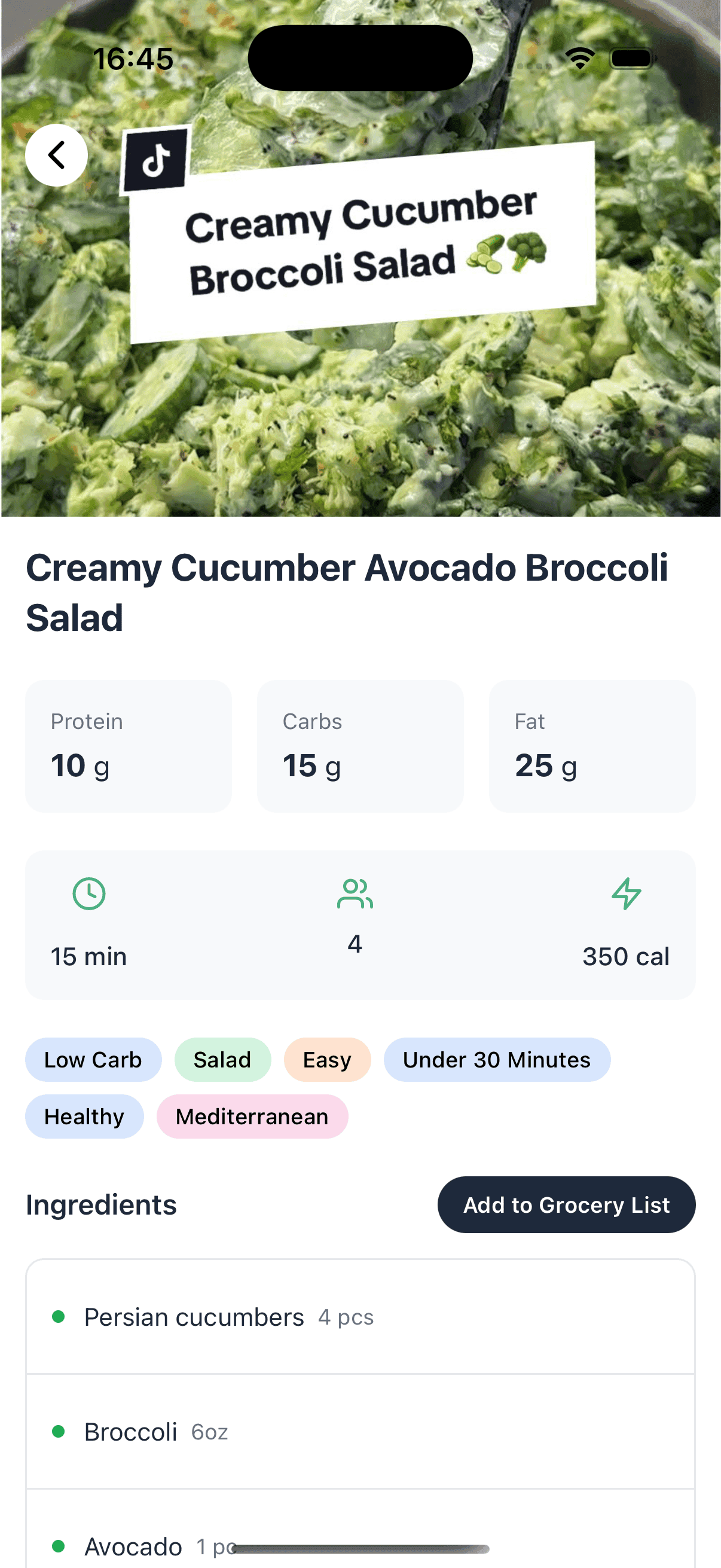
Tired of losing track of your favorite recipes from across the internet? Recipe One is an AI-powered recipe keeper that captures, organizes, and standardizes recipes from social media, images, or even plain text with a single click. Stop the endless copy-pasting and start building your perfect digital cookbook today. Learn more at https://www.recipeone.app/.