When you see the word "sauté" in a recipe, think of it as a culinary sprint, not a marathon. It's a high-heat, fast-paced cooking method that uses just a little bit of fat in a shallow pan. The whole point is to cook food quickly, giving it a beautiful brown crust while keeping the inside tender and full of flavor.
What It Really Means to Sauté
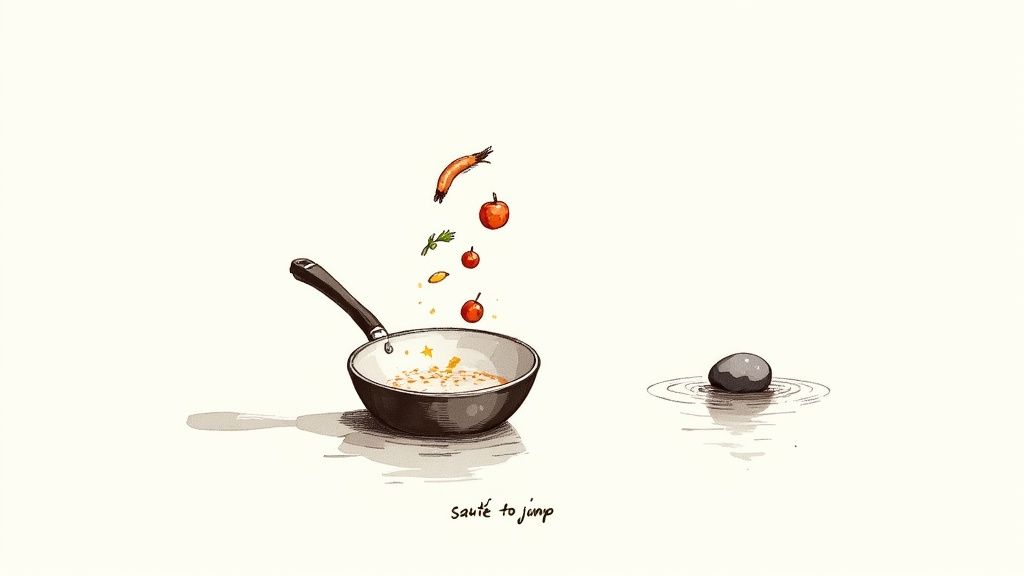
Let's get right to it. The word sauté is French, from the verb sauter, which means “to jump.” That’s the perfect way to picture it. Your ingredients should literally be jumping around the pan as you toss them. This constant, energetic motion is what keeps everything cooking evenly instead of just steaming in its own liquid.
Think of it like skipping a stone across a pond. You want a quick, light touch that keeps the stone skimming the surface, not sinking. Sautéing works the same way and really boils down to three key things:
- High Heat: Your pan needs to be hot before the food goes in. You're looking for an instant, satisfying sizzle.
- A Little Fat: Just enough oil or butter to coat the bottom of the pan and keep things from sticking. Too much, and you're frying.
- Constant Motion: Keep things moving, either by shaking the pan or stirring. This is what prevents burning and ensures an even cook.
Mastering these three elements is how you get that perfect sear and vibrant texture that makes sautéed food so good. It’s a foundational skill that shows up in more recipes than you can count.
Getting this right is a huge step toward becoming more confident in the kitchen. When you learn how to read a recipe and see the word "sauté," you'll know it's calling for this specific kind of speed and intensity. It’s a simple technique that, once mastered, opens up a whole world of dishes.
The Five Keys to a Perfect Sauté
Knowing what sautéing is and actually doing it well are two different things. Time and again, I see people end up with a pan of soggy, steamed vegetables instead of the crisp-tender, beautifully browned dish they were hoping for.
The difference comes down to five simple, non-negotiable rules. Get these right, and you're in control. Get them wrong, and you've lost the battle before it's even begun.
1. The Right Pan and Proper Heat
First things first: your pan is your foundation. You need a wide, shallow pan with a heavy bottom—think stainless steel or a classic cast iron skillet. The whole point is to give moisture a quick escape route. Food needs to sit in a single, even layer, which is the secret to getting that perfect browning instead of a steamy mess. If you want to dive deeper, this guide on palmbeachpost.com explains why proper prep is so critical.
Heat is just as crucial. Get that pan hot before a drop of oil goes in. Crank the heat to medium-high and wait. How do you know it's ready? Flick a drop of water in. If it sizzles and vanishes in a second, you're good to go.
2. The Correct Fat
Fat does more than just stop food from sticking; it’s what transfers heat from the pan to your ingredients and adds a layer of flavor. But for the high-octane heat of sautéing, not just any fat will do. You need one with a high smoke point—that’s the temperature where it starts to burn, smoke, and taste awful.
You're safe with options like:
- Avocado oil
- Grapeseed oil
- Canola oil
- Clarified butter (ghee)
These can handle the heat without breaking a sweat. To see how different oils stack up, check out our cooking oil smoke point chart.
To make it even clearer, here’s a quick rundown of the gear and ingredients that set you up for success.
Essential Tools and Ingredients for Sautéing
This table breaks down exactly what you need and why it's the best choice for the job.
Component
Best Choice
Why It Works
Pan
Stainless Steel or Cast Iron
Distributes heat evenly and the wide surface helps moisture evaporate quickly.
Fat
High-smoke-point oil (Avocado, Grapeseed)
Conducts heat efficiently without burning at high temperatures, ensuring clean flavor.
Utensil
Wooden Spoon or Heat-Resistant Spatula
Allows you to keep ingredients moving without scratching the pan's surface.
Ingredients
Uniform, bite-sized pieces
Ensures everything cooks at the same rate for consistent texture and flavor.
Getting these four components right from the start makes the whole process smoother and far more delicious.
3. Uniform Ingredient Size
This one’s all about consistency. Your ingredients have to be cut into similar, bite-sized shapes and sizes. Imagine you're cooking broccoli—if you have giant florets mixed with tiny bits, the little pieces will turn to charcoal before the big ones are even cooked.
Chopping everything evenly guarantees that every single piece cooks at the same pace. It’s a simple prep step that makes all the difference between a balanced dish and a chaotic one.
4. Don't Crowd the Pan
This is hands-down the most common mistake I see. It’s tempting to dump everything into the pan at once, but that’s a direct ticket to a soggy failure. Overcrowding instantly drops the pan’s temperature and traps steam. Instead of searing, your food just boils in its own juices.
The golden rule of sautéing is to cook in batches if you have to. Give each piece of food its own personal space to sizzle and develop that beautiful golden-brown crust.
5. Keep Things Moving
Finally, remember the name of the game. Sauté literally means "to jump" in French. Once your ingredients hit that hot, oiled pan, they need to stay in motion.
You can stir frequently with a spatula, or you can learn the classic chef's wrist-flick to toss the food in the air. This constant movement is what ensures every side gets a chance to kiss the hot pan, leading to perfectly even cooking.
Sautéing vs. Frying vs. Searing
It’s easy to get these terms mixed up. Sauté, fry, sear… they all involve a hot pan and some oil, right? Well, yes, but the little details make a world of difference in the final dish. Understanding these nuances is what separates a good cook from a great one.
Think of it like this: sautéing is a quick dance in the pan, pan-frying is more like a shallow swim in oil, and searing is a brief, intense branding session. The real distinctions come down to the amount of fat you use, how hot the pan is, and how you move the food around.
Motion and Fat: The Telltale Signs
The word "sauté" literally means "to jump" in French, and that's the perfect way to picture it. You’re using just a little bit of fat—maybe a tablespoon or two—over high heat, and you’re keeping the food in constant motion. This is for small, uniform pieces that cook fast.
Searing, on the other hand, is all about creating a deep, brown crust on something bigger, like a thick steak or a couple of scallops. You get the pan screaming hot, add your food, and then—this is the important part—you leave it alone. No shaking, no stirring. You want maximum contact to develop that incredible flavor.
Stir-frying is another close relative. The biggest difference here is the equipment. Stir-frying is traditionally done in a wok, which has a bowl shape that concentrates intense heat at the bottom. The food is always moving. Sautéing relies on a flat-bottomed pan, giving you a wider, more even heating surface.
This simple flowchart helps visualize the core decisions for a perfect sauté every time.
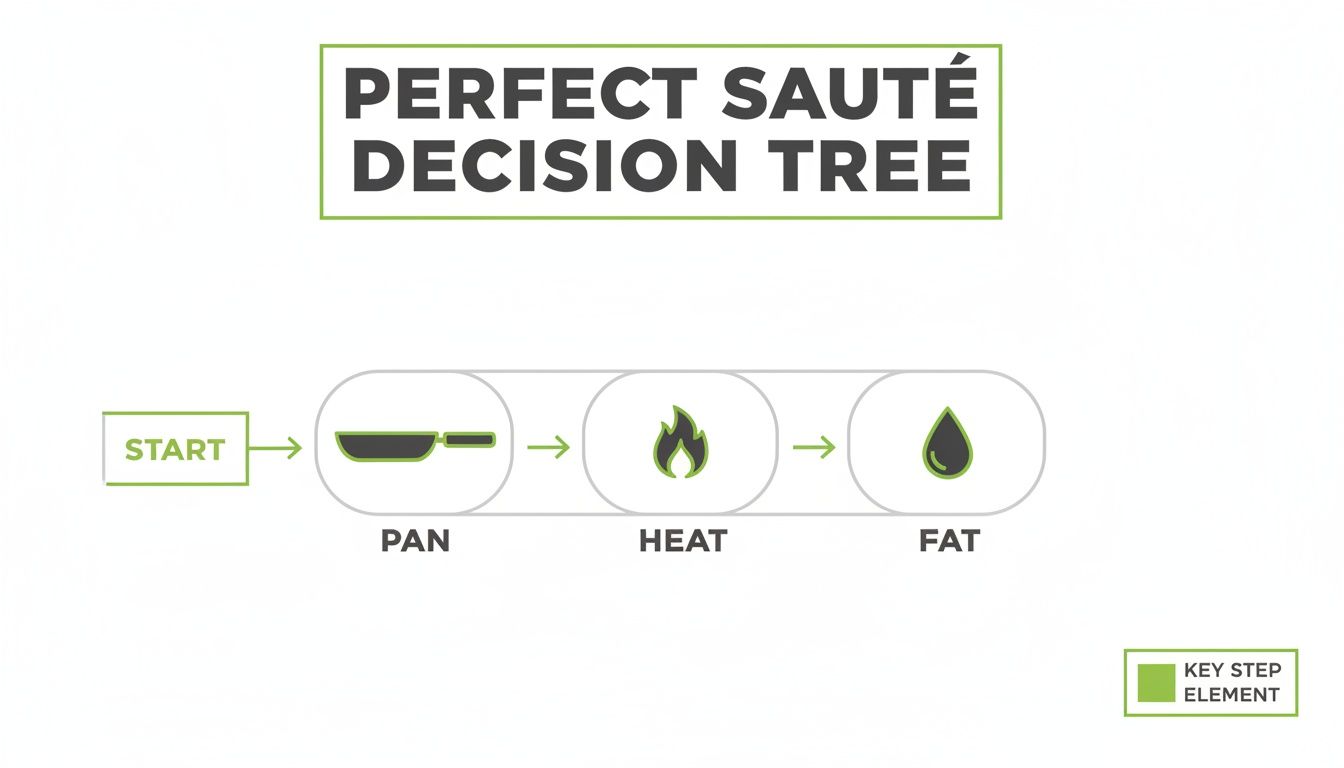
As you can see, getting the pan, heat, and fat right from the start is the foundation of the whole technique.
To make things even clearer, let's break down how these common pan-cooking methods stack up against each other.
Cooking Method Comparison: Sautéing vs. Frying vs. Searing
| Technique | Heat Level | Amount of Fat | Typical Food Size | Primary Goal |
|---|---|---|---|---|
| Sauté | Medium-High | Minimal (coating) | Small, uniform pieces | Cook quickly and evenly |
| Pan-Fry | Medium | Moderate (halfway) | Medium to large | Cook through with a crispy, golden exterior |
| Sear | High to Very High | Minimal (coating) | Large, thick cuts | Create a deep brown crust for flavor |
This table really highlights the specific role each technique plays in the kitchen.
When to Choose Each Method
So, how do you know which one to use? It all comes down to what you're trying to achieve with your ingredients.
- Sauté when you have small, tender items you want to cook through quickly. Think chopped garlic and onions, sliced mushrooms, shrimp, or thin strips of chicken.
- Pan-Fry for larger pieces that need more time to cook, especially if they have a coating. This is perfect for breaded chicken cutlets or fish fillets where you want that crispy, golden-brown crust.
- Sear when your main goal is building a massive amount of flavor on the outside of a thick cut of meat. A beautiful steak, a pork chop, or tuna steaks are prime candidates. For searing, knowing how to season cast iron skillets is a game-changer, as they hold heat like nothing else.
Once you get a feel for these differences, you’ll stop just following recipes and start truly understanding how to cook.
Why Chefs Rely on the Sauté Method
In any professional kitchen, speed and flavor are everything. This is precisely why sautéing isn't just another cooking method—it's a foundational technique used night after night. It’s all about transforming ingredients with incredible efficiency, making it perfect for the rush of a dinner service or just a quick weeknight meal at home.
The real magic behind sautéing is its use of high, direct heat. This intense heat is what kicks off the Maillard reaction, the beautiful chemical dance between amino acids and sugars that gives browned food its signature savory flavor. Just picture the difference between a deeply browned, sweet onion and a plain boiled one. That incredible depth of flavor is all thanks to the Maillard reaction, and it’s something you just can’t get from slower, wetter methods like boiling or steaming.
While other techniques like searing also rely on this reaction, how you use them matters. Our guide to cooking thick steaks explores how different high-heat methods achieve different results.
More Than Just Flavor
But sautéing isn't just about creating amazing taste. The lightning-fast cooking time brings a lot more to the table.
For vegetables, it means they stay crisp and vibrant instead of turning into a dull, mushy mess. This quick blast of heat also does a better job of locking in delicate, heat-sensitive nutrients that often get lost in longer cooking processes.
Sautéing is a powerhouse technique because it delivers on three fronts: it develops deep, complex flavor, preserves the food's natural texture and nutrients, and does it all in record time.
From a practical perspective, the speed is a game-changer. Most sautéed dishes, whether it's thin-cut chicken or sliced veggies, are ready in just 2–8 minutes. This allows restaurants to get plates out fast and helps home cooks put a fresh, healthy meal on the table without a lot of fuss. As the American Heart Association points out, this combination of flavor, nutrition, and speed is what makes mastering what it means to sauté so worthwhile.
Your First Sauté: A Simple Garlic Shrimp and Broccoli Recipe
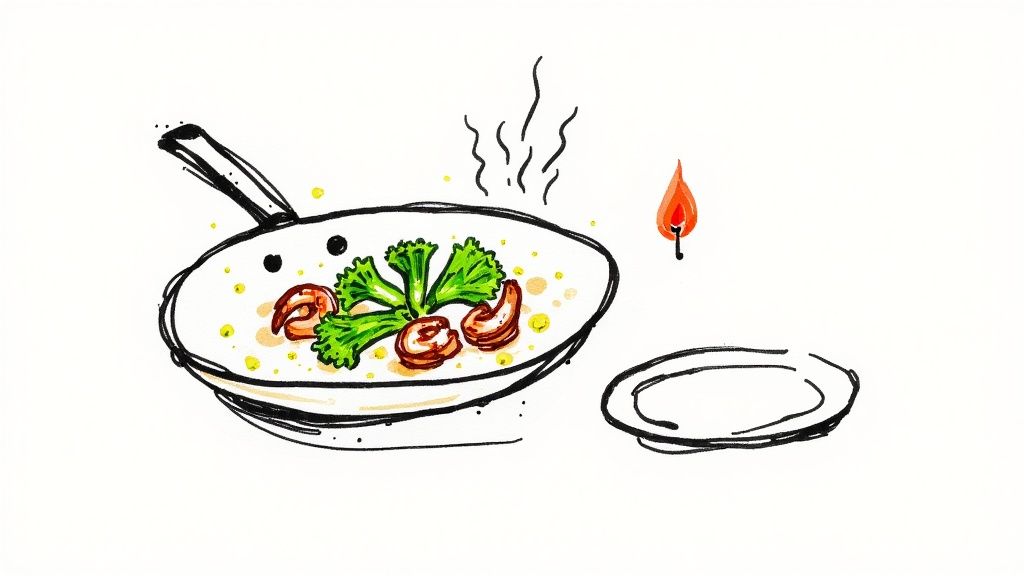
Alright, enough theory. The best way to understand sautéing is to get your hands dirty and fire up the stove. This simple recipe is your first lesson, built to show you exactly how all those principles—high heat, constant motion, the right pan—come together in the real world.
We're using quick-cooking shrimp and crisp broccoli because they're perfect for demonstrating the speed and precision of this technique. Think of this less as a recipe and more as a guided practice round. Let's do this.
Ingredients and Prep
First things first, get everything ready to go. The French call it mise en place ("everything in its place"), and for a fast-moving technique like sautéing, it's non-negotiable. You won't have time to chop once the pan is hot.
- 1 lb large shrimp, peeled and deveined
- 1 large head of broccoli, cut into small, bite-sized florets
- 4 cloves garlic, sliced thin
- 2 tablespoons high-smoke-point oil (avocado or grapeseed are great)
- 1 tablespoon butter
- Red pepper flakes, a pinch (or more!)
- Salt and fresh-cracked pepper
Before you do anything else, pat the shrimp completely dry with paper towels. I'm serious—this is the secret to getting a beautiful sear instead of just steaming them in their own moisture.
Step-by-Step Sauté
Now for the fun part. The key here is to work in batches if you need to. A crowded pan is a steamy pan.
- Get the Pan Hot: Put a large skillet over medium-high heat. Give it a good 2-3 minutes to get properly hot. You'll know it's ready when a drop of water sizzles and vanishes instantly.
- Sauté the Broccoli: Add one tablespoon of oil. When it shimmers, add the broccoli florets in a single, even layer. Let them cook for 3-4 minutes, tossing them around every so often, until they're bright green, tender-crisp, and have a few nice charred spots. Scoop them out and set them aside.
- Cook the Shrimp: Add the rest of the oil to the pan. Arrange the shrimp in a single layer—don't let them touch! Let them cook for about 60-90 seconds per side, just until they turn pink and curl up. Don't overdo it.
- Bring It All Together: Turn the heat down to low. Toss in the butter, garlic, and red pepper flakes. Stir constantly for just 30 seconds until the garlic smells amazing (don't let it burn!). Add the broccoli and shrimp back into the pan, give it all a good toss to coat, and season with salt and pepper.
And just like that, you've sautéed. It's a fantastic, quick meal that really shows off the technique. If this got you excited, you can learn how to find recipes by ingredients you have on hand and keep practicing with whatever's in your fridge.
Sautéing Questions I Hear All The Time
Even with the right technique, a few common problems can pop up. Let's walk through the questions I get asked most often, so you can sauté with confidence and get that perfect sizzle every single time.
"Why is my food steaming instead of browning?"
This is, without a doubt, the number one frustration I see. You're expecting a beautiful golden-brown crust, but instead, your food is just getting soft and soggy in a puddle of its own juice. Sound familiar?
Nine times out of ten, the culprit is either overcrowding the pan or not getting it hot enough to begin with. When you dump too much food in at once, all that moisture instantly cools the pan down, creating a steamy mess. The fix is thankfully simple:
- Cook in batches. Don't be afraid to sauté in two or three rounds. Every piece of food needs its own little piece of real estate on the hot pan surface.
- Let the pan get HOT. Seriously, be patient. Before you add a thing, the pan should be hot enough that a flick of water sizzles and disappears in a second.
"Can I use a non-stick pan for this?"
You absolutely can, but it comes with a couple of trade-offs. Non-stick pans are fantastic for beginners; they’re forgiving and a lifesaver for delicate things like fish fillets or eggs that love to stick.
However, for a truly great sauté, you can't beat stainless steel or carbon steel. These pans can get screaming hot, which gives you a much better sear and helps develop fond—those delicious brown bits that stick to the bottom and are the secret to amazing pan sauces.
A non-stick pan will get the job done, but just be careful not to crank the heat too high. Extreme temperatures can damage the coating. Think of it this way: non-stick is for convenience, but a classic skillet is for flavor.
"What’s the best oil to use for sautéing?"
You'll want an oil with a high smoke point. That just means it can handle high heat without burning and turning your food bitter.
My go-to choices are avocado oil, grapeseed oil, or even clarified butter (ghee). They're built for the heat. While everyone loves extra virgin olive oil for its flavor, it has a lower smoke point, making it better for finishing a dish or for gentler cooking. And definitely skip regular butter—its milk solids will burn almost instantly.
If you're tired of losing great recipes you find online, Recipe One can help. It captures recipes from any social media post, video, or webpage with a single click and organizes them into your personal, searchable library. Try Recipe One for free and start building your forever cookbook today!